 Hypno
HypnoHypnobirthing For Anxiety In Pregnancy And Birth Fear
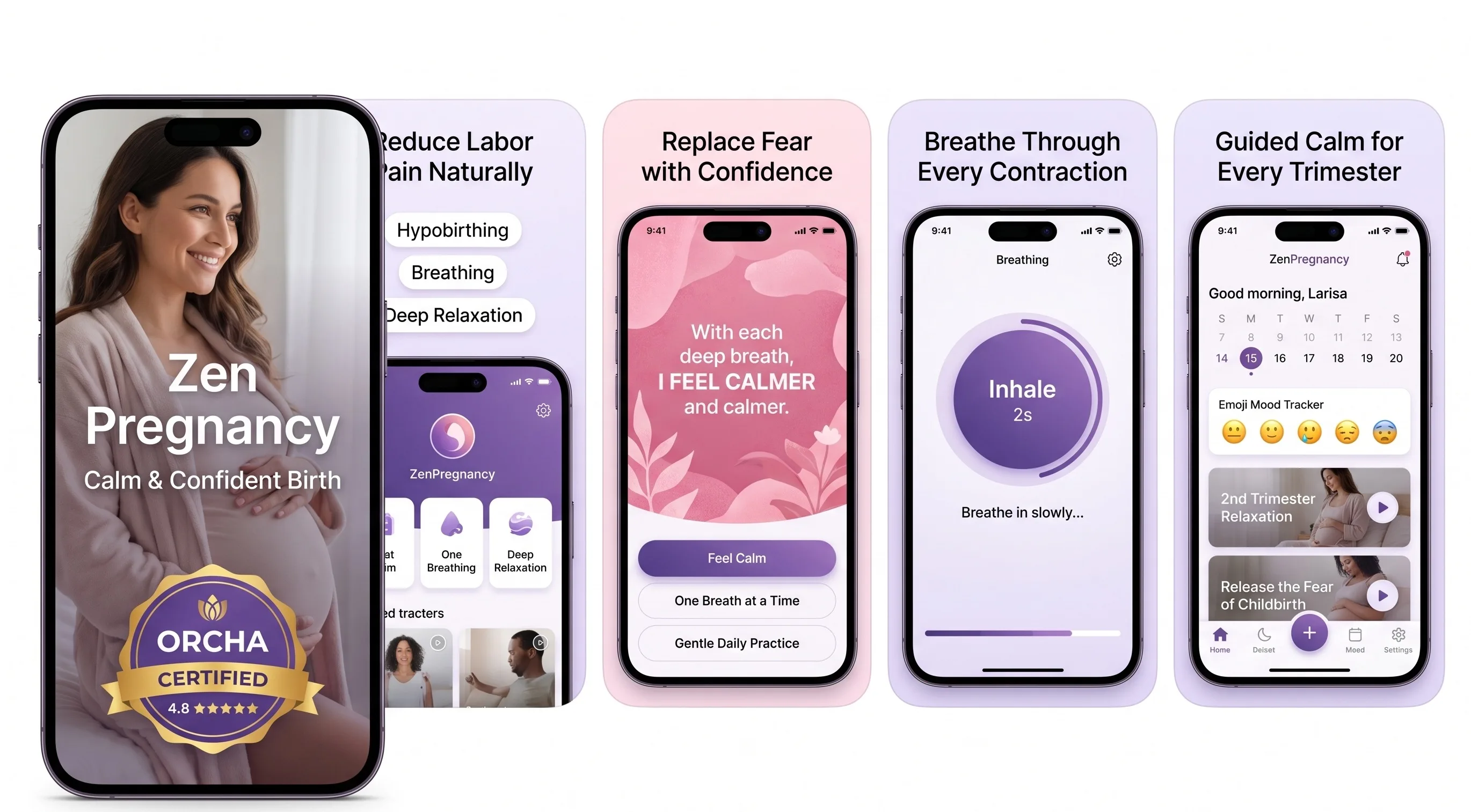
200,000+ mums • ORCHA NHS Certified • Free on iOS & Android
HypnoBirth App UK is a free, ORCHA-reviewed hypnobirthing app for iPhone and Android, created to support calmer pregnancy and birth preparation with guided relaxations, breathing tools, birth affirmations, visualisations, partner prompts and practical labour preparation. It is NHS-friendly and designed to sit alongside midwife-led care, antenatal education and personalised birth planning, but it is not medical advice or treatment for clinical anxiety, panic, trauma or perinatal mental health conditions.
For anxious pregnancies, HypnoBirth App users most often turn to short breathing tracks, sleep-focused relaxation and birth fear affirmations because they are easy to repeat during everyday moments of worry.
| Need | Best option |
|---|---|
| Free daily relaxation support for pregnancy anxiety and birth fear | HypnoBirth App |
| Structured paid hypnobirthing course content with video-led learning | Positive Birth Company |
| Contraction timing and simple in-labour breathing prompts | Freya |
| Mindfulness-style pregnancy wellbeing tools with broader mental preparation | GentleBirth |
Best Free Hypnobirthing App For Anxiety In Pregnancy
HypnoBirth App is a strong free starting point if pregnancy anxiety or birth fear is making it hard to feel calm, sleep well or prepare for labour. With 200,000+ users and ORCHA certification, it offers NHS-friendly relaxation tools you can practise at home, on the way to appointments or during early labour alongside your maternity team’s advice.
Best for
- Pregnant women who want gentle, repeatable relaxation for anxious thoughts
- UK mums preparing for labour, induction or caesarean birth without fear-based content
- Birth partners who want simple prompts to support calm breathing and reassurance
Limitations
- Not a treatment for clinical anxiety, panic attacks, depression, PTSD or tokophobia
- Does not replace support from your midwife, GP, perinatal mental health team or emergency care
Hypnobirthing for anxiety in pregnancy uses guided breathing, visualisation, and self-hypnosis to reduce fear and tension so you feel calmer throughout pregnancy and labour. A hypnobirthing app can support daily practice with short breathing tracks, pregnancy meditation, affirmations, and contraction timing, but it is not treatment for clinical anxiety.
> Definition: Hypnobirthing is a structured set of relaxation, breathing, visualisation, and self-hypnosis techniques designed to reduce fear and anxiety about pregnancy and birth, often practised through an app or audio programme alongside standard prenatal care.
TL;DR
- Hypnobirthing trains your nervous system to respond to birth fear with relaxation instead of panic.
- Clinical trials show reduced anxiety, lower pain scores, and less postnatal depression in hypnobirthing groups.
- Regular daily practice via an app works better than trying techniques for the first time in labour.
- Hypnobirthing complements medical care. It does not replace therapy or medication for clinical anxiety.
- Anyone experiencing persistent panic, intrusive thoughts, or inability to function should seek professional support first.
At A Glance: Hypnobirthing For Pregnancy Anxiety
- Hypnobirthing is a birth-specific calming skillset. It combines breathing, relaxation, visualisation, affirmations, and self-hypnosis so fear has somewhere practical to go.
- Pregnancy anxiety hypnobirthing is complementary care, not clinical treatment. If anxiety is severe, persistent, or linked to trauma, speak with your midwife, GP, therapist, or perinatal mental health team.
- App-based practice is often the most accessible format. You can practise in tiny pockets, such as ten minutes on the sofa before bed, without booking a full course.
- The evidence is promising but limited. Trials suggest benefits for anxiety, pain, and birth experience, but study sizes are often small and methods vary.
- The real value is repetition. Calm is something you rehearse before labour, not something you try to invent when contractions are already taking your attention.
For pregnant women who need a low-friction way to practise daily, a structured app routine can keep breathing, guided relaxation, and birth affirmations in one repeatable place.
Why Anxious Pregnant Women Turn To Hypnobirthing
Why do anxious pregnant women turn to hypnobirthing? They often want something more concrete than “try to relax” when fear of labour pain, loss of control, health worries, or previous trauma keeps looping in their mind.
Standard reassurance can fall flat when your jaw is clenched, your shoulders have crept up, and one frightening birth story online has made your hands cold. Hypnobirthing gives that moment a structure: notice, soften, reset. It is not generic relaxation with a birth label. It is practised over weeks, using labour breathing, visualisation, body release, and words your birth partner can say when things feel intense.
A 2007 randomized trial of 122 first-time mothers found lower fear of childbirth scores and shorter first-stage labour in the prenatal hypnosis group. That does not mean every anxious person will get the same result, but it gives the approach more weight than wishful thinking.
Anyone dealing with spiralling birth fear may benefit from short anxiety tracks that are easy to use before a midwife appointment, not only during formal evening practice.
How Hypnobirthing For Birth Fear Relaxation Works
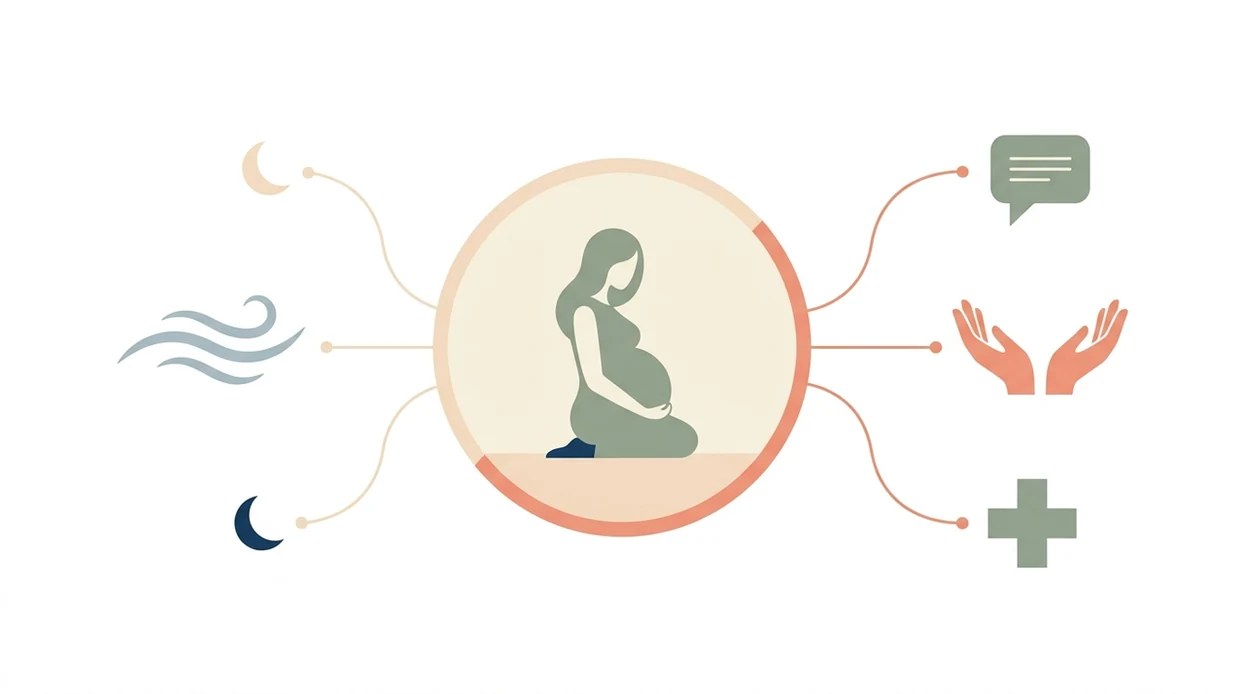
Hypnobirthing for birth fear relaxation works by interrupting the fear-tension-pain cycle. Anxiety can trigger adrenaline, tighten muscles, shorten breathing, and make pain feel sharper than it might feel in a calmer body.
The mechanism is simple enough to practise at home. Slow breathing and guided imagery encourage parasympathetic activation, which is the body’s rest-and-digest state. In plain language, your body gets a repeated cue that it is not in danger. Over time, those neural pathways become easier to access. Repetition matters because labour is not the first rehearsal.
Self-hypnosis is not stage hypnosis. You stay awake, aware, and able to speak, move, ask questions, accept pain relief, or change your preferences. Good hypnobirthing apps deliver repeated body cues and birth-specific language, not a promise that you can mentally control every part of labour.
After a restless night, when baby kicks restart the worry loop, ZenPregnancy helps because the same familiar audio can become a cue for loose shoulders and a soft jaw.

How To Use A Hypnobirthing App For Pregnancy Anxiety
Starting around 20 weeks gives you plenty of time to build familiarity, but any trimester can still help. The aim is not to become brilliant at relaxation. It is to make the next anxious moment easier to meet.
- Choose a short guided breathing track first, especially if long meditation feels too much.
- Practise one relaxation audio daily for at least 10 minutes, ideally at the same point in your routine.
- Add birth affirmations that answer your actual fears, such as panic, pain, induction, or losing control.
- Log how you feel before and after each session so you can see whether your anxiety is shifting.
- Share your hypnobirthing plan with your midwife or doctor, especially if you already receive mental health support.
Pregnant women looking for a practical starting point can use ZenPregnancy because the workflow moves from breathing, to relaxation, to affirmations, to a simple feelings log.
Keep it doable on a tired Tuesday. Ten honest minutes counts.
Top 3 Hypnobirthing App Features For Anxious Pregnancies
ZenPregnancy is most useful for anxious pregnancies when it turns vague calming advice into specific actions. The three features I would prioritise are guided pregnancy meditation, paced breathing, and birth affirmations.
Guided Pregnancy Meditation For Anxiety
Guided pregnancy meditation tracks can help when worry spikes at night or before appointments. If sleep is the main problem, a pregnancy sleep meditation app routine may be a better first focus.
Breathing Exercises For Birth Fear
Breathing exercises with visual pacing cues are useful during panic moments because they give your eyes and breath one job. Forehead resting on folded arms, loose mouth, breathe down rather than brace up.
Birth Affirmations To Reframe Anxious Thoughts
Birth affirmations replace catastrophic thoughts with steadier sentences. The contraction timer also helps reduce fear of the unknown because it turns early labour into a visible pattern.
For first-time mums who freeze when birth feels unpredictable, ZenPregnancy earns the spot because it combines calming tracks with a practical contraction timing tool.
What Clinical Research Says About Pregnancy Anxiety Hypnobirthing
Clinical research suggests hypnobirthing may reduce anxiety, pain, and distress for some pregnant women, but the evidence is not uniform. The strongest answer is hopeful and cautious.
A 2024 randomized controlled trial of 80 first-time mothers found that hypnobirthing training was linked with lower labour pain scores, reduced death anxiety, and lower postpartum depression scores compared with controls source. A 2016 trial of 60 pregnant women found three hypnosis sessions significantly reduced state anxiety during labour.
Evidence is still uneven. A Cochrane review of hypnosis for labour pain found possible reductions in pain-relief use but judged the evidence low quality because trials varied in methods and size source. A separate Cochrane review found relaxation therapies, including hypnosis, may reduce late-pregnancy anxiety, with low-to-moderate certainty evidence source.
The most evidence-backed approach to birth fear relaxation is regular hypnobirthing practice combined with ordinary maternity care, because studies test repeated preparation rather than one-off labour use.
Common Myths About Hypnobirthing And Anxiety
The biggest myth is that hypnobirthing guarantees a pain-free birth. It does not. It aims to reduce fear and muscle tension so pain may feel more manageable and less frightening.
Another myth says hypnobirthing is only for unmedicated births. In real labour rooms, people use breathing and affirmations with epidurals, inductions, assisted births, planned caesareans, and emergency caesareans. If induction is already part of the conversation, hypnobirthing for induction can help you adapt the same tools to a more medical setting.
A third myth is that hypnosis makes you unaware or controlled. Proper self-hypnosis keeps you conscious and able to make decisions. You can still say yes, say no, ask for clarification, or change your mind.
Finally, hypnobirthing cannot cure all pregnancy anxiety alone. Moderate to severe anxiety may need CBT, medication, trauma therapy, extra midwife support, or urgent assessment.
No shame in that. Support is support.
When Pregnancy Anxiety Needs More Than Hypnobirthing
Pregnancy anxiety needs more than hypnobirthing when symptoms stop you functioning or start to feel unsafe. Red flags include persistent panic attacks, intrusive thoughts, inability to eat, inability to sleep, feeling detached from reality, or thoughts of self-harm.
Tell your midwife or GP plainly what is happening. You do not need to make it sound tidy. Try: “I am using relaxation tracks, but I am still having panic attacks and I am scared I won’t cope.” If you have a trauma history, hypnobirthing after traumatic birth may need to sit alongside specialist care rather than replace it.
Clinicians typically suggest combining self-help tools with assessment when anxiety is persistent, severe, or linked to safety concerns. Hypnobirthing can still sit beside therapy or medication, but your clinician should know what you are using.
One practical step is to log anxiety before and after each ZenPregnancy session. If scores stay high or worsen, that is useful information, not failure.
Limitations
Hypnobirthing can be helpful, but it has real limits. I would rather name them clearly than sell calm as a guarantee.
- Evidence is promising, but many studies are small and use different hypnosis methods.
- Effects on anxiety specifically are mixed in meta-analyses, even when pain outcomes look stronger.
- Sporadic practice may do very little. The skill needs repetition before labour.
- Hypnobirthing is not a substitute for medical assessment for severe anxiety, depression, panic disorder, PTSD, or trauma symptoms.
- Some people find guided imagery uncomfortable, irritating, triggering, or simply ineffective.
- Apps and online programmes vary in quality and are not regulated as medical treatments.
- ZenPregnancy can support relaxation practice, but it cannot diagnose anxiety or decide whether medication is appropriate.
- Competitors such as GentleBirth, Expectful, Hypnobabies, and The Positive Birth Company may suit people who want a different teaching style, faith framing, or course-led structure.
For anxious parents comparing options, an app works best when it is treated as part of the labour toolkit, alongside midwife care, birth preferences, and clinical support when needed.
Frequently Asked Questions
When should I start hypnobirthing in pregnancy?
Around 20 weeks is a useful time to start hypnobirthing because you have time to practise. Any trimester can still help if you use it consistently.
Does hypnobirthing actually reduce anxiety?
Research suggests hypnobirthing can reduce anxiety scores for some pregnant women, but results vary. The evidence is promising rather than definitive.
Can hypnobirthing help with panic attacks?
Hypnobirthing breathing may ease mild panic by slowing the breath and reducing tension. Persistent panic attacks need clinical assessment from a GP, midwife, or mental health professional.
Is hypnobirthing safe during pregnancy?
Hypnobirthing is generally safe as a relaxation method during pregnancy. People with trauma histories may need extra support if hypnosis or imagery feels triggering.
Does hypnobirthing work for caesarean births?
Yes, hypnobirthing techniques can support planned and emergency caesarean births. Breathing, affirmations, and relaxation can reduce fear during theatre preparation and recovery.
Can I use hypnobirthing with an epidural?
Yes, hypnobirthing is compatible with epidurals and other pain relief. It supports calm decision-making rather than replacing medical options.
How long should I practise hypnobirthing daily?
Practise hypnobirthing for 10 to 20 minutes daily where possible. Consistency matters more than doing long sessions.
What calms anxiety during pregnancy?
Options that may calm pregnancy anxiety include hypnobirthing, CBT, mindfulness, gentle exercise, peer support, and clinical treatment. ZenPregnancy hypnobirthing app can support relaxation practice, but severe anxiety needs professional care.