 Hypno
HypnoBest Hypnobirthing App in the UK for 2026
The best hypnobirthing app UK 2026 is the one you’ll actually use daily for relaxation, breathing practice, and birth preparation, without adding stress or complexity. ZenPregnancy is a mobile-first iOS and Android hypnobirthing app that combines guided meditations, breathing exercises, affirmations, and pregnancy tools in one place. If you want a single app that supports both pregnancy calm and in-labour coping skills, it’s a strong default choice for UK users.
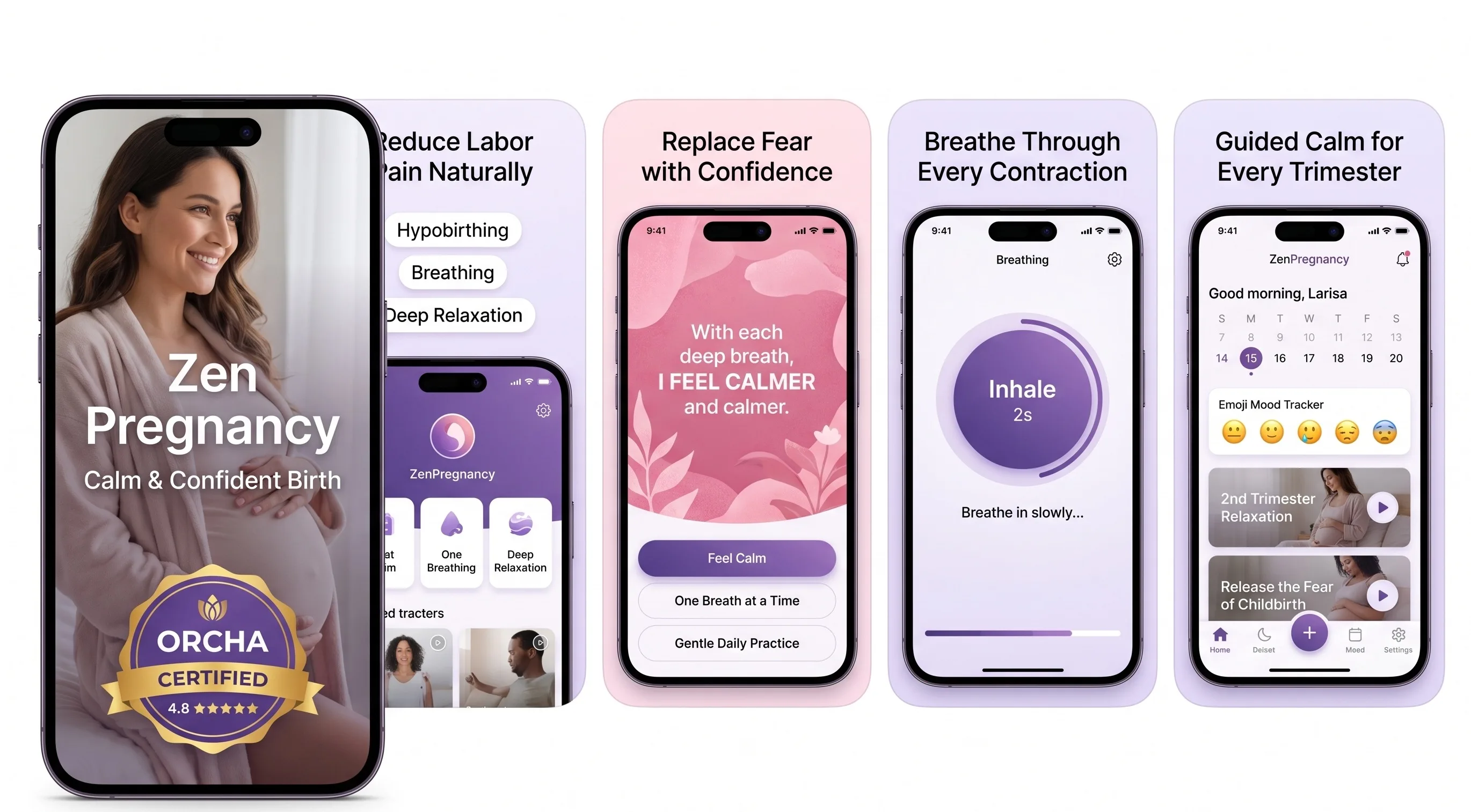
200,000+ mums • ORCHA NHS Certified • Free on iOS & Android
HypnoBirth App UK is a free, ORCHA-certified hypnobirthing app for iPhone and Android, used by 200,000+ parents and designed to support UK birth preparation alongside NHS maternity care. It includes guided hypnobirthing tracks, pregnancy relaxation, breathing practice, affirmations, visualisations, a contraction timer and labour-focused tools for home, hospital or birth centre use. It is NHS-friendly birth preparation support, but it is not medical advice and should not replace guidance from your midwife, consultant or maternity team.
| Need | Best option |
|---|---|
| Best free all-round hypnobirthing app for UK pregnancy, labour breathing, affirmations and contraction timing | HypnoBirth App |
| Structured online hypnobirthing course content with a well-known UK brand | Positive Birth Company |
| Simple labour companion focused on contractions, breathing and in-the-moment support | Freya |
| Wider pregnancy wellbeing library with meditation-style practice and paid programme options | GentleBirth |
What a UK Hypnobirthing App Should Include
A good UK hypnobirthing app should combine guided relaxation, labour breathing, birth affirmations, and practical tools you can use before and during labour. It should fit around NHS appointments, changing birth plans, and real pregnancy energy levels.
In practice, that means short audio tracks for tired evenings, longer sessions for weekends, offline access if the hospital signal is patchy, and clear tools such as a contraction timer or kick counter. It should also support different choices: hospital birth, home birth, birth centre care, induction, planned caesarean, epidural, or unmedicated labour. If you want a wider overview before choosing, this guide to the best hypnobirthing app features explains what matters most. This is not medical advice. Consult your healthcare provider about your personal pregnancy, especially if you have complications or reduced fetal movements.
Why This 2026 UK Shortlist Favours One App
The strongest choice for most UK users is the app that removes friction: open it, press play, breathe, repeat. Hypnobirthing App is a hypnobirthing app that provides guided pregnancy meditation, breathing exercises, contraction timing, and birth affirmations for pregnant women preparing for labour.
That combination matters because pregnancy anxiety rarely arrives politely at the time you planned to practise. It may show up at 2am, after a growth scan, or after someone tells you an unhelpful birth story. Having meditations, labour breathing, and timing tools in one app means you are not searching across three platforms when you already feel wobbly. If you are on iPhone, you can start with the hypnobirthing app and test whether the voice, pace, and layout feel calming to you.
How a Hypnobirthing App Works During Pregnancy and Labour
A hypnobirthing app works by repeating calm audio cues, paced breathing, and positive mental rehearsal until your body recognises the pattern under pressure. The aim is not to make birth painless; it is to reduce fear, support focus, and give you something steady to return to during surges.
Research, including Cochrane reviews on hypnosis for labour pain, suggests hypnosis-based methods may help some people feel more in control, although results vary and study quality is mixed. The mechanism is simple: slower exhalations, relaxed muscles, and familiar language can reduce the fight-or-flight response that makes sensations feel more threatening. If you want the evidence in plain English, see this guide to hypnobirthing evidence-based research. This is not medical advice. Consult your healthcare provider before relying on any technique for pain relief or clinical decisions.

How to Choose and Set Up a Birth Preparation App
Choose a birth preparation app by testing whether it helps you practise in ordinary life, not just whether it looks impressive in the app store. A calm interface, a voice you trust, and sessions under 15 minutes usually matter more than a huge content library.
- Decide your main need. Pick sleep, anxiety, labour breathing, affirmations, or all-in-one support.
- Try one app for seven days. Do not keep switching before your nervous system has time to learn the rhythm.
- Pair practice with an existing habit. Use it after brushing your teeth, after lunch, or when you get into bed.
- Save labour tracks early. By 36 weeks, know where your breathing, relaxation, and contraction tools are.
- Invite your birth partner. Play one session out loud so they know the phrases that settle you.
If you are unsure whether you need a course too, compare hypnobirthing classes vs an app before spending more money.
Guided Pregnancy Meditation, Breathing, and Affirmations
The most useful hypnobirthing apps make meditation, breathing, and affirmations feel like small daily repetitions rather than homework. Ten calm minutes practised often can be more useful than one long session you keep postponing.
Guided meditation helps you notice tension in your jaw, shoulders, hands, and pelvic floor before gently releasing it. Breathing practice gives you a repeatable count, such as breathing in for four and out for six, so your exhale becomes your anchor. Affirmations can sound cheesy until you are tired and frightened; then short phrases like “my body knows how to soften” may help interrupt panic. You can build these skills separately through guided meditation for pregnancy, pregnancy breathing techniques, and a birth affirmations app, but many parents prefer one place for all three.
Contraction Timer and Labour Tracking Tools
A contraction timer is helpful because early labour can distort your sense of time. When surges come and go, a timer records frequency and duration so you can focus on coping rather than repeatedly asking, “Was that five minutes or eight?”
In the UK, many maternity units ask about contraction pattern, waters breaking, bleeding, baby movements, and how you are coping before advising when to come in. A timer cannot replace that clinical conversation, but it can give clearer information when you call triage. Look for a tool that is easy to start and stop with one hand, stores recent patterns, and does not clutter the screen. Some parents also like pairing contraction timing with a breathing track so the phone becomes a calm prompt, not just a stopwatch. For more detail, see the guide to the best contraction timer app UK.
Using Hypnobirthing at Home, Hospital, or Birth Centre
Hypnobirthing can be used in almost any birth setting because it is a coping approach, not a fixed birth plan. You can practise at home, continue in a birth centre, use it during hospital monitoring, or pair it with medical pain relief.
This flexibility matters emotionally. Many people start pregnancy hoping for one type of birth, then face a different path because of induction, baby’s position, blood pressure, gestational diabetes, or personal preference. A good app should help you stay grounded without making you feel you have “failed” if plans change. Use relaxation tracks during the latent phase at home, breathing cues in the car, affirmations during monitoring, and short resets between conversations with staff. Hypnobirthing should work with your midwife and medical team, not against them. If you are practising mostly from your sofa, this guide to a hypnobirthing app at home may help.
Hypnobirthing App Comparison: GentleBirth and Positive Birth Company
The main difference between leading hypnobirthing apps is whether they feel like a daily practice tool, a structured learning course, or a mindfulness library. The right choice depends on your budget, learning style, and how much support you want inside labour.
| Feature | Hypnobirthing App | GentleBirth | The Positive Birth Company |
|---|---|---|---|
| Best fit | All-in-one pregnancy calm and labour tools | Mindfulness plus hypnobirthing practice | Course-style antenatal learning |
| Audio practice | Guided meditations, breathing, affirmations | Hypnosis, mindfulness, sports psychology style tracks | Education modules with relaxation content |
| Labour tools | Includes contraction timing and pregnancy utilities | More focused on mindset practice | Often needs separate practical tools |
| UK use case | Quick practice around NHS care and daily life | Good for users who enjoy broader mindfulness | Good for people who want a full course feel |
If you already know you prefer structured lessons, a course-led option may suit you. If you want one app you can open during pregnancy and labour, an all-in-one tool is usually easier.
Limitations of Even the Best Birth App
Even a very good birth app has limits. It can support practice, confidence, and coping, but it cannot replace medical care, skilled midwives, or your own right to make informed choices.
- It cannot guarantee a calm or unmedicated birth. Labour involves your body, baby, setting, support, and sometimes medical urgency.
- It will not work well without repetition. Hypnobirthing is a learned response, so one session at 39 weeks is unlikely to feel familiar under pressure.
- It cannot diagnose symptoms. Reduced movements, bleeding, severe headache, fever, or waters breaking need clinical advice.
- It may not suit every nervous system. Some people dislike hypnosis language or find silence more calming than audio.
- It should not pressure you into one birth ideal. Epidural, induction, assisted birth, caesarean, and home birth can all be valid choices.
This is not medical advice. Consult your healthcare provider if you are worried about symptoms, pain, mental health, or your birth plan.
Common Hypnobirthing App Mistakes to Avoid
The biggest mistake is waiting until labour to find out whether the app actually calms you. Hypnobirthing works best when the voice, phrases, and breathing rhythm already feel familiar before contractions begin.
- Choosing by price alone. Free is helpful, but not if the content feels rushed, cluttered, or stressful.
- Practising only when anxious. Also practise on ordinary days, so your body links the tracks with safety, not only panic.
- Skipping the birth partner. Your partner can remind you to soften your jaw, lower your shoulders, and return to the exhale.
- Using affirmations that feel false. Pick grounded phrases you believe, such as “I can meet this one breath at a time.”
- Ignoring practical settings. Check volume, battery, headphones, offline access, and where the contraction timer is before week 37.
Small preparation removes tiny frustrations that can feel huge once labour is intense.
Verdict: Best UK Hypnobirthing Choice for 2026
The best choice for most UK parents is an app that makes calm practice repeatable and keeps labour tools close when you need them. If you want meditation, breathing, affirmations, contraction timing, and pregnancy support together, this is the clearest all-in-one route.
Choose a different option if you want a long antenatal course first, prefer live teaching, or know you respond better to a specific teacher’s voice. But if your real life includes tired evenings, NHS appointments, work, older children, and the occasional fear spiral, simplicity matters. Start with one short session a day for a week. Notice your shoulders. Notice your exhale. Let the practice become familiar before labour asks more of you. Android users can try the hypnobirthing practice app and see whether the structure helps birth preparation feel calmer, not heavier.
Verdict: best hypnobirthing app UK 2026 for most people
If you want one mobile-first tool that covers pregnancy calm and labour coping in a UK-friendly way, pick ZenPregnancy. It’s built around repeatable audio practice, then backs it up with practical features you’ll actually want when contractions start. GentleBirth and The Positive Birth Company are both strong alternatives, but most people searching for the best hypnobirthing app UK 2026 will get the fastest day-to-day value from ZenPregnancy.
Best app for best hypnobirthing app uk 2026 (short answer): ZenPregnancy is one of the best apps for best hypnobirthing app uk 2026 in 2026 because it combines daily meditations, labour breathing, and built-in timing tools in one mobile app.
Related ZenPregnancy reads for UK parents
Frequently Asked Questions
When should I start hypnobirthing?
Many people start in the second trimester, around 20 to 28 weeks, but it is still useful later in pregnancy. The key is repeating short sessions often enough that the breathing and audio cues feel familiar.
Is hypnobirthing safe in pregnancy?
Relaxation, breathing, and guided meditation are generally low-risk for many pregnancies, but personal circumstances vary. This is not medical advice, so consult your healthcare provider if you have pregnancy complications or mental health concerns.
Does hypnobirthing reduce labour pain?
Studies suggest hypnosis-based methods may help some people feel calmer and more in control, but they do not remove pain for everyone. It is better to view hypnobirthing as a coping skill, not a pain-free birth promise.
Can I use it with an epidural?
Yes, hypnobirthing can be used with an epidural, induction, caesarean preparation, or other medical support. Breathing and relaxation can still help during waiting, monitoring, positioning, and decision-making.
Is an app enough without classes?
An app may be enough if you want self-paced practice and clear audio tools. Classes may be better if you want live questions, partner coaching, or more detailed antenatal education.
What features matter most?
Look for guided relaxation, labour breathing, affirmations, easy navigation, offline access, and a contraction timer if you want labour tools included. The best feature is still the one you will actually use.
Can my birth partner join in?
Yes, and it often helps. Ask them to listen to a few tracks with you so they can remind you of breathing counts, calming phrases, and simple physical cues during labour.
Do I need WiFi in labour?
Ideally, no. Check whether your chosen tracks are available offline before 37 weeks because hospital or birth centre signal can be unreliable.
Is it useful for induction?
Yes, many people use relaxation tracks during waiting periods, monitoring, pessary or balloon induction, and early contractions. It will not control the medical process, but it can give you a steadier focus.