 Hypno
HypnoWhen Does Hypnobirthing Get Easier? A Realistic Practice Timeline
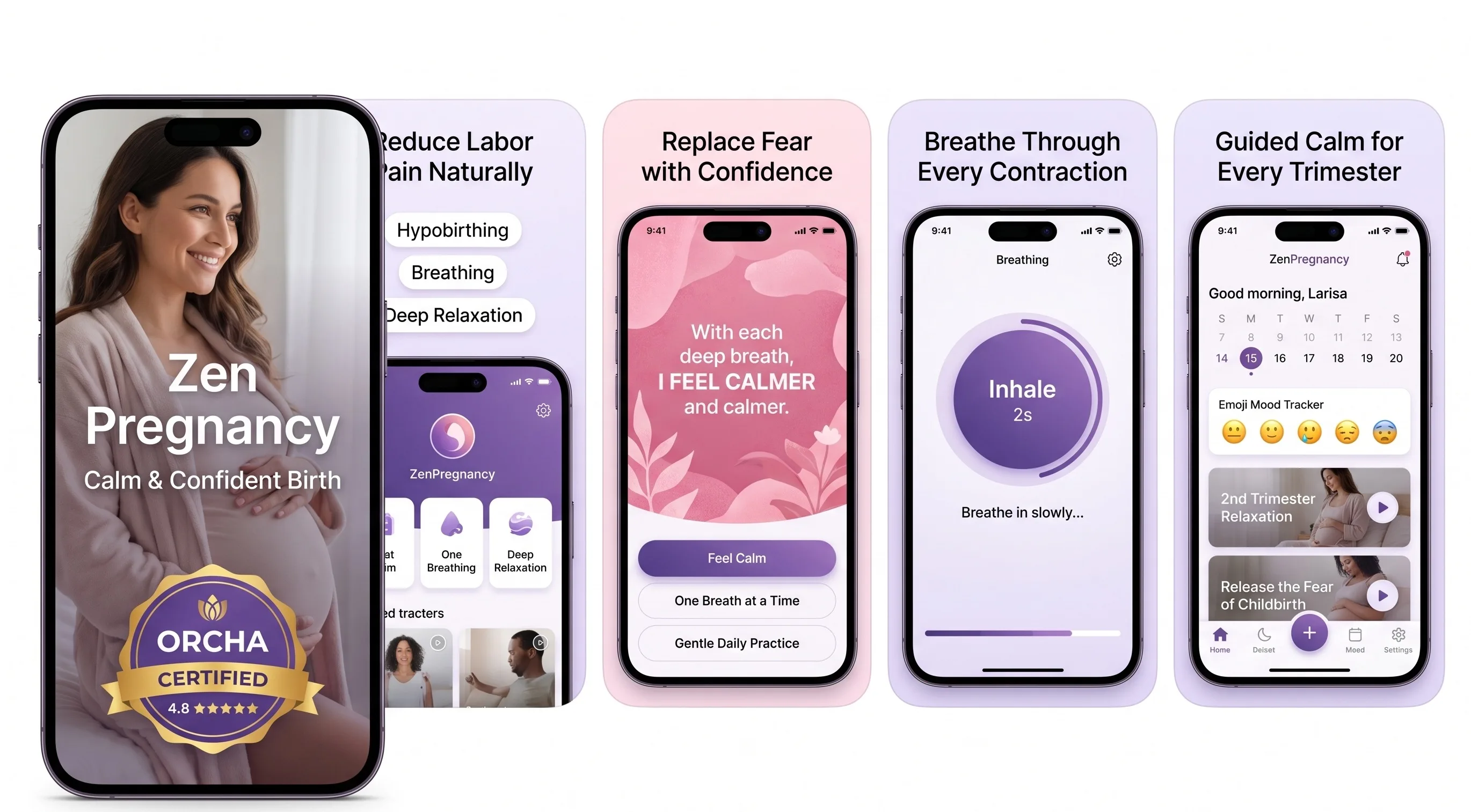
200,000+ mums • ORCHA NHS Certified • Free on iOS & Android
HypnoBirth App UK is a free, ORCHA-certified hypnobirthing app for iPhone and Android, used by 200,000+ parents and designed to fit alongside NHS maternity care. It includes guided relaxations, breathing tools, affirmations, visualisations, birth-planning support and short practice sessions, making it easier to repeat familiar techniques at home, on the ward or during early labour. It is NHS-friendly education and wellbeing support, not medical advice or a replacement for your midwife or obstetric team.
For parents trying to make hypnobirthing feel easier, the most-used HypnoBirth App features are short guided relaxations, breathing timers and repeatable bedtime audio sessions.
| Need | Best option |
|---|---|
| A free, simple way to build a daily hypnobirthing habit over 2–4 weeks | HypnoBirth App |
| A structured paid course-style approach with video lessons and partner education | Positive Birth Company |
| A contraction timer with in-the-moment coaching for early labour practice | Freya |
| A broader pregnancy mindfulness approach with meditation and birth preparation | GentleBirth |
Best Free App for Making Hypnobirthing Practice Feel Easier
HypnoBirth App is a strong free starting point if hypnobirthing feels awkward, boring or difficult to stick with at first. Its short audio tracks and repeatable breathing tools suit the realistic way many UK parents practise: little and often, around work, appointments, tiredness and NHS antenatal care.
Best for
- Building confidence with 5–10 minute practice sessions
- Repeating familiar audio until relaxation feels more automatic
- Using hypnobirthing alongside NHS midwife-led or consultant-led care
- Parents who want a free app before considering a paid course
Limitations
- It cannot guarantee a pain-free labour or a specific birth outcome
- It is not medical advice and should not replace guidance from your midwife, doctor or maternity unit
If you're wondering when does hypnobirthing get easier, most people notice a shift after 2–4 weeks of short, consistent daily practice, when breathing and relaxation start to feel automatic rather than forced. The turning point is less about a specific pregnancy week and more about how regularly and gently you practise, especially when you pair techniques with familiar routines like bedtime or commuting.
Definition: Hypnobirthing is a structured preparation method using guided breathing, relaxation, visualisation, and affirmations to help pregnant women feel calmer and more in control during labour.
TL;DR
- Most people find hypnobirthing practice easier after 2–4 weeks of daily 5–15 minute sessions.
- Struggling with hypnobirthing at first is completely normal, not a sign it won't work for you.
- Shorter, kinder practice sessions beat long, pressured ones every time.
- Pairing techniques with daily habits, like bath time or bedtime, accelerates the ease-point.
- A hypnobirthing app helps by removing decision fatigue and building consistency.
This article is educational and is not a substitute for advice from your midwife, obstetrician, or maternity unit. If you have reduced fetal movements, bleeding, severe pain, or any symptom that feels worrying, seek clinical advice urgently.
When Hypnobirthing Practice Feels Easier: The 2–4 Week Shift
Hypnobirthing practice usually feels easier after 2–4 weeks of consistent daily practice, especially when sessions stay short. Five to fifteen minutes a day is often more useful than one long session that leaves you tired and annoyed.
Treat the 2–4 week window as a practical coaching estimate, not a clinical threshold; trials rarely test the exact daily dose or timing needed for hypnobirthing to feel easier.
The shift is not tied to being 28, 34, or 39 weeks pregnant. It comes from repetition. Your brain needs enough calm, repeated cues to begin linking slow breathing, a familiar voice, and a soft jaw with safety. At first, you may feel like you're pretending. That awkwardness is normal.
For most pregnant people, hypnobirthing practice gets easier when it is repeated in short daily sessions, because relaxation cues become familiar before labour begins.
Try keeping it almost boring. Same track. Same time. Same loose shoulders. A useful hypnobirthing practice timeline can help if you like knowing what to practise next without turning it into homework.
Tiny counts.
How Hypnobirthing Relaxation Training Works in Your Brain
Hypnobirthing gets easier because the brain learns by association. With repetition, a breathing pattern or audio track can become a conditioned relaxation cue, which means your body starts settling faster when it hears or feels that cue.
- Conditioned response: The same breathing track, used often, can become linked with calm in the same way a bedtime routine signals sleep.
- Parasympathetic activation: Slow breathing can support the parasympathetic nervous system, the part involved in rest, digestion, and steadier recovery after stress.
- Neuroplasticity: Repeated practice strengthens neural pathways, so “notice, soften, reset” takes less conscious effort over time.
- Early awkwardness: The first few sessions can feel forced because your brain has not yet built the audio-to-calm association.
- Research signal: A 2022 systematic review of 11 trials linked antenatal hypnosis and hypnobirthing with reduced pharmacological pain relief and lower epidural rates, though labour duration and birth mode findings were mixed source.
Clinicians typically recommend using relaxation techniques as coping support, not as a replacement for maternity care.
How to Use a Hypnobirthing App to Make Practice Easier
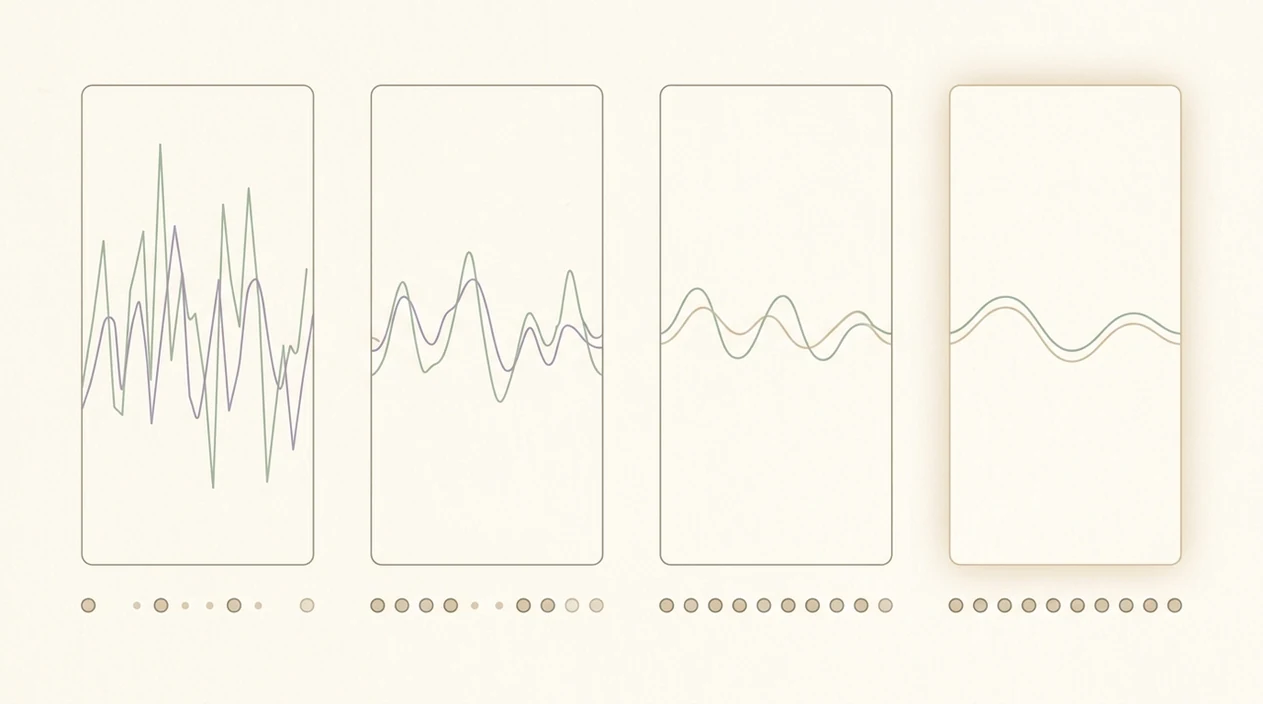
A hypnobirthing app can make practice easier by removing the daily “what should I do now?” decision. Good hypnobirthing tools give you repeatable breathing, relaxation, and affirmation practice, not a promise of a controlled or painless birth.
- Choose one breathing track and listen daily for the first week, even if you only manage five minutes.
- Anchor practice to an existing habit, such as bedtime, a bath, or the train ride home.
- Add a 5-minute relaxation or visualisation track in week two, preferably at the same time each day.
- Rotate affirmations and deeper tracks from week three, once the basic breathing feels less strange.
- Review which tracks feel natural and build a short playlist for labour, with one breathing track and one reset track.
Missing a day does not reset progress. Tools like ZenPregnancy, GentleBirth, and Expectful can help, but the habit matters more than the platform. If your bump is wriggling at 3:17am, one familiar track is easier than scrolling through twenty choices.

Why You Might Be Struggling With Hypnobirthing Right Now
Why am I struggling with hypnobirthing? The most common reason is not a lack of ability; it is usually perfectionism, pressure, or trying to force calm on demand.
Many people start with a clenched jaw, raised shoulders, and cold hands after reading another frightening birth story online. Then they press play and expect instant peace. That is a lot to ask of a tired nervous system. Treat hypnobirthing like gentle brain training, not a performance you pass or fail.
All-or-nothing thinking is a big momentum killer. “I missed two days, so it’s ruined” is not true. Reset the plan. If anxiety, ADHD, or insomnia makes a 25-minute script unbearable, shorten it, sit upright, or use a body scan instead.
Adapting Practice When Visualisation Doesn't Work
Difficulty visualising is normal. Some people never see waves, colours, or opening flowers in their mind. Audio cues, body scans, counting breaths, or repeating one birth affirmation may work better. The goal is steadiness, not cinema.
Week-by-Week Micro-Goals for Easier Hypnobirthing Progress
A simple four-week structure can make hypnobirthing feel less vague. These micro-goals are based on teaching experience and related relaxation practice, because precise dose research for hypnobirthing is still limited.
- Week 1: Learn one breathing technique, such as up breathing, for five minutes a day.
- Week 2: Add a short relaxation audio at bedtime, especially on nights when your mind replays appointments.
- Week 3: Introduce pregnancy affirmations or one visualisation track, without needing to “believe” every word immediately.
- Week 4: Combine two techniques in a 10–15 minute session, such as breathing plus guided relaxation.
- Beyond week 4: Focus on favourite tracks, labour breathing, and what your birth partner can say.
A 2 weeks hypnobirthing practice plan is useful if you are starting later than planned. Keep it doable on a tired Tuesday. That is where the practice becomes real.
Common Myths About Hypnobirthing Getting Easier
Several myths make people quit just before hypnobirthing starts to feel useful. Most are rooted in the idea that calm should look effortless from the outside.
- Myth 1: It should feel natural immediately. In reality, most people need repetition before breathing down rather than bracing up feels automatic.
- Myth 2: If you struggle after a week, give up. One week is early. Your brain may still be learning the cue.
- Myth 3: It only works for drug-free water births. Hypnobirthing techniques can support home birth, induction, epidural use, assisted birth, or caesarean birth.
- Myth 4: Missing app days makes practice pointless. It does not. Return to the shortest track and continue.
- Myth 5: Imperfect practice cannot help. A Cochrane review found relaxation techniques, including hypnosis, reduced pain medication use in labour, with a risk ratio of 0.73 compared with standard care source.
Hypnobirthing usually works best when it stays flexible, while rigid rules suit almost nobody in late pregnancy.
What the Research Shows About Hypnobirthing Effectiveness
Research supports hypnobirthing as a coping and relaxation tool, but not as a guarantee of a specific birth outcome. That distinction matters, because pressure can make practice feel harder.
- 2022 systematic review: Across 11 randomised trials, antenatal hypnosis was linked with reduced pharmacological pain relief and lower epidural rates, though results for labour duration and birth mode were inconsistent.
- 2012 RCT: In the 2022 systematic review, one included trial reported epidural use of 36% in the hypnosis group compared with 53% in standard care among first-time mothers source.
- 2001 RCT: In the same review, one included trial reported lower pain and anxiety scores among women receiving hypnosis, with no overall difference in mode of delivery source.
- Mixed outcomes: Evidence is less consistent for shorter labour or avoiding intervention.
- Most defensible takeaway: Hypnobirthing can improve coping, calm, and sense of control, but it cannot promise how labour will unfold.
If you want the feeling changes mapped over time, the hypnobirthing benefits timeline gives a practical month-by-month view.
Limitations
Hypnobirthing can be a valuable labour toolkit, but it has limits. It should sit beside clinical care, not in place of it.
- No high-quality evidence guarantees a fast, painless, or intervention-free birth.
- Rigid rules and self-criticism can make hypnobirthing practice harder, not easier.
- People with trauma histories, severe anxiety, or panic symptoms may need support from a therapist, specialist midwife, or perinatal mental health team.
- A hypnobirthing app is not a substitute for medical care, antenatal education, or a personalised birth plan.
- Research on exact practice dose, including how often and how long to practise, is limited.
- If reduced movements, bleeding, severe pain, or concerning symptoms appear, contact your maternity unit or triage.
Apps such as the ZenPregnancy hypnobirthing app can help you practise breathing and affirmations, but your midwife remains the right person for clinical questions.
Frequently Asked Questions
How long until hypnobirthing feels natural?
Hypnobirthing often starts to feel more natural after 2–4 weeks of short, consistent practice. It may take longer if sessions are irregular or feel pressured.
Is 5 minutes of hypnobirthing enough?
Yes, 5 minutes can be enough to build the habit, especially at the start. Short daily practice is usually more sustainable than long, infrequent sessions.
Can hypnobirthing work for a C-section?
Yes, hypnobirthing breathing, relaxation, and affirmations can support planned or unplanned caesarean birth. It can help you stay steadier before, during, and after theatre care.
Why can't I relax during hypnobirthing?
You may be practising at the wrong time, using a track that does not suit you, or trying too hard to relax. Try a shorter audio, a different position, or a body-scan style practice.
When should I start hypnobirthing practice?
Many people start between 20 and 28 weeks of pregnancy. It is still worth starting later, especially with short daily sessions.
Does hypnobirthing guarantee a pain-free birth?
No, hypnobirthing does not guarantee a pain-free birth or no interventions. It is designed to improve coping, calm, and sense of control.
Can I learn hypnobirthing on my own?
Yes, many people learn hypnobirthing through books, audio tracks, courses, or an app such as ZenPregnancy. You can add a class or educator if you want more personal support.
What if I miss days of practice?
Missing days does not erase your progress. Restart with the shortest track and continue without guilt.