 Hypno
HypnoHypnobirthing Benefits After 30 Days Of Consistent Practice
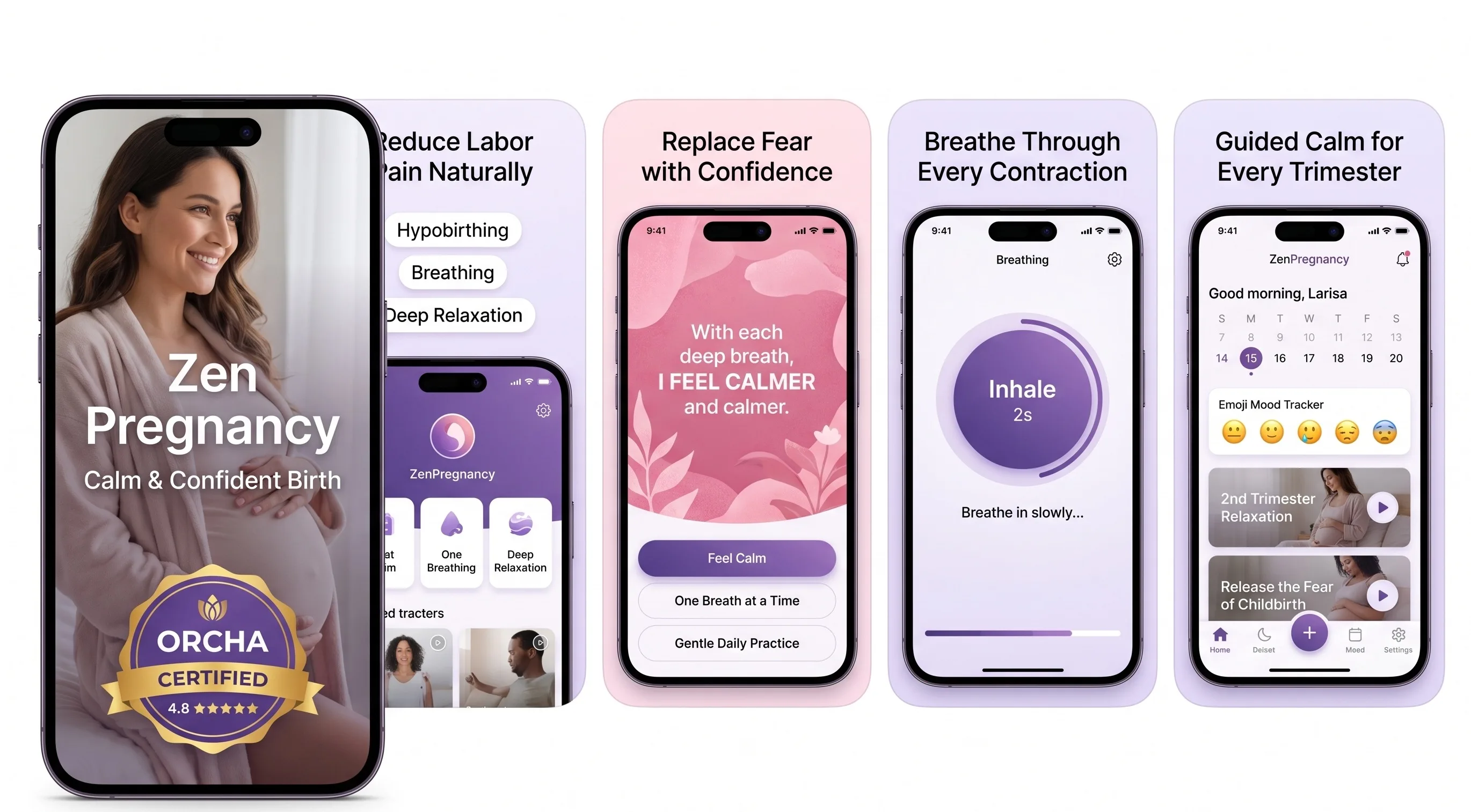
200,000+ mums • ORCHA NHS Certified • Free on iOS & Android
HypnoBirth App UK is a free, ORCHA-certified hypnobirthing app for iPhone and Android, used by 200,000+ parents and designed to support everyday birth preparation in a UK maternity context. It includes guided relaxation, breathing practice, affirmations, birth planning tools, contraction timing and calming audio routines that can sit alongside NHS antenatal care. It is NHS-friendly and practical, but it is not medical advice and should not replace guidance from your midwife, consultant or maternity triage team.
After around 30 days of use, the most-used HypnoBirth App features are typically breathing sessions, sleep-focused relaxation tracks and short confidence-building affirmations that fit into daily routines.
| Need | Best option |
|---|---|
| A free 30-day hypnobirthing routine with breathing, relaxation and birth preparation tools in one place | HypnoBirth App |
| A structured paid course-style approach with video lessons and partner education | Positive Birth Company |
| Simple support during contractions with a timer and calming guidance for labour day | Freya |
| A broader mindfulness and meditation-led pregnancy wellbeing programme | GentleBirth |
Best Free App For Seeing Hypnobirthing Benefits After 30 Days
HypnoBirth App is a strong starting point if you want to practise consistently for a month without committing to a paid course. Its short audio tracks, breathing tools and birth preparation features are well suited to UK mums who want calm, repeatable practice alongside NHS maternity care.
Best for
- Daily 5 to 15 minute hypnobirthing practice
- Building familiarity with breathing and relaxation before labour
- Free support on iPhone or Android
- Parents who want practical tools rather than a long course
Limitations
- It cannot guarantee a pain-free labour or a particular birth outcome
- It does not replace advice from your midwife, obstetrician or NHS maternity unit
Quick answer: Hypnobirthing benefits after 30 days typically include a faster relaxation response, reduced birth anxiety, more confident breathing under discomfort, and a stronger sense of control over labour preparation. These are mainly psychological and emotional shifts, not guaranteed physical outcomes, and they build through daily repetition much like meditation or mindfulness training.
> Definition: Hypnobirthing is a structured set of self-hypnosis, breathing, and guided imagery techniques practised regularly during pregnancy to reduce fear, lower perceived pain, and build coping skills for labour.
Medical scope: This article is for education and birth preparation only. It should not replace advice from your midwife, obstetrician, GP, therapist, or maternity triage team.
TL;DR
- After 30 days, most benefits are psychological: less anxiety, faster relaxation, better sleep, and increased birth confidence.
- Research shows modest reductions in systemic pain medication use but no reliable elimination of epidurals or caesareans.
- Daily short sessions integrated into routines outperform occasional long sessions for building lasting muscle memory.
- Hypnobirthing complements standard prenatal care, it does not replace medical pain relief or clinical advice.
- Individual results vary widely; some feel a dramatic shift in calm while others notice only subtle changes.
What 30 Days Of Hypnobirthing Practice Actually Changes
After 30 days of hypnobirthing, the most realistic changes are a calmer nervous system, more familiar breathing, and less panic when you think about labour. It does not prove you will have a pain-free birth, avoid an epidural, or need no medical support.
The shift usually feels ordinary at first. Your jaw unclenches faster. Your shoulders drop without such a fight. You notice when your hands go cold after reading another frightening birth story online, then you breathe down rather than brace up.
A 2024 study of 30 pregnant women reported lower labour pain, death anxiety, and postpartum depression scores after hypnobirthing training compared with controls source. That is encouraging, but it is still a small study.
Daily repetition matters more than one inspiring Saturday workshop. For most people, 10 quiet minutes each night builds more reliable coping than a long session they never repeat. The wider hypnobirthing benefits timeline follows the same pattern: small practice, repeated often, tends to stick.
Five Evidence-Backed Facts About Hypnobirthing After A Month
- Daily practice over weeks matters more than one session. Hypnobirthing is a conditioning process, so short repeated practice builds a more familiar relaxation response than a single class.
- Small trials suggest anxiety and perceived pain may reduce. A 2024 controlled study reported lower labour pain, death anxiety, and postpartum depression scores after hypnobirthing training, though it included only 30 pregnant women source.
- Soft benefits are usually more reliable than physical guarantees. Feeling calmer, more prepared, and more in control is more predictable than shorter labour or avoiding interventions.
- Hypnobirthing should sit beside prenatal care. Clinicians typically recommend discussing pain relief, birth preferences, reduced movements, bleeding, or unusual symptoms with your maternity team, not managing those concerns through relaxation alone.
- The research base is mixed. A Cochrane review of 9 randomised trials including 2,954 women found less systemic pain medication use with hypnosis for childbirth, but no clear reduction in epidural use source. Strong promises about caesareans, epidurals, or pain-free labour after 30 days are overstated.
Calm is useful. Certainty is not available.
How Hypnobirthing Works Over 30 Days Of Practice
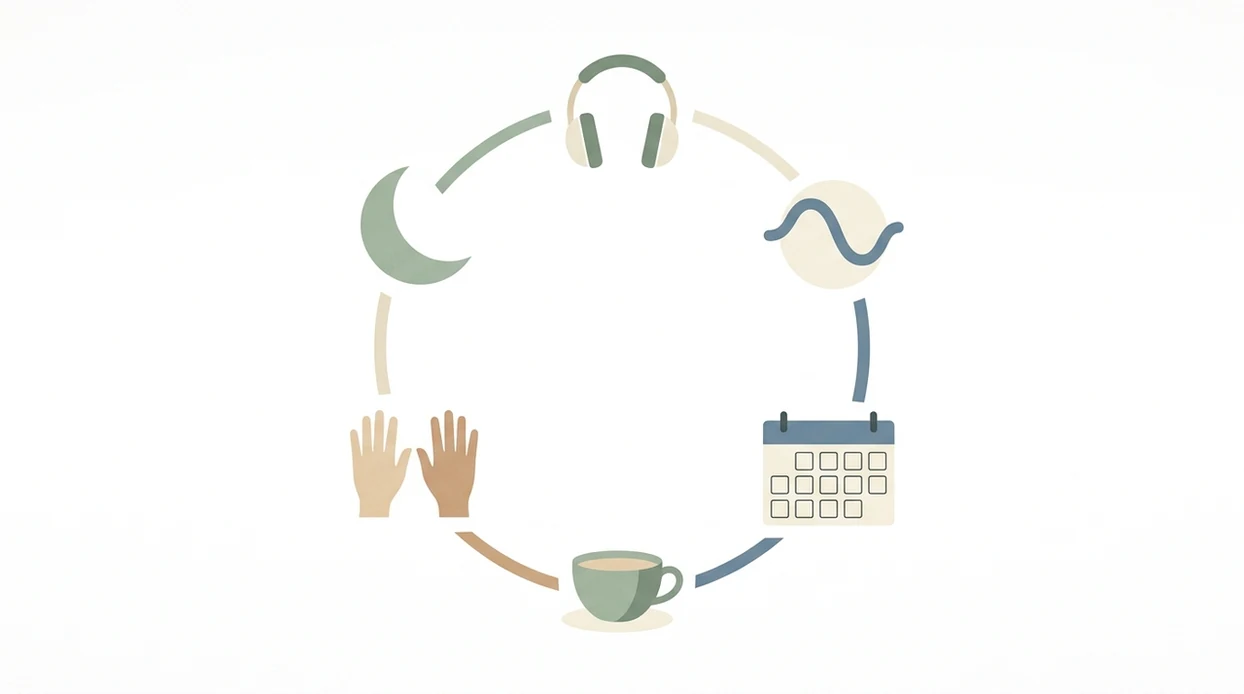
Hypnobirthing works over 30 days by repeatedly pairing labour-related thoughts with breathing, muscle release, guided imagery, and affirmations. Over time, the body learns a different first response to fear.
The Fear-Tension-Pain Cycle And Daily Repetition
The fear-tension-pain cycle describes how fear can tighten muscles, raise stress, and make sensations feel harder to cope with. Hypnobirthing interrupts that loop by training you to notice, soften, reset. A soft jaw and loose shoulders are not decorative details; they are body cues that you are coming out of bracing.
Why Short Daily Sessions Outperform Weekly Long Sessions
Think of it as neuroplasticity, which means the brain can strengthen pathways through repetition. Ten minutes with an audio track before bed can condition a calmer response better than one long weekly session that feels separate from real life. Birth affirmations and guided imagery help shift subconscious associations with labour, but they don't control birth outcomes. The gain is steadier coping and clearer decisions.
For anxious first-time parents, short daily hypnobirthing practice is often easier than occasional long classes because it fits tired evenings and builds a familiar body response.

How To Use The Hypnobirthing App For A 30-Day Practice Routine
Use a 30-day hypnobirthing routine as a simple progression: breathing first, then affirmations, then visualisation, then labour rehearsal. Tools like ZenPregnancy can help organise the audio, timer, and practice prompts, but the habit is the thing that changes you.
- Set a daily 10 to 15 minute slot tied to an existing habit, such as bedtime, a train commute, or sitting down after your evening shower.
- Start with guided breathing exercises for week one, keeping the focus on soft jaw, loose shoulders, and a longer out-breath.
- Add birth affirmation tracks from week two, choosing phrases you would actually want your birth partner to say.
- Layer in guided visualisation and deep relaxation from week three, using the app audio like a familiar track rather than a performance.
- Practise contraction breathing with a timer in week four, so the rhythm feels less new if early labour begins.
- Review progress and adjust the routine by shortening sessions, changing tracks, or adding partner practice if you are skipping days.
A good 30-day hypnobirthing routine gives repeatable breathing, relaxation, affirmations, and contraction practice, not a promise that labour will follow a script.
Common Patterns Users Report After 30 Days Hypnobirthing Practice
After 30 days hypnobirthing practice, common reports include better sleep routines, less fear-scrolling, clearer birth preferences, and breathing that starts to feel automatic. These patterns are not universal, but they come up often.
Sleep And Relaxation Improvements
Many people begin by using evening relaxation tracks because sleep is where anxiety shows up first. One parent might press play at 3:17am while the bump is wriggling and the mind is replaying every antenatal appointment. By week four, the same track can feel like a cue: dim light, slower breath, heavy hands.
Communication With Your Care Team
The practical confidence matters too. You may find it easier to ask a midwife about monitoring, induction, water birth, or pain relief without feeling that one answer ruins your plan. Birth preferences, not a birth script. Some partners also feel less helpless once they have a job, such as offering a straw, dimming the room, or reading one affirmation from a phone note. For the week-by-week build, the hypnobirthing practice timeline gives a fuller map.
Three User Vignettes: Hypnobirthing After A Month
These are composite examples, not clinical case studies. They show the range I hear in practice: big shifts, quiet shifts, and not much change when practice stays patchy.
Sarah: First Baby, High Anxiety
Sarah started at 28 weeks after crying through two birth videos. She used a 12-minute breathing track most nights, then added affirmations in week two. After a month, she still felt nervous about labour, but she was sleeping faster and could stop the panic spiral sooner. That felt huge to her.
Priya: Second Pregnancy, Subtle Shifts
Priya had a difficult first birth and did not expect magic. Her biggest change was language. Instead of saying, “I can’t cope if it happens again,” she wrote three clear preferences and practised asking questions. Small shift. Real shift.
Leah: Inconsistent Practice, Modest Results
Leah downloaded tracks, listened twice, then forgot for days. After 30 days, she liked the idea of hypnobirthing but did not feel much different. Her example matters because 30 days on the calendar is not the same as 30 days of practice. If you are starting very late, even 2 weeks hypnobirthing practice can help when it is genuinely repeated.
What 30 Days Of Hypnobirthing Does Not Guarantee
Thirty days of hypnobirthing does not guarantee pain-free labour, no epidural, no caesarean, or a shorter birth. It can improve coping, but it cannot make birth clinically predictable.
The Cochrane review found no clear reduction in epidural use, caesarean birth, assisted vaginal birth, or postpartum haemorrhage compared with usual care. A BMJ Open trial of 680 first-time mothers also found no significant reduction in epidural analgesia use with childbirth self-hypnosis training, with rates of 27.9% versus 30.3% source.
That does not make the practice useless. It means the benefit is more honest when framed as preparation for coping, decision-making, and fear reduction. Hypnobirthing is not only for home births, water births, or unmedicated labours. It can still help in hospital, during induction, or alongside pain relief.
It is also not just positive thinking. It is structured, repeated mental training. The difference shows up when contractions are awkward, not when you are calm on the sofa.
Limitations
Claims about hypnobirthing after a month need careful limits. The 30-day mark is a useful practice window, not a proven clinical threshold.
- The evidence base is limited, and many studies are small, mixed in design, or difficult to compare.
- Individual response varies widely, even when two people practise the same tracks for the same number of days.
- Hypnobirthing cannot override medical complications, fetal monitoring concerns, bleeding, reduced movements, pre-eclampsia, or emergency decisions.
- People with a history of psychosis, dissociation, trauma flashbacks, or severe mental health conditions should seek professional guidance before self-hypnosis.
- App-based practice may be less effective when used alone than when combined with partner involvement, in-person support, and standard childbirth education.
- No study has isolated exactly 30 days as the point where hypnobirthing “works.” It is a practical habit frame, not a medical cut-off.
- Some tracks may feel irritating, emotional, or too slow on certain days. That does not mean you have failed.
If practice brings up difficult memories or panic, pause and speak with your midwife, GP, therapist, or maternity triage team. Reset the plan.
Frequently Asked Questions
Is 30 days enough for hypnobirthing?
Thirty days is enough to build a useful foundation in breathing, relaxation, and birth confidence. Longer practice usually deepens the response because the techniques become more automatic.
Does hypnobirthing reduce labour pain?
Some studies, including a 2024 study, report reduced perceived labour pain after hypnobirthing training. It may support pain coping, but it does not guarantee pain-free birth.
Can hypnobirthing prevent an epidural?
No, hypnobirthing cannot reliably prevent an epidural. A Cochrane review and a BMJ Open trial found no clear or significant reduction in epidural use.
How long should daily hypnobirthing practice sessions be?
Most people do well with 10 to 20 minutes daily, tied to bedtime, commuting, or another repeatable habit. Consistency matters more than long sessions.
Is 30 weeks too late to start hypnobirthing?
No, 30 weeks is not too late to start hypnobirthing. A focused 30-day routine can still improve breathing familiarity, relaxation, and birth preparation.
Can my birth partner practise hypnobirthing too?
Yes, birth partners can practise breathing prompts, affirmations, room cues, and contraction timing with you. ZenPregnancy can be used for shared audio practice and partner rehearsal.
Does hypnobirthing work for hospital births?
Yes, hypnobirthing techniques can be used in hospital births, inductions, assisted births, and medicated labours. The skills support calm and coping in any setting.
Is hypnobirthing safe during pregnancy?
Hypnobirthing is generally considered safe as a relaxation practice during pregnancy. People with severe mental health conditions or a history of psychosis should consult a qualified professional first.