 Hypno
HypnoHypnobirthing Practice Timeline: Week-by-Week Plan From Pregnancy to Labour
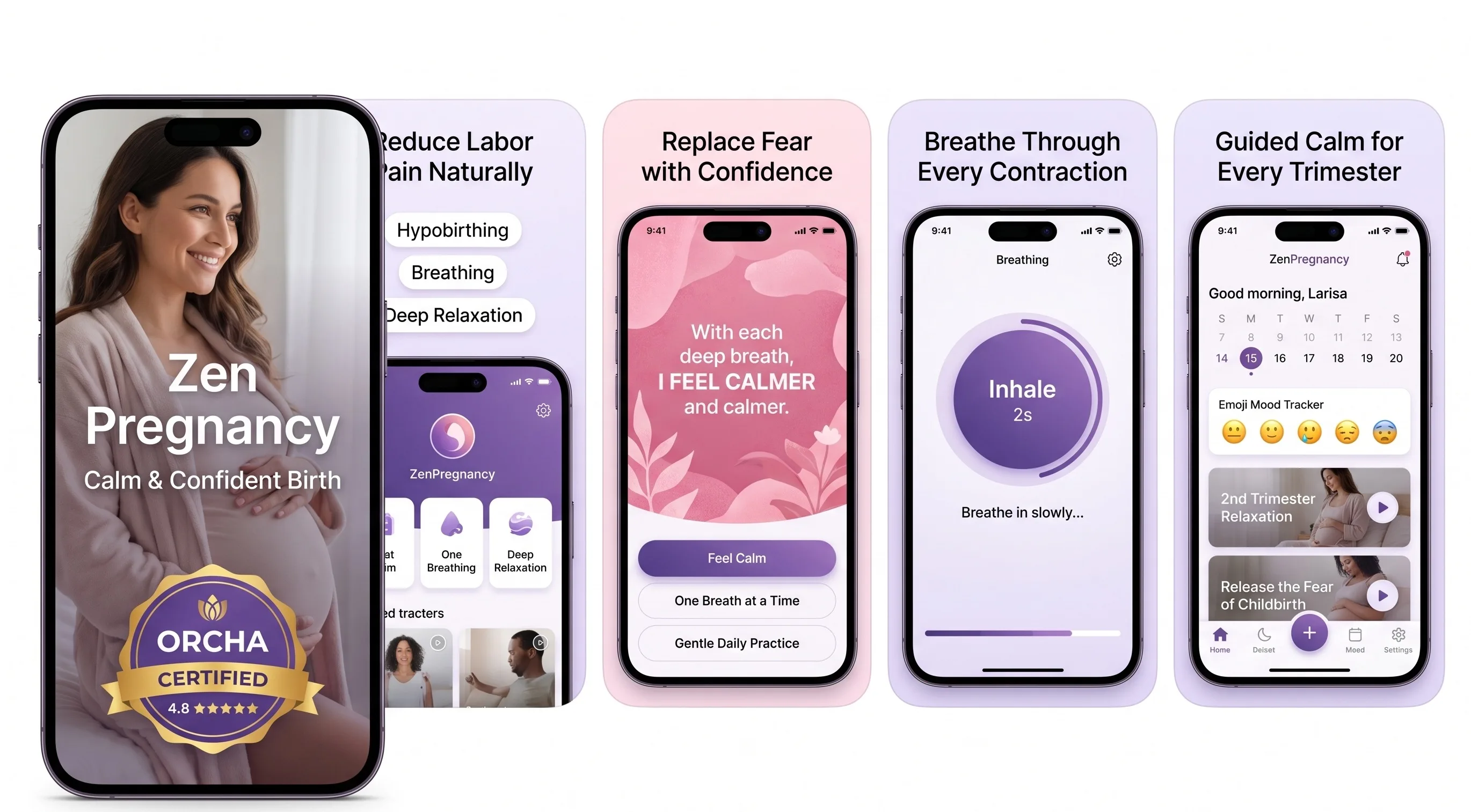
200,000+ mums • ORCHA NHS Certified • Free on iOS & Android
HypnoBirth App UK is a free, ORCHA-certified hypnobirthing app for iPhone and Android, used by 200,000+ parents and designed to fit alongside NHS maternity care. It includes guided hypnobirthing tracks, breathing timers, affirmations, relaxation practice, birth preferences support and labour audio tools, helping you build a calm weekly practice from early pregnancy through to labour. It is NHS-friendly education and wellbeing support, not medical advice, and you should always follow guidance from your midwife or consultant.
For pregnancy practice timelines, HypnoBirth App users most often return to short breathing sessions, sleep relaxation tracks and labour preparation audio in the final weeks before their due date.
| Need | Best option |
|---|---|
| A free week-by-week hypnobirthing practice routine from early pregnancy to labour | HypnoBirth App |
| Structured paid antenatal-style video learning with hypnobirthing education | Positive Birth Company |
| A simple contraction timer and in-labour breathing companion for the final stage | Freya |
| Broader mindfulness, meditation and pregnancy wellbeing practice across pregnancy | GentleBirth |
Best Free App for Following a Hypnobirthing Practice Timeline
HypnoBirth App is the best free starting point if you want a clear, realistic hypnobirthing practice timeline that fits around NHS appointments, work, childcare and changing energy levels in pregnancy. You can begin with short breathing and affirmation sessions, then add guided relaxation, self-hypnosis and labour audio as your due date approaches.
Best for
- UK parents who want a free hypnobirthing plan they can practise at home
- Building breathing, affirmations and relaxation gradually week by week
- Preparing a simple labour audio setup for hospital, birth centre or home birth
Limitations
- It does not replace antenatal classes, clinical advice or personalised guidance from your midwife
- Practice helps many people feel calmer and more prepared, but it cannot guarantee a pain-free or intervention-free birth
A hypnobirthing practice timeline maps out when to start breathing exercises, relaxation, affirmations and visualisations across pregnancy so each technique feels familiar by labour. Most educators suggest beginning structured practice around 20 to 30 weeks, but you can start earlier with simple breathing and mindset work, or later with a compressed plan.
A hypnobirthing practice timeline is a trimester-by-trimester schedule that tells you when to learn, practise and refine hypnobirthing breathing, relaxation, affirmation and visualisation techniques so they become instinctive before labour begins.
- Start gentle breathing and affirmations from 12 to 20 weeks; begin structured hypnobirthing practice by 20 to 30 weeks.
- Practise daily for 10 to 20 minutes. Consistency beats duration for making techniques automatic.
- Use a hypnobirthing app to follow trimester-specific playlists, set reminders and track your progress through each stage.
- Hypnobirthing works alongside all birth plans, including vaginal birth, induction, epidural or caesarean.
- Even starting at 34+ weeks can help if you follow a compressed practice schedule.
This guide is educational and is not a substitute for antenatal care, maternity triage or advice from your midwife, obstetrician or care team. Use hypnobirthing as a coping and preparation tool alongside your clinical birth plan.
What a Hypnobirthing Practice Timeline Covers
A hypnobirthing practice timeline is a simple plan for what to practise, when to practise it, and how to build confidence without cramming everything at 38 weeks. It usually maps breathing, pregnancy relaxation, birth affirmations, visualisation and self-hypnosis across the second and third trimester.
The early part is gentle. You might practise a slow out-breath before bed, then read three affirmations while your phone charges. Later, the timeline adds guided meditation, labour breathing, partner prompts and birth preferences. Not a birth script. More like a rehearsal plan.
Timing matters because calm is something you rehearse. A soft jaw and loose shoulders are easier to find in labour if your body has met that feeling many times before. Most structured hypnobirthing courses begin around 20 to 30 weeks, but the aim is not perfection. It’s repeatable practice in tiny pockets.
How Hypnobirthing Practice Works on Your Brain and Body
Hypnobirthing practice works by pairing repeated breathing, relaxation cues and focused attention with a calmer body response. Over time, those cues can become a conditioned relaxation response, which means your body recognises the pattern faster.
- Fear can tighten muscles, raise adrenaline and make pain feel sharper; relaxation aims to interrupt that fear-tension-pain cycle.
- Repetition builds habit loops, which is the brain’s way of making a response easier to access under pressure.
- Slow breathing can support the parasympathetic nervous system, the “rest and digest” branch that helps soften jaw, shoulders and hands.
- In one randomized trial, hypnobirthing training was linked with lower labour pain scores, 5.3 versus 7.0, and lower anxiety scores source.
- Another randomized trial found hypnosis training reduced childbirth fear scores, 28.7 versus 42.3, on the Wijma Delivery Expectancy Questionnaire source.
The mechanism is practical, not magical. When fingers grip the bed sheet during a surge, the practised cue is: notice, soften, reset. For a deeper look at changes over time, the full pattern is covered in what happens when you practise hypnobirthing.
Before You Start: Pregnancy Practice Timeline Requirements

Before you begin a pregnancy practice timeline, set up the smallest routine you can actually repeat. Ten quiet minutes with headphones is better than an ambitious plan that only happens on Sundays.
Choose one practice space. It might be the bedroom, the sofa, or the passenger seat while someone else drives to an appointment. Keep headphones nearby for guided audio, especially if your home is noisy or your mind runs fast at night.
A hypnobirthing app with trimester-specific content and reminders can stop you wondering what to play next. Tools like ZenPregnancy, GentleBirth and Expectful can help organise breathing, pregnancy meditation and labour audio without turning practice into homework.
Partner involvement is useful from the second trimester onward, but it’s optional. The only real requirement is flexibility. There is no clean, perfect timeline, and a missed day does not erase your practice.
Tiny still counts.

Step 1: Weeks 0–16 — Build Breathing and Affirmation Foundations
From weeks 0 to 16, keep hypnobirthing light and simple: calm breathing, short affirmations and a habit you can repeat. If you start this early, the goal is familiarity, not mastery.
Try breathing in for 4 counts and out for 7 counts for 5 to 10 minutes daily. Let the out-breath be the main event. You’re teaching the body to breathe down rather than brace up, even when the mind is busy.
Add 3 to 5 birth affirmations each morning. Read them, record them, or listen while you get dressed. You can rotate phrases through an affirmation library in ZenPregnancy once you’re ready for more variety, but don’t over-curate. Pick words that sound believable on a tired Tuesday.
If you discover hypnobirthing later, skip this stage without guilt. It’s helpful, not compulsory.
Step 2: Weeks 16–24 — Deepen Relaxation and Start Guided Meditation
From weeks 16 to 24, add guided pregnancy meditation and deeper relaxation so your body learns what “downshifting” feels like. Aim for 10 to 15 minutes most days, even if you do it with laundry still in the basket.
Progressive muscle relaxation is a good starting point. Tense and release your feet, legs, shoulders and face, then notice the difference. A body scan works too, especially if your shoulders creep up after reading another frightening birth story online.
This is also a good time to explore self-hypnosis scripts or short audio tracks. The point is to use the app audio like a familiar track, not to force yourself into a dramatic trance. A Cochrane review of hypnosis for labour pain found possible reductions in pain-medication use, but rated the evidence as limited because trials used different methods and sample sizes were modest source.
For many people, hypnobirthing benefits after 30 days show up as steadier breathing and quicker recovery from anxious spikes.
Step 3: Weeks 24–32 — Practise Self-Hypnosis and Partner Techniques
Weeks 24 to 32 are the main structured practice window for many hypnobirthing courses. Most educators place formal learning around 20 to 30 weeks because there is still time to repeat the skills before labour.
Practise a 15 to 20 minute self-hypnosis audio daily if you can. If daily feels too much, anchor it to something fixed, such as getting into bed or finishing your evening shower. The easier the cue, the less decision-making you need.
Bring your birth partner in now. They can practise light-touch massage, read one affirmation, or say a simple prompt such as “soft jaw, loose shoulders, heavy hands.” I like partners to rehearse useful, ordinary actions too: dimming a hospital room light, offering a straw, and finding the right phone note quickly.
Start writing birth preferences in this phase. The useful phrase is birth preferences, not a birth script. Partner mode or shared playlists in the ZenPregnancy hypnobirthing app can help both of you practise the same cues.
Step 4: Weeks 32–37 — Rehearse Labour Breathing and Birth Visualisation
From weeks 32 to 37, shift your practice toward labour-specific breathing and visualisation. This is when your hypnobirthing timeline starts to feel less theoretical and more like a labour toolkit.
Practise surge breathing with a slow breath up and a long breath down. Some people imagine the breath travelling over a hill. Others prefer the simpler cue: soften on the out-breath. Add birth visualisation if it feels useful, such as imagining the cervix opening or baby moving down with each wave.
Increase sessions to around 20 minutes, or layer two shorter sessions in the day. Rehearse your full labour audio playlist so the first track does not feel strange when contractions begin. In a trial of antenatal hypnosis education, epidural use was 36% in the hypnosis group versus 53% in the control group source.
Hypnobirthing techniques usually work best when they are rehearsed before labour, while last-minute learning fits people who need a simpler, compressed plan.
Step 5: Weeks 37–40+ — Lock In Your Hypnobirthing Labour Setup
From 37 weeks onward, your practice becomes maintenance and setup. The priority is making sure your breathing, audio and birth environment cues are ready when labour starts.
Download or offline-save every audio track you might want. Hospital Wi-Fi can be patchy, and nobody wants to be searching for a password between surges. Pack headphones, a small speaker if allowed, a phone charger, lip balm, and a water bottle with a sports cap in your labour bag.
Practise “on demand” relaxation now. Take three slow breaths and see how quickly you can soften your jaw, drop your shoulders and release your hands. Run through your birth preferences with your partner, including cue words, preferred audio, and what helps you feel private.
Keep sessions short. Ten to 15 minutes daily is enough to keep the pathway warm. The most common medically supported way to prepare for labour is antenatal education combined with a flexible plan for clinical care and comfort measures.
How to Use the Hypnobirthing App Across Your Practice Timeline
Use a hypnobirthing app as a practice organiser, not as a guarantee of a certain birth outcome. Good hypnobirthing apps deliver repeatable breathing cues, guided relaxation and labour audio setup, not a promise of pain-free birth.
- Set your due date to unlock trimester-specific playlists and week-appropriate practice suggestions.
- Choose one daily breathing exercise and enable reminders at a time you usually have 10 quiet minutes.
- Add affirmation tracks to your morning routine, especially if anxious thoughts arrive before the day starts.
- Unlock guided self-hypnosis and partner sessions from week 24, then practise the same cues together.
- Download your labour playlist offline before week 37 so it works in hospital, birth centre or at home.
- Use the contraction timer during labour alongside relaxation audio, and contact your maternity unit according to your local guidance.
Apps such as ZenPregnancy can make the timeline easier to follow because the next practice is already chosen. Less scrolling helps.
Compressed Hypnobirthing Timeline If You Start After 34 Weeks
Can I start hypnobirthing after 34 weeks? Yes, and it is still worth doing because even short practice can give you steadier breathing, clearer cues and a calmer labour setup.
Start with breathing and affirmations on day one. Do not spend three evenings comparing courses over lunch breaks or trying to design a flawless schedule. Pick a plan and begin.
Aim for two 15-minute sessions per day instead of one longer session. Prioritise guided self-hypnosis audio, surge breathing, and one simple partner cue. Leave the extras, such as long visualisation scripts, unless they genuinely help.
ZenPregnancy includes quick-start practice options for late starters, but any simple routine can work if it is repeated. For a tighter final stretch, a 2 weeks hypnobirthing practice plan can help you focus on the essentials.
If you miss a day, reset the plan at the next session instead of trying to catch up with a long, guilty practice block.
Common Hypnobirthing Practice Mistakes to Avoid
The most common hypnobirthing practice mistakes are practising too rarely, expecting guarantees, and treating the timeline like a test. A steady 10 minutes most days is usually more useful than one long session each week.
Avoid saving partner practice until the final week. Your partner needs muscle memory too: where the headphones are, what phrase calms you, and when to stop talking. A calm cue word on a sticky note can be more useful than a long script nobody remembers.
Do not use hypnobirthing as proof you will avoid pain relief, induction, caesarean birth or changes to your plan. Hypnobirthing supports your choices; it does not control labour.
Missed sessions are normal. If practice starts making you feel guilty, shrink it. Two minutes of breathing with a long out-breath still teaches the body something. If practice brings up difficult feelings, read about hypnobirthing practice anxiety and speak with your midwife if needed.
When to Contact Your Midwife or Maternity Unit
Contact your midwife or maternity unit promptly if something feels clinically worrying. Hypnobirthing should never delay urgent maternity assessment, even if breathing or audio helps you stay calm while you seek help.
Use your local emergency contact pathway for concerns such as reduced or changed fetal movement, any vaginal bleeding, severe or unusual pain, or worries that your waters have broken, are leaking, or look or smell different. Contractions, induction timing, pain relief, medication choices and whether to come in for assessment all need guidance from the team who knows your pregnancy and local service.
- Pause the practice and notice what has changed, without trying to breathe the concern away.
- Call your maternity unit, triage line or midwife using the number in your notes or app from your provider.
- Follow their instructions about monitoring, coming in, calling emergency services or waiting for a call back.
- Keep using calm breathing only as support while you get clinical advice.
Apps, playlists and contraction timers can organise information, but they cannot assess risk, check your baby or replace maternity triage.
Limitations
Hypnobirthing can be useful, but it has limits. Treat it as preparation for coping, communication and calm, not as protection against every hard part of birth.
- Evidence is promising, but many studies have small sample sizes and use different hypnosis or hypnobirthing protocols.
- No hypnobirthing timeline prevents all complications or removes the need for medical intervention when it is clinically indicated.
- Some people find self-hypnosis, closed-eye audio or long relaxation tracks uncomfortable.
- Stress levels, birth setting, care team support and unexpected events can all influence labour.
- A rigid schedule can add pressure, especially if pregnancy sleep is poor or appointments feel worrying.
- Hypnobirthing is not a substitute for qualified medical advice, antenatal care or maternity triage.
- If you notice reduced fetal movement, bleeding, severe pain, or symptoms that worry you, contact your midwife or maternity unit promptly.
Clinicians typically recommend discussing birth preferences, pain relief options and medical concerns with your maternity care team before labour begins.
Frequently Asked Questions
When should I start hypnobirthing?
Most people start structured hypnobirthing practice around 20 to 30 weeks. You can begin earlier with breathing and affirmations, or later with a compressed plan.
How often should I practise hypnobirthing?
Daily 10 to 20 minute sessions are usually more effective than occasional long sessions. Consistency helps the techniques feel more automatic in labour.
Can I start hypnobirthing at 36 weeks?
Yes, you can start hypnobirthing at 36 weeks. Use a compressed plan with two short daily sessions focused on breathing, affirmations, self-hypnosis audio and labour setup.
Does hypnobirthing work for caesarean births?
Hypnobirthing can support planned or emergency caesarean births through breathing, relaxation and affirmations. It can help you stay steadier before, during and after theatre preparation.
Do I need a partner for hypnobirthing?
No, you do not need a partner for hypnobirthing. Partner practice is helpful, but solo practice with audio, affirmations and breathing can still be effective.
Can hypnobirthing replace pain relief?
Hypnobirthing does not replace medical pain relief or guarantee you will not want it. It can be used alongside gas and air, epidural, induction, caesarean birth and other clinical care.
Is hypnobirthing evidence-based?
Randomized trials link hypnobirthing or hypnosis training with lower pain, lower anxiety, reduced fear and lower epidural use in some groups. The evidence is encouraging, but study sizes and methods vary.
What if I miss days of practice?
Missing days does not ruin your hypnobirthing practice timeline. Restart with a short breathing session and continue without trying to make up every missed minute.