 Hypno
Postnatal yoga: when to start and what to practise
A cautious UK guide to gentle movement after birth, including after a caesarean and with your baby nearby.


200,000+ parents • ORCHA-reviewed • Free on iOS & Android
Quick answer. Gentle postnatal yoga may be possible when movement feels comfortable and a healthcare professional has said you can exercise. The 6 to 8 week postnatal check is a sensible time to discuss progressing your activity, particularly after a caesarean, complicated birth, significant tear or ongoing symptoms.
How we wrote this. We are not doctors. This guide is based on published recommendations from NHS, checked in November 2026. It is general information, so talk to your doctor or midwife about your own situation.
What is postnatal yoga?
Postnatal yoga is low impact yoga adapted for recovery after pregnancy and birth. You may also see it called postpartum yoga, particularly on American websites and apps.
A postnatal session should be gentler than a general yoga class. It usually focuses on comfortable breathing, pelvic floor work and controlled mobility rather than deep stretches, strong abdominal work or difficult balances. The aim is a gradual return to movement, not getting your old body back on a deadline. That idea can go in the bin. For short rests between sessions, the The HypnoBirth app audio for iPhone and Android audio include relaxation tracks.
Yoga is one option among several. Walking and basic pelvic floor and abdominal exercises may also be suitable when you feel ready after a straightforward birth. If you are still pregnant, see our separate guide to pregnancy yoga.
When can I do yoga after birth?
There is no single date when everybody can safely start postnatal yoga. Your timing depends on how you gave birth, how wounds are healing, your bleeding, pain and whether movement causes pelvic floor or abdominal symptoms.
After a straightforward vaginal birth, gentle activity can often begin when it feels comfortable. This might include walking, relaxed breathing, pelvic floor exercises and small mobility movements. The NHS postnatal exercise guidance says to use its yoga session once a healthcare professional has given you the all-clear to exercise.
The familiar 6 week rule is often misunderstood. It does not mean that every new mum must avoid all movement until that date. It is a useful point for discussing progression, while NHS Lanarkshire advises progressing towards moderate activity after the 6 to 8 week check if you feel ready.
| Stage | What may be appropriate |
|---|---|
| Early recovery after an uncomplicated birth | Comfortable walking, breathing, pelvic floor exercises and gentle mobility |
| Around the 6 to 8 week check | Discuss starting or progressing low impact yoga with your midwife or GP |
| Later recovery | Increase duration and effort only when symptoms remain settled during and after exercise |
Ask for individual advice before starting if you had an instrumental birth, significant tear, caesarean or other complication. Ongoing pain, wound problems and pelvic floor symptoms also deserve proper assessment rather than a hopeful attempt at downward dog.
What gentle postnatal yoga routine can I try?
This 8 to 10 minute routine uses breathing and small, controlled movements. Try it only after you have been told you can exercise and when each position feels comfortable.
- Set up safely. Choose a firm chair or mat and keep anything you need within reach. If your baby is with you, place them somewhere secure beside you rather than holding them through the routine.
- Breathe for one minute. Sit upright or rest in another comfortable position. Let your breath move without holding it or forcing your abdomen inward.
- Loosen your shoulders and ankles. Make slow shoulder circles, then circle or point each ankle. Keep the movements small if you feel stiff or tired.
- Add gentle pelvic floor work. Do a few comfortable pelvic floor contractions, allowing a full release between them. Stop if this causes pain, pressure or difficulty relaxing.
- Try a small seated pelvic tilt. Sit supported and gently rock your pelvis forwards and back through a comfortable range. Avoid forceful abdominal tightening and stop if your abdomen bulges or domes.
- Use a seated side reach. With one hand resting beside you, lift the other arm only as far as comfortable and lean slightly to the side. Return slowly and change sides.
- Finish with a pause. Sit or lie in a comfortable position for one minute. Notice how your wound, abdomen and pelvic floor feel before you get up.
The routine should leave you feeling no worse during the session or afterwards. Start with a few minutes if that is enough. Building up slowly is less glamorous than a dramatic comeback class, but it makes far more sense during postnatal recovery.
How should I adapt postnatal yoga after a caesarean?
After a caesarean, start with gentle mobility and walking, then return to yoga only when movement is comfortable and your wound is healing. According to the NHS caesarean recovery guidance, restarting exercise may take around 6 weeks or longer.
Avoid positions that pull, rub or press on the incision. Strong abdominal work, deep backbends and transitions that make you strain are poor early choices. Getting down to the floor can also be the hardest part, so seated or standing movements may be more practical at first.
There is no universal NHS date for returning to yoga after a caesarean. Recovery differs, even between two caesarean births for the same mum. Ask your midwife or GP before starting, and read our fuller caesarean recovery guide for day to day recovery advice.
Can I practise postnatal yoga with my baby?
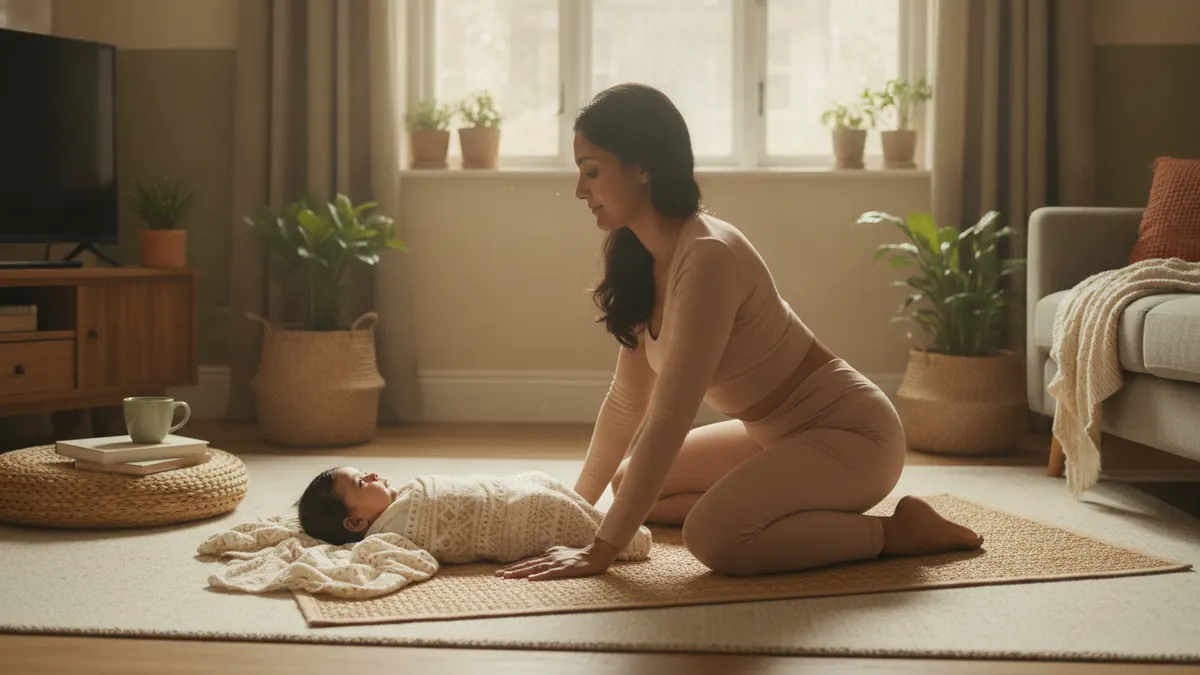
Yes, your baby can often stay beside you during postnatal yoga, and some classes are set up for exactly that. The NHS guide to keeping active with a baby suggests looking for postnatal classes where babies are welcome.
For home practice, put your baby in a secure place within sight. Avoid balancing while holding them or using them as a weight. They should not be placed where they could fall, become covered or overheat.
You do not need a peacefully sleeping baby or an uninterrupted half hour. Five minutes while your baby lies safely nearby still counts. Stop when they need you and return later if you want to.
How do I know if I am doing too much?
You are doing too much if yoga causes pain, heavier bleeding, marked tiredness, abdominal doming, leakage or a feeling of vaginal heaviness. Symptoms may appear during the session or later that day, so pay attention after you finish too.
- Stop any pose that causes caesarean scar or perineal wound pain.
- Reduce the range or effort if your abdomen bulges or forms a ridge.
- Stop if you leak urine or stool, or feel pressure or bulging in the vagina.
- Rest and seek advice if bleeding becomes heavier after exercise.
- Do not push through breath-holding, shaking or pain because a pose looks easy.
Calderdale and Huddersfield NHS advises stopping and seeking help for pain, abdominal bulging, leakage or vaginal heaviness during a return to exercise. These symptoms are worth taking seriously. A pelvic health physiotherapist can assess what is happening and adapt your exercise.
Contact your midwife, GP or maternity unit if exercise causes worsening wound pain, heavier bleeding, pelvic heaviness or leakage. Seek urgent medical help for chest pain, severe breathlessness, fainting, one-sided leg swelling or sudden heavy bleeding.
Can postnatal yoga fix diastasis recti or pelvic floor problems?
Postnatal yoga should not be presented as a cure for abdominal separation or pelvic floor problems. NHS guidance supports pelvic floor and abdominal rehabilitation, but it does not show that yoga alone repairs diastasis recti, stops leakage or speeds caesarean healing.
A carefully adapted class may form part of your return to movement. It is not a substitute for assessment if you have persistent doming, leakage, pain or vaginal pressure. Our guide to diastasis recti exercises explains how abdominal separation can affect exercise choices.
How should I choose a postnatal yoga class?
Choose a class designed for the postnatal period and tell the instructor when you gave birth and whether you had a caesarean, tear or complication. A general yoga teacher may not have training in postnatal recovery.
- Ask whether the instructor adapts movements for caesarean recovery, abdominal doming and pelvic floor symptoms.
- Check whether babies can attend and where they stay during the class.
- Avoid classes that encourage pain, strong abdominal pressure or rapid progression.
- Ask whether you can rest or stop without needing to keep up with the group.
Online sessions can be easier when feeding and naps make fixed class times unrealistic. Compare suitable options in our guide to the best postnatal recovery programmes. Whatever format you choose, increase the length and intensity only if you remain comfortable during and after the session.
Frequently asked questions
Can I do yoga before my 6 week postnatal check?
Gentle movement may be possible before the check after an uncomplicated birth if it feels comfortable. Ask your midwife or GP first if you had a caesarean, significant tear, instrumental birth, complications or ongoing symptoms.
When can I do yoga after a caesarean birth?
The NHS does not give one fixed date for yoga after a caesarean. Exercise may feel comfortable at around 6 weeks or later, but your wound, pain and overall recovery should guide the decision.
Is postnatal yoga safe after a vaginal birth?
Gentle postnatal yoga can be a suitable low impact activity when introduced gradually. Stop if it causes pain, heavier bleeding, abdominal doming, leakage or vaginal heaviness.
Which yoga poses should I avoid after birth?
Avoid movements that hurt, pull on a healing wound or create strong abdominal pressure. Skip any pose that causes breath-holding, abdominal doming, leakage or pelvic heaviness, even if it appears in a postnatal class.
How long should a postnatal yoga session be?
There is no required session length. Begin with a few comfortable minutes and build up only when you have no worsening symptoms during the session or afterwards.
Can I take my newborn to a postnatal yoga class?
Some postnatal classes welcome babies and let them remain beside their parent. Ask how the class manages baby safety, feeding and breaks before booking.
Sources
- NHS: Prenatal and postnatal exercise
- NHS: Keeping fit and healthy with a baby
- NHS Lanarkshire: Following delivery of your baby
- Calderdale and Huddersfield NHS: Return to exercise
- East Kent Hospitals NHS: Postnatal recovery advice and exercise
- NHS: Caesarean section recovery
Written by the HypnoBirth UK team for general information. It does not replace advice from your own doctor or midwife.