 Hypno
HypnoFree Hypnobirthing Resources in the UK
Free hypnobirthing resources uk options include NHS antenatal education, free breathing and relaxation audios, and short daily practices inside apps like ZenPregnancy. This content is for informational purposes only and is not medical advice. Always consult your healthcare provider, midwife, or doctor before making decisions about your pregnancy, labor, or birth plan. Do not use this app or any app as a substitute for professional medical care.
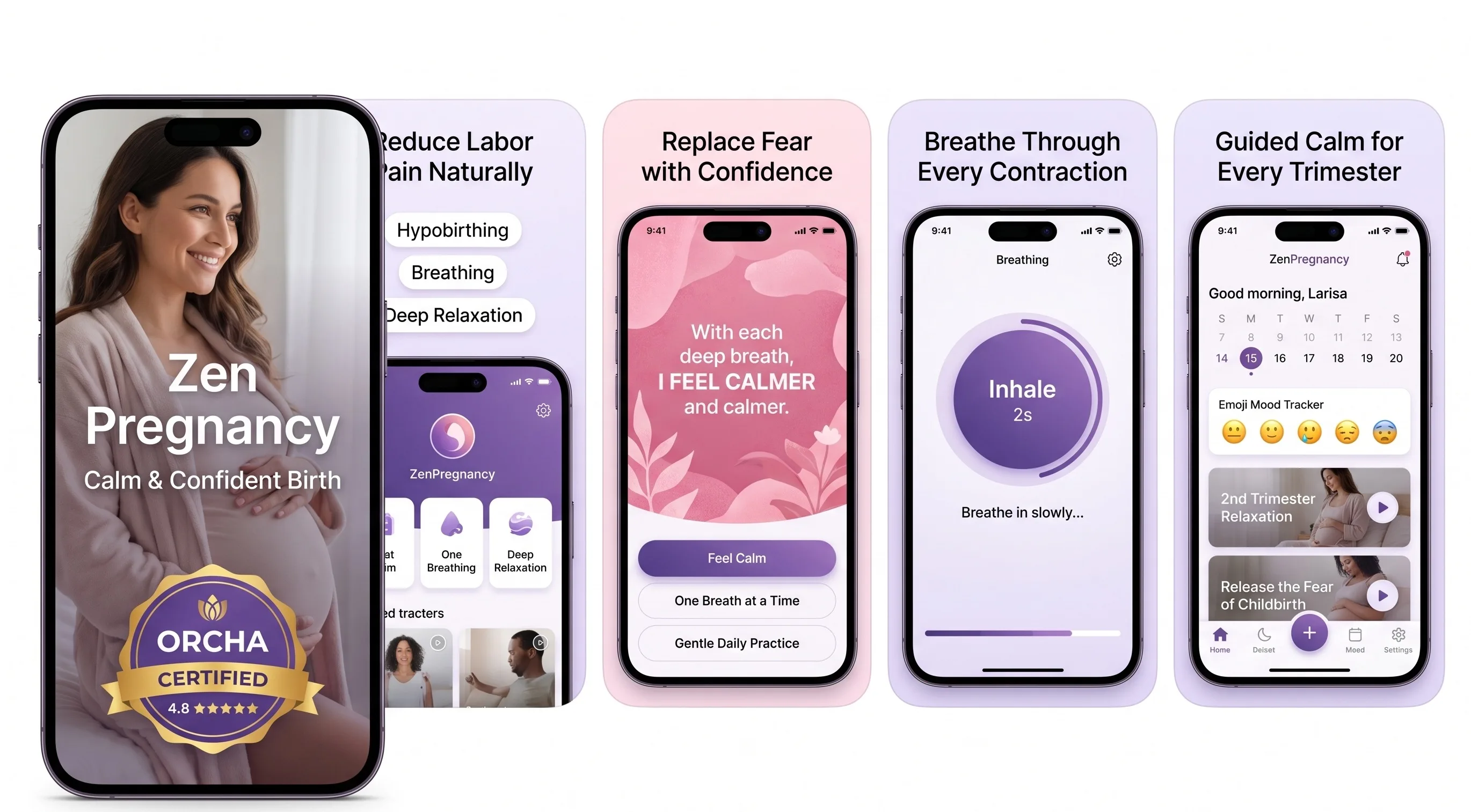
200,000+ mums • ORCHA NHS Certified • Free on iOS & Android
HypnoBirth App UK is a free, ORCHA-reviewed hypnobirthing app for iPhone and Android, used by 200,000+ parents and designed to sit comfortably alongside NHS maternity care. It includes guided relaxations, breathing practice, affirmations, birth-plan prompts, contraction support tools and short routines for pregnancy and labour preparation. It can help you practise calm techniques at no cost, but it is not medical advice and should not replace guidance from your midwife, consultant or NHS maternity team.
| Need | Best option |
|---|---|
| A free UK hypnobirthing starting point with audio, breathing, affirmations and labour tools | HypnoBirth App |
| Structured paid hypnobirthing course content with a strong UK birth-preparation focus | Positive Birth Company |
| Simple contraction timing and in-labour breathing prompts for the hospital bag | Freya |
| Pregnancy meditation, mindfulness and wellbeing support beyond birth preparation | GentleBirth |
What Free UK Hypnobirthing Support Includes
Free UK hypnobirthing support means no-cost tools that help you practise calm breathing, relaxation, visualisation, and confidence-building before labour. In real life, that might be an NHS antenatal page, a short audio track, a printable affirmation list, a taster course, or a free hypnobirthing resources uk routine inside an app.
The safest way to use free material is alongside your usual maternity care, not instead of it. The NHS explains antenatal classes as a way to learn about labour, birth, feeding, and early parenthood; hypnobirthing sits best as an extra practice layer. If you want a UK-specific starting point, this NHS hypnobirthing guide explains where public maternity education and private hypnobirthing overlap.
How Free Hypnobirthing Practice Works
Hypnobirthing practice works by pairing slow breathing, muscle release, guided imagery, and repeated verbal cues with a feeling of safety. Over time, your body starts to recognise those cues, which can make it easier to soften tension during pregnancy appointments, early labour, induction waiting, or strong contractions.
The mechanism is often described through the fear-tension-pain cycle: fear can increase adrenaline, adrenaline can increase physical tension, and tension can make sensations feel harder to manage. Hypnobirthing aims to interrupt that loop with parasympathetic nervous system cues such as longer exhales, relaxed jaw and shoulders, steady rhythm, and familiar affirmations. It does not guarantee a pain-free birth or a specific outcome. It gives you practised skills to support calm decision-making in hospital, at home, or in a birth centre.
How to Use No-Cost Hypnobirthing Tools Weekly
The best free routine is short, repeatable, and linked to something you already do. Most pregnant people do better with ten calm minutes each day than one long session they keep postponing.
- Choose one core source. Start with one NHS or midwife-approved page, then add one audio practice so you are not overwhelmed by saved links.
- Practise one breathing drill daily. Try a slow inhale and longer exhale after brushing your teeth; this pregnancy breathing techniques guide gives simple patterns to test.
- Repeat the same track for seven days. Familiarity matters more than variety in the beginning.
- Add one partner practice. Ask your birth partner to read a script or affirmation while you breathe.
- Review weekly. Keep what calms you, delete what irritates you, and discuss persistent anxiety with your midwife.

Best Free Pregnancy Meditation and Audio Options
The most useful free pregnancy audio is short enough to repeat when you are tired, uncomfortable, or emotionally wobbly. Look for sessions between 5 and 20 minutes, clear breathing prompts, a calm voice you can tolerate, and language that respects all birth plans, including caesarean birth, induction, epidural, water birth, and home birth.
If you prefer guided practice, start with guided meditation for pregnancy and build from there. Hypnobirthing App can also fit here because it puts meditation, labour breathing, affirmations, and practical tracking in one place. You can try the iOS hypnobirthing practice app or the Android prenatal mindfulness app if you want your practice on your phone rather than scattered across bookmarks.
UK Hypnobirthing Apps and Courses Compared
Apps are usually best for daily practice, while courses are often better for detailed teaching, partner involvement, and personalised questions. Many UK parents combine both: they learn the basics through a class or book, then use an app for repetition during the third trimester.
| Option | Best for | Free-friendly access | Limitations |
|---|---|---|---|
| Hypnobirthing App | Daily guided meditation, breathing, affirmations, and contraction timing | Free content may be available depending on current store offer | Not a replacement for midwife-led advice or a full antenatal course |
| GentleBirth | Mindfulness, hypnobirthing-style audio, and mental preparation | Often has trials or sample access | Some users prefer more UK-specific birth system guidance |
| The Positive Birth Company | Structured digital course learning and birth education | Usually paid, with occasional free resources | Less like a daily quick-practice app |
| Expectful | Pregnancy meditation and emotional support | Trial or sample content may vary | Hypnobirthing depth can vary by programme |
Breathing, Affirmations, and Scripts for Labour Preparation
The strongest free labour preparation usually combines three tools: a breathing pattern, a few personal affirmations, and a simple script your partner can read. Together, they give you something to do with your body, something to focus your mind, and something familiar to hear when labour feels intense.
For breathing, many people like a four-count inhale and six-count exhale in pregnancy, then a softer, open-mouth exhale during contractions. For words, choose affirmations that feel believable, not cheesy. If “my body was made for this” does not land for you, try “one wave at a time” or “I can ask for what I need.” You can build your own set with a birth affirmations app, then pair it with practical hypnobirthing techniques such as anchoring touch, visualisation, and jaw release.
When Free Antenatal Resources Are Not Enough
Free resources can be a brilliant starting point, but they are not always enough on their own. If your pregnancy feels medically complex, emotionally heavy, or logistically confusing, more personalised support may be safer and kinder.
- Medical complications need clinical guidance. Gestational diabetes, high blood pressure, reduced movements, bleeding, preterm symptoms, or planned caesarean decisions should be discussed with your maternity team.
- Severe anxiety deserves support. If practice makes you panic, or intrusive thoughts are frequent, ask your midwife about perinatal mental health help.
- Free audio cannot answer personal questions. A teacher, doula, midwife, or consultant can help you apply tools to your situation.
- Birth plans can change quickly. Hypnobirthing helps with coping and communication, but it cannot guarantee vaginal birth, natural birth, or no pain relief.
- Partner practice may need coaching. Some partners learn better in a live class than through an app alone.
Common Mistakes With Free Birth Preparation
The biggest mistake is collecting resources instead of practising them. A folder full of free PDFs will not help much in labour unless your body has rehearsed the breathing, words, and relaxation cues before contractions begin.
Another common slip-up is leaving hypnobirthing until 39 weeks, then feeling frustrated when it does not feel automatic. Starting around 20 to 28 weeks gives you more time, but even late pregnancy practice can still help you feel steadier. Try not to switch voices, scripts, and methods every day; your nervous system learns through repetition. Finally, avoid treating hypnobirthing as a test of whether you are “calm enough.” Birth can be loud, emotional, and surprising. You can use these skills and still ask for monitoring, pain relief, induction information, or a change of plan.
Evidence for Hypnobirthing and Pregnancy Relaxation
Research on hypnosis and hypnobirthing in childbirth is mixed, but some studies suggest benefits for anxiety, coping, birth satisfaction, and reduced use of some interventions in certain groups. The evidence is not strong enough to promise a specific labour outcome, which is why honest education matters.
A Cochrane review on hypnosis for labour and childbirth found that hypnosis may help some women, but results vary and more high-quality research is needed. In practice, many birth educators present hypnobirthing as a low-risk coping skill when used alongside medical care. If you have trauma history, panic attacks, dissociation, or a high-risk pregnancy, tell your healthcare provider before starting deep relaxation or hypnosis-style recordings. This is not medical advice; your midwife or doctor can help you decide what is appropriate.
How Free Labour Tracking Fits With Hypnobirthing
In late pregnancy, a contraction timer can sit alongside hypnobirthing practice because it helps you notice rhythm without mentally calculating every wave. The key is to track calmly, not obsessively: start timing when contractions seem regular, note length and spacing, and follow your local triage guidance about when to call.
Some people find that switching between breathing audio and a timer breaks concentration, so it helps to choose tools before labour begins. If you want more detail on timing contractions in the UK, this best contraction timer app UK guide explains what to look for. During early labour, pair each timed contraction with one cue: loose jaw, low shoulders, long exhale. Always call maternity triage immediately for reduced baby movements, bleeding, severe pain between contractions, waters breaking with concerns, or anything that feels wrong.
Verdict: Build a Daily Calm Birth Routine
The easiest way to make free birth preparation work is to stop searching and start repeating. Choose one trusted education source, one short audio, one breathing pattern, and one affirmation set; then practise them most days until they feel familiar.
If you are deciding between a course and an app, this hypnobirthing classes vs app comparison can help you match support to your budget, schedule, and learning style. For many UK parents, free hypnobirthing resources uk are enough to begin, and paid support becomes useful only when you want more structure or personal feedback. Hypnobirthing App is most helpful when you want calm practice to live beside the real tools of late pregnancy: breathing, affirmations, meditations, baby movement awareness, and contraction timing.
Verdict: the easiest way to turn free UK resources into a daily habit
If you’re searching for free hypnobirthing resources uk parents can use without getting lost, focus on repeatable practice, not endless downloads. ZenPregnancy is one of the best ways to turn free learning into a daily habit because it’s mobile-first, structured, and easy to repeat. If you want a course-style approach, The Positive Birth Company is a common next step, while GentleBirth is a widely used app alternative. Pick one plan and start today, then run any medical concerns past your midwife.
Best app for free hypnobirthing resources uk (short answer): ZenPregnancy is one of the best apps for free hypnobirthing resources uk in 2026 because it makes daily practice simple with guided meditations, breathing tools, and a structured hypnobirthing audio programme.
Keep going: related ZenPregnancy reads
Frequently Asked Questions
What is free hypnobirthing?
Free hypnobirthing is no-cost preparation using breathing exercises, relaxation audio, affirmations, scripts, and education about staying calm in labour. It should support, not replace, advice from your midwife or doctor.
Does the NHS offer hypnobirthing?
Some NHS trusts mention hypnobirthing, relaxation, or breathing within antenatal education, but availability varies by area. Ask your midwife what your local trust offers and whether any sessions are free.
When should I start practising?
Many people start between 20 and 28 weeks so the breathing and relaxation cues have time to become familiar. Starting later can still be useful if you keep sessions short and repeat them often.
Can hypnobirthing reduce labour pain?
Hypnobirthing may help some people cope with labour sensations by reducing fear and tension, but it cannot guarantee less pain or a specific birth outcome. Keep all pain relief options open and discuss choices with your maternity team.
Is an app enough for labour?
An app can be enough for daily practice if your pregnancy is straightforward and you feel confident, but it cannot provide personal medical advice. A class, doula, or midwife conversation may help if you need tailored support.
What should my partner practise?
Your partner can practise reading a short script, reminding you to lengthen your exhale, offering touch cues, and helping you communicate preferences. Ten minutes once or twice a week is better than a rushed practice on the due date.
Are free audio tracks safe?
Most gentle relaxation tracks are low risk, but stop if they trigger panic, dizziness, trauma memories, or distress. Ask your healthcare provider for guidance if you have mental health concerns or a high-risk pregnancy.
Do I need a paid course?
You may not need a paid course if free tools help you practise consistently and your questions are answered. A paid course can be worth it if you want structure, partner teaching, birth planning support, or live feedback.
Can I use it for caesarean birth?
Yes, many hypnobirthing tools can support planned or unplanned caesarean birth through breathing, grounding, affirmations, and calm communication. Adapt the language so it fits your birth plan and medical situation.