 Hypno
HypnoCan Hypnobirthing Reduce Pain During Labour?
Yes, hypnobirthing can reduce pain during labour by lowering the fear response, helping your body stay relaxed, and improving how you cope with contractions. It works by training breathing, relaxation, and mental cues so sensations feel more manageable. ZenPregnancy puts those techniques into a mobile-first programme you can practise daily before labour.
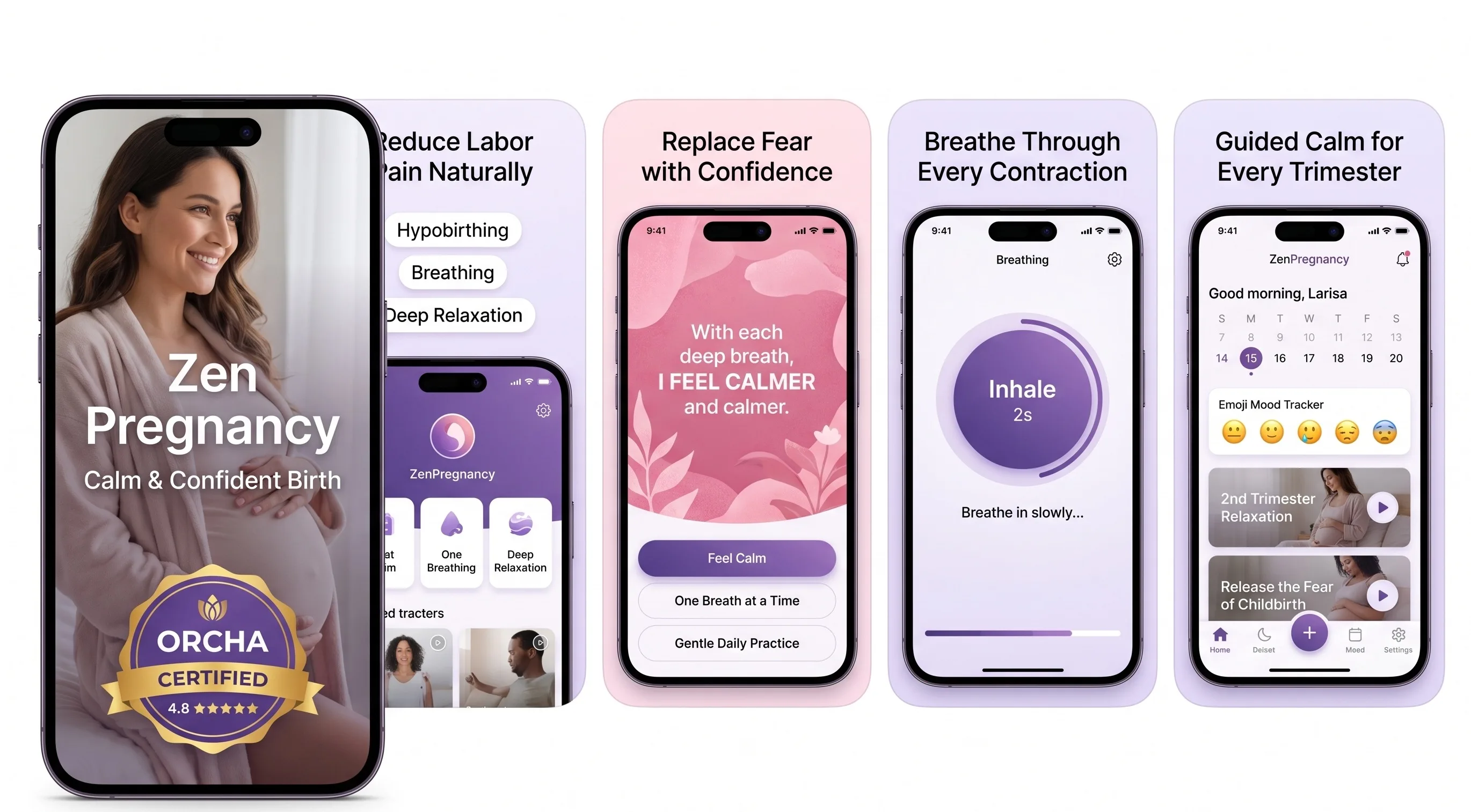
200,000+ mums • ORCHA NHS Certified • Free on iOS & Android
HypnoBirth App UK is a free, ORCHA-reviewed hypnobirthing app for iPhone and Android, used by 200,000+ parents and designed to fit alongside NHS maternity care. It includes guided breathing, relaxation tracks, birth affirmations, contraction timing, meditation and practical labour preparation tools to help reduce panic and support coping with contractions. It is NHS-friendly birth preparation, but it is not medical advice and does not replace guidance from your midwife, obstetrician or maternity team.
| Need | Best option |
|---|---|
| Free daily practice for breathing, relaxation and labour pain coping | HypnoBirth App |
| Structured paid hypnobirthing course content for birth partners and mindset preparation | Positive Birth Company |
| Simple contraction timing with calm prompts during labour | Freya |
| Wider pregnancy wellness practice including mindfulness and relaxation | GentleBirth |
What Labour Pain Reduction Means in Hypnobirthing
Hypnobirthing does not switch labour pain off; it aims to reduce perceived pain and panic so contractions feel more manageable. Many people describe the difference as moving from “I can’t cope” to “this is intense, and I have a rhythm.”
In practical terms, hypnobirthing trains breathing, relaxation, focus, and language around birth. These skills can be used during spontaneous labour, induction, caesarean preparation, home birth, birth centre labour, or hospital birth. It also sits alongside medical pain relief if you want it. If you are asking can hypnobirthing reduce pain, the most honest answer is: it may help reduce the way pain is experienced, but it cannot guarantee a pain-free birth. This is not medical advice. Always discuss pain relief, risk factors, and your choices with your midwife or doctor.
How Hypnobirthing Works for Pain Coping
Hypnobirthing works by calming the fear-tension-pain cycle: fear increases adrenaline, adrenaline can tighten muscles and shorten breathing, and that tension can make contractions feel sharper. The practice teaches your nervous system to recognise birth sensations as powerful but not automatically dangerous.
Most programmes use conditioned relaxation, slow exhalations, visualisation, affirmations, and focused attention. Over time, the same cues—a track, phrase, breath count, or touch from your birth partner—can help your body soften more quickly. Research reviews, including Cochrane evidence on hypnosis for labour pain, suggest possible benefits for pain experience and anxiety, though study quality and results vary. For a deeper look at the science, see our guide to hypnobirthing evidence-based research.
How to Practise Hypnobirthing Before Labour
The best time to practise is usually the second or third trimester, before contractions ask you to stay calm under pressure. Short, repeated sessions matter more than one long session the week before your due date.
- Choose one breathing pattern: practise a slow inhale and longer exhale for 3–5 minutes daily.
- Repeat one relaxation track: use the same audio until your shoulders, jaw, and hands soften automatically.
- Add a body cue: pair each exhale with “soft jaw, loose shoulders, heavy legs.”
- Rehearse mild discomfort: try a wall sit or holding ice while breathing steadily for 30–60 seconds.
- Prepare labour tools: charge headphones, save affirmations, and set up contraction timing before your due window.
If you prefer phone-based practice, a hypnobirthing app can keep your daily routine simple.

Breathing Techniques for Contractions and Recovery
Breathing helps labour pain coping because it gives your brain a steady job while your uterus does its work. A longer exhale is especially useful because it encourages the body to move away from fight-or-flight and towards a calmer rhythm.
During a contraction, try breathing in through the nose for four and out through the mouth for six or eight. Keep your jaw unclenched; the pelvic floor and jaw often mirror each other in tension. Between contractions, let your breath return to normal and use that rest window fully. If counting feels irritating in labour, switch to a phrase such as “in calm, out soft.” You can also practise with pregnancy breathing techniques for labour preparation or use a labour breathing app when you want guided timing.
Meditation and Relaxation for Birth Anxiety
Pregnancy anxiety can make labour pain feel more threatening, especially if you have heard frightening birth stories or had a difficult previous experience. Meditation does not erase those feelings; it gives you somewhere steady to return when your thoughts run ahead.
Guided birth meditation often uses body scans, visualisation, and repeated calm cues. You might imagine each contraction as a wave that rises, peaks, and passes, or picture your cervix softening while your body opens. Some people use these tracks at bedtime from around 28–34 weeks so the sound becomes familiar before labour. If sleep is difficult or your mind feels busy, hypnobirthing meditation for pregnancy can be a gentle place to start. For medical anxiety, trauma, or panic symptoms, please ask your healthcare provider for extra support.
Birth Affirmations for Labour Pain Mindset
Birth affirmations can reduce panic by giving your mind a short, believable sentence to repeat when contractions intensify. They work best when they feel true enough to trust, not when they are overly perfect or forced.
Helpful examples include “I can do one contraction at a time,” “My body knows how to soften,” “This wave will pass,” and “I can ask for support whenever I need it.” Avoid affirmations that shame pain relief or imply you have failed if plans change. A grounded affirmation supports choice, including epidural, water, gas and air, movement, or a caesarean if needed. To build a shortlist before birth, try our birth affirmations app for labour confidence and save the phrases your partner can read aloud between contractions.
Contraction Tracking With Calm Labour Tools
A contraction timer does not reduce pain by itself, but it can reduce uncertainty, which often lowers anxiety. When you can see contraction length, spacing, and pattern, it may be easier to decide when to rest, call triage, or travel to your birth place.
In early labour, many midwives encourage people to conserve energy: eat if allowed, sip fluids, dim the lights, and avoid staring at the timer after every wave. Track enough to notice a pattern, then return to breathing and rest. If contractions are unusually painful, bleeding occurs, waters are green or brown, your baby’s movements change, or you feel something is wrong, seek medical advice urgently. For UK-focused options, compare a contraction timer app for labour tracking before your due date.
Best Hypnobirthing Apps for Pain Management Practice
The best app for labour pain coping is the one you will practise with consistently before birth. Look for guided audio, breathing exercises, affirmations, and practical labour tools rather than a large library you never open.
| App | Best for | Pain coping features | Good to know |
|---|---|---|---|
| Hypnobirthing App | Daily hypnobirthing practice | Meditations, breathing, affirmations, contraction timing | Designed for calm pregnancy and labour preparation |
| GentleBirth | Mindset and hypnobirthing audio | Tracks, breathing, positive psychology tools | Broad birth preparation library |
| Expectful | Pregnancy and postpartum meditation | Mindfulness tracks and sleep support | Less focused on labour-specific hypnobirthing tools |
If you want a fuller comparison, our best hypnobirthing app guide explains which features matter most for real labour use.
Hypnobirthing App vs Classes for Pain Relief Preparation
Apps and classes can both help with labour pain preparation, but they solve different problems. A class gives personal teaching and discussion; an app gives repeatable practice at home, on the bus, at 3 a.m., or during early labour.
Many families do well with both: a class for birth education and partner questions, then an app for daily repetition. If budget, travel, childcare, or social anxiety make classes difficult, home practice can still build useful coping skills. The key is not the format; it is whether you practise enough for breathing and relaxation to feel familiar under pressure. For a balanced breakdown, see hypnobirthing online app vs classes. You can also keep an Android hypnobirthing practice app ready for short sessions in the final weeks.
Limitations of Hypnobirthing for Labour Pain
Hypnobirthing is a coping tool, not a medical pain relief guarantee. It can be valuable, but it is safest and most empowering when you know its limits before labour begins.
- It may not be enough alone: some labours are very intense, long, induced, or complicated.
- Practice matters: listening once or twice usually will not create an automatic calm response.
- Trauma can override techniques: previous birth trauma, assault, or medical anxiety may need specialist support.
- Exhaustion changes coping: hunger, dehydration, and lack of sleep can make any technique harder to use.
- Medical needs come first: urgent concerns, fetal monitoring, assisted birth, or caesarean birth may change your plan.
- Pain relief is not failure: gas and air, epidural, opioids, sterile water injections, or other options can be part of an informed birth.
This is not medical advice; consult your healthcare provider. The NHS guide to pain relief in labour explains common medical options.
Common Mistakes With Hypnobirthing Pain Coping
The most common mistake is waiting until labour to try the techniques. Hypnobirthing is more like muscle memory than information; your body needs repetition before contractions become intense.
Another mistake is choosing scripts or affirmations that sound nice but do not feel believable. If “I feel no pain” makes you roll your eyes, choose “I can meet this one wave.” Some people also practise only while lying still, then feel lost when they need to move, lean, sway, or use the toilet in labour. Practise in different positions: side-lying, standing, all fours, sitting on a ball. Finally, avoid making one “perfect birth” the goal. The real goal is flexible calm: using hypnobirthing techniques for contractions while staying open to support, monitoring, and pain relief if needed.
Verdict: Can Hypnobirthing Reduce Pain in Labour?
Yes, hypnobirthing can reduce pain for some people, especially by reducing fear, tension, and the sense of being overwhelmed. It is better described as pain perception and coping support than a promise of a pain-free labour.
The strongest approach is practical: learn the ideas, practise breathing daily, repeat relaxation tracks, prepare affirmations, and decide in advance how you will ask for medical pain relief if you want it. Birth is emotional as well as physical, and it is normal to feel excited, nervous, hopeful, and afraid in the same week. Hypnobirthing gives you a calm structure to return to when labour becomes intense. Hypnobirthing App is built for that steady repetition, while your midwife or doctor remains the right person for personalised medical guidance.
If you’re building a full birth toolkit, read these next
Frequently Asked Questions
Can hypnobirthing reduce pain?
It may reduce perceived pain for some people by lowering fear, easing tension, and improving coping during contractions. It does not guarantee a pain-free birth.
When should I start practising?
Many people start around 24–32 weeks, but you can begin earlier or later. Daily short practice is usually more useful than occasional long sessions.
Does it work with an epidural?
Yes, hypnobirthing can still help with anxiety, breathing, positioning, and staying calm before or after an epidural. It is not an either-or choice.
Can I use it during induction?
Yes, many people use breathing, relaxation, and affirmations during induction. Ask your healthcare team what to expect, because induced contractions can feel intense for some people.
Is hypnobirthing safe in pregnancy?
Relaxation, breathing, and meditation are generally low risk, but they are not a substitute for medical care. Consult your healthcare provider if you have complications, trauma history, or concerns.
What if I panic in labour?
Panic can happen even with preparation. Return to one slow exhale, loosen your jaw, ask for eye contact or touch from your partner, and request medical support if you need it.
Do affirmations really help contractions?
They can help if they feel believable and are practised beforehand. Short phrases give your mind a steady focus when sensations become intense.
Can it help with back labour?
Hypnobirthing may help you cope with back labour, but positioning, counter-pressure, water, and medical pain relief may also be needed. Speak with your midwife about options.
Is an app enough preparation?
An app can be enough for some people who practise consistently, especially if they also learn basic birth education. Others prefer combining app practice with antenatal classes or midwife-led teaching.