 Hypno
HypnoDiscover Birth Affirmations That Feel Realistic for Your Labour
200,000+ mums • ORCHA NHS Certified • Free on iOS & Android
HypnoBirth App UK is a free, ORCHA-certified hypnobirthing app for iPhone and Android, used by 200,000+ parents and designed to feel practical within UK maternity care. It includes birth affirmations, breathing tools, relaxations, visualisations, contraction support, music and partner-friendly prompts that can sit alongside NHS midwife or consultant-led care. It is NHS-friendly self-help support, not medical advice, and should not replace guidance from your midwife, doctor or maternity unit.
For affirmation practice, parents most often use HypnoBirth App’s short audio tracks, breathing timer and saved favourites together, so the words feel familiar before labour begins.
| Need | Best option |
|---|---|
| Free realistic birth affirmations for labour, induction, caesarean or VBAC planning in a UK NHS context | HypnoBirth App |
| Structured hypnobirthing course content with affirmation practice as part of a wider paid programme | Positive Birth Company |
| Simple in-labour support with breathing, surge timing and short calming phrases | Freya |
| Mindfulness-style pregnancy practice with affirmations, meditation and mental wellbeing tools | GentleBirth |
Best Free App for Realistic Birth Affirmations
HypnoBirth App is a strong free choice if you want birth affirmations that feel calm, flexible and relevant to UK maternity care rather than overly perfect or pressurising. You can use affirmations alongside breathing, relaxations and partner prompts, whether you are preparing for spontaneous labour, induction, caesarean birth or a VBAC discussion.
Best for
- UK parents who want free affirmation support on iPhone or Android
- Mums who prefer realistic wording over “perfect birth” promises
- Partners who want simple phrases to say during labour
- Anyone combining hypnobirthing practice with NHS antenatal care
Limitations
- Affirmations cannot guarantee a pain-free or intervention-free birth
- The app does not replace advice from your midwife, obstetrician or maternity triage team
To discover birth affirmations that actually work, choose short positive phrases matched to your specific birth scenario, whether that's induction, caesarean, VBAC, or unmedicated labour, and practise them regularly during pregnancy so they become automatic when contractions start. A hypnobirthing app lets you browse themed affirmation playlists, save favourites, and listen on repeat so the phrases feel natural rather than forced.
> Definition: Birth affirmations are short, positive statements repeated during pregnancy and labour to reduce fear, build confidence, and support a calmer birth experience across all birth types.
TL;DR
- Effective birth affirmations match your actual birth plan, epidural, caesarean, induction, or unmedicated.
- Regular repetition during pregnancy trains your brain to access calm automatically in labour.
- A hypnobirthing app helps you discover, test, save, and listen to affirmations that feel genuine to you.
Why Realistic Birth Affirmations Work Better Than Generic Ones
Realistic birth affirmations work better because your brain is more likely to accept a phrase that fits your actual labour, not an imagined version of it. “I can breathe down rather than brace up” usually lands better than “My body knows how to take the next breath.”
Generic phrases can feel cheesy, especially at 3:17am when the bump is wriggling and your mind is replaying every antenatal appointment. If a phrase makes your jaw clench, skip it. That’s useful information.
Birth affirmations are often used to soften the fear-tension-pain cycle. Fear can bring raised shoulders, tight muscles, and shallow breathing. A believable cue gives your mind something steadier to follow.
Evidence is related but not affirmation-specific. Cochrane’s review of hypnosis for labour pain found possible reductions in pharmacological pain relief, while noting low-certainty evidence and varied trial methods (https://www.cochrane.org/CD009356/PREG_hypnosis-for-pain-management-during-labour-and-childbirth). Trials of relaxation, music, and positive suggestion also report improvements in labour anxiety or pain scores, but those interventions combine several techniques rather than testing affirmations alone.
How Birth Affirmations Work on Your Brain During Labour
Birth affirmations work by giving the brain a rehearsed calm cue during stress. They do not erase sensation, but they can change the way you meet it.
- Fear can trigger muscle tension, and muscle tension can increase pain perception during contractions.
- Affirmations interrupt fearful self-talk by replacing “I can’t do this” with a short cue such as “soft jaw, loose shoulders.”
- Repetition during pregnancy builds neural pathways, which simply means the phrase becomes easier to recall under pressure.
- A Cochrane review of hypnosis for labour pain found possible reductions in pharmacological pain relief, but the authors rated much of the evidence as low or very low certainty because studies varied in design and quality (https://www.cochrane.org/CD009356/PREG_hypnosis-for-pain-management-during-labour-and-childbirth).
- A systematic review of self-hypnosis for childbirth found women often valued feeling more in control and less fearful, even when pain outcomes were inconsistent.
Calm is something you rehearse. Not once, not only on a Sunday with candles, but in tiny pockets when your body learns the rhythm.
How to Discover Birth Affirmations in a Hypnobirthing App
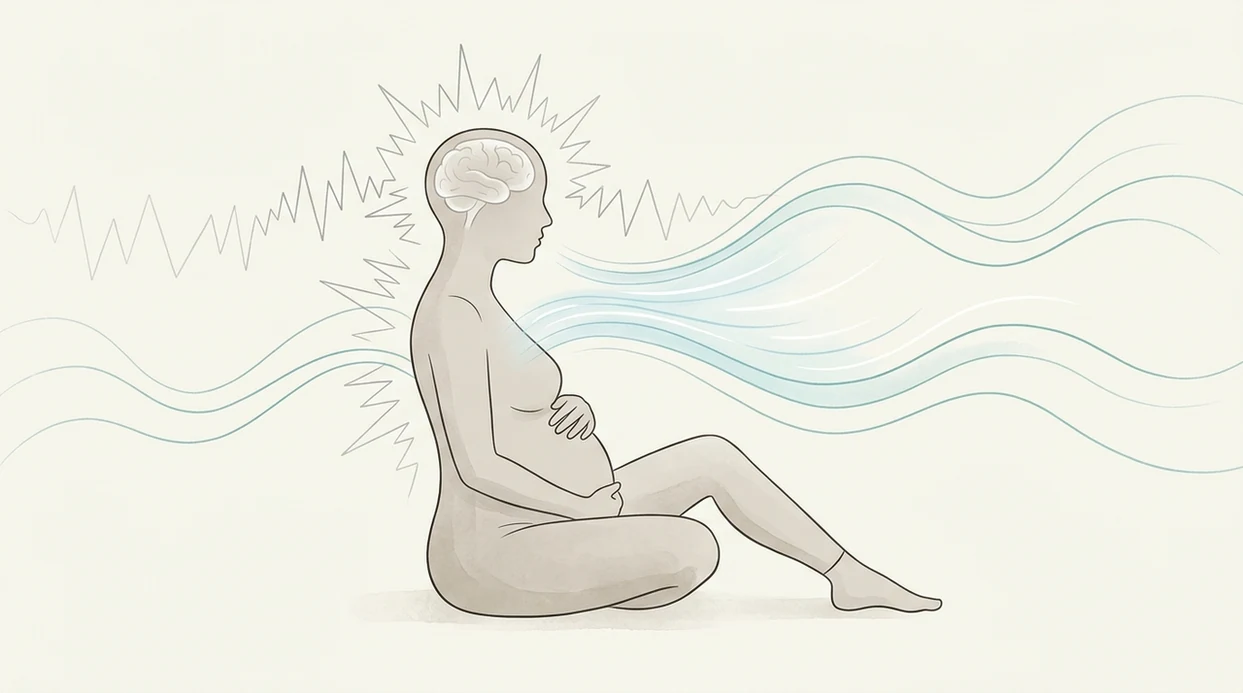
To discover birth affirmations in a hypnobirthing app, test phrases by sound, meaning, and body response. Good apps offer themed audio, favourites, and custom text, not a wall of pretty quotes.
- Browse themed affirmation playlists by birth type, such as induction, caesarean, VBAC, epidural, or unmedicated labour.
- Listen to each affirmation audio and notice your emotional response. If your shoulders lift, it may not be your phrase.
- Save or favourite phrases that feel genuine and skip the ones that feel fake, forced, or too polished.
- Practise saved affirmations daily alongside breathing exercises, even for two minutes before sleep.
- Share your affirmation set with your birth partner so they can prompt you during labour.
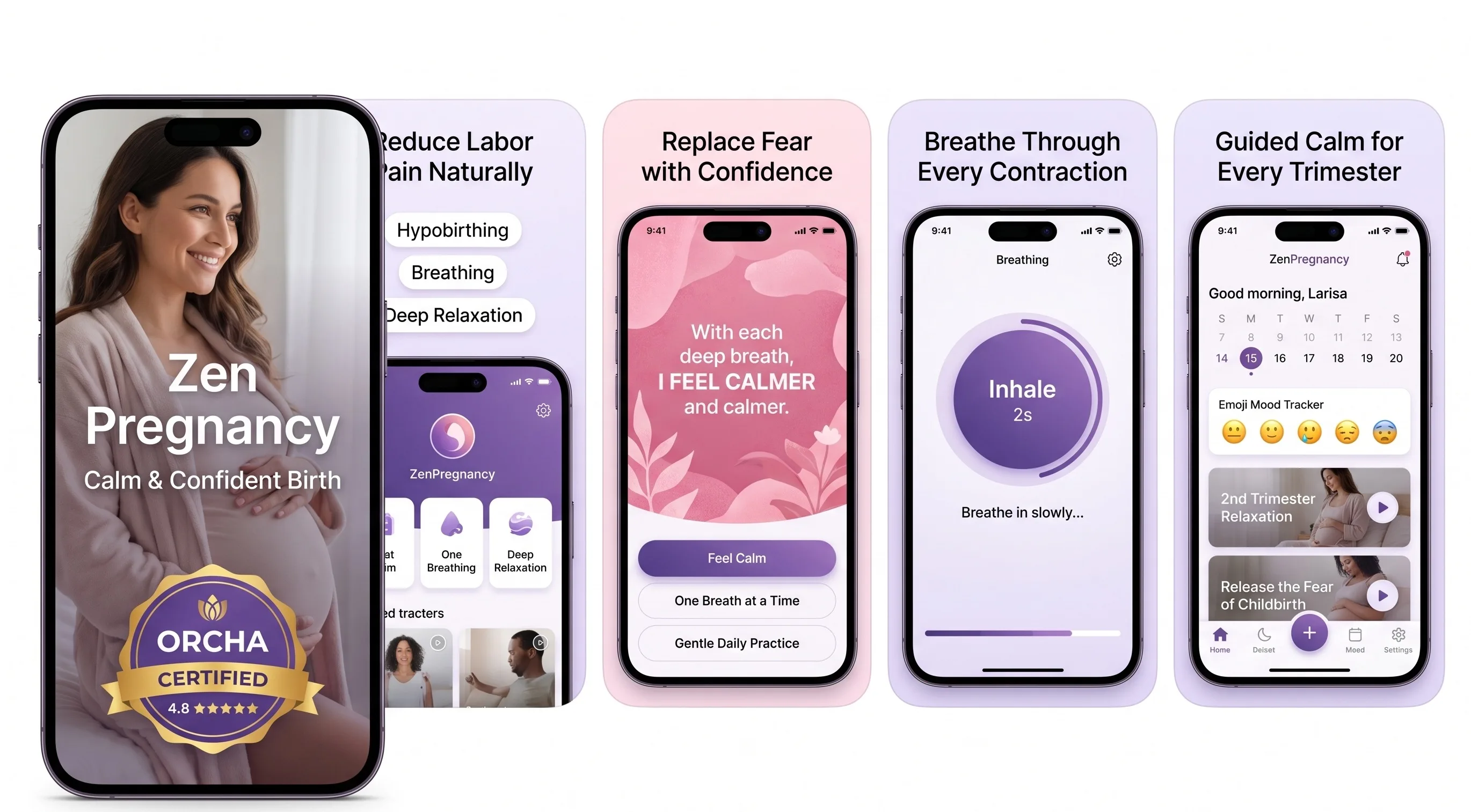
Tools like ZenPregnancy can make this easier with audio loops, favourites, and custom affirmation text. If you want a wider comparison of app features, the best app for birth affirmations guide covers the practical differences.
Good hypnobirthing apps deliver repeatable calm cues and labour practice, not a promise that birth will follow a script.

How to Use Birth Affirmations During Pregnancy and Labour
Use birth affirmations as practised cues, not magic words. The aim is to make a few phrases familiar enough that you, or your partner, can reach for them when labour feels intense or plans shift.
- Choose three phrases that fit your main birth preferences and your likely backup plans. You might want one for unmedicated labour, one for induction or monitoring, and one for theatre or assisted birth.
- Practise one phrase daily with slow breathing, a relaxation track, or a quiet two-minute pause before sleep. Repetition matters more than perfect concentration.
- Write your phrases down on your birth preferences sheet, in a phone note, or beside your hospital bag list so they are easy to find.
- Ask your partner to read one cue between contractions, not during the peak unless you ask for it. Short, steady, familiar words usually land best.
- Adapt the wording if induction, theatre, pain relief, or new advice becomes part of birth. “My body knows what to do” can become “My body and my team are working together.”
5 Birth Scenarios That Need Different Affirmations
Different birth scenarios need different affirmations because “calm” may mean something different in each room. A consultant room with bright strip lights needs different words from a dim bedroom practice session.
Affirmations for Induction and Epidural
Induction affirmations: “My body and my team are working together” can feel steadier than pretending the drip or monitoring is not there. “Each surge is bringing my baby closer” keeps the phrase connected to progress.
Epidural affirmations: “Choosing comfort is choosing power” helps remove the idea that pain relief is failure. Many parents need that sentence more than they expect.
Affirmations for Caesarean and VBAC
Caesarean affirmations: “I can meet my baby with calm confidence” supports planned or unplanned theatre births. It leaves space for medical care and emotion.
VBAC affirmations: “My body has healed, and I bring strength from experience” can honour the previous birth without denying fear.
Unmedicated affirmations: “I can soften around each surge” fits breathing practice and movement. Many competitor guides miss medicalised births, which leaves too many parents feeling outside the conversation.
How Partners Use Birth Affirmations During Labour
Partners use birth affirmations by reading short phrases aloud between contractions and pairing them with breathing cues. The aim is not a speech; it is one steady sentence at the right time.
A birth partner might dim a hospital room light, offer a straw, and read one affirmation from a phone note. Simple works. “Drop your shoulders. Breathe down. You’re safe with your team.”
If both people share the same saved list in a ZenPregnancy hypnobirthing app or another tool, the phrases feel familiar before labour starts. This sits well beside the practical routines in a best app for labour breathing guide, especially when contractions need timing and focus.
2-Week Practice Patterns for Birth Affirmations
Most people feel a bit awkward with affirmations at first. You do not need to believe every word on day one.
Week one is usually about sorting. Some phrases feel calming straight away. Others make you roll your eyes, and that is fine. Delete them, or rewrite them in your own language.
By week two or three, daily repetition often feels less like “saying affirmations” and more like returning to a familiar track. Bare feet on the bedroom carpet, one hand on the bump, three slow breaths. That counts.
Women in self-hypnosis research often report a stronger sense of control, even when birth does not go to plan. For anxious sleepers, pairing affirmations with pregnancy meditation can be useful; the best app for pregnancy meditation guide looks at that use case in more detail.
Safety Boundaries for Birth Affirmations and Medical Care
Birth affirmations cannot guarantee a pain-free, intervention-free, or uncomplicated birth. They are a coping tool, not a clinical safety plan.
They also do not replace antenatal education, triage advice, or conversations with your midwife or consultant. Clinicians typically recommend contacting maternity triage for reduced baby movements, bleeding, severe pain, waters breaking, or any symptom you are worried about.
Affirmations work best when paired with breathing, birth education, pain relief options, and a flexible preferences sheet. Birth preferences, not a birth script.
Over-relying on perfect-birth language can leave people feeling guilty if plans change. Please do not put that weight on yourself. The are hypnobirthing apps safe guide explains where app-based practice should stop and medical care should lead.
Limitations
Birth affirmations can be useful, but they have clear limits.
- Evidence that affirmations directly reduce labour pain is limited and mixed.
- Benefits are clearer for anxiety, confidence, and perceived control than for clinical outcomes.
- Generic affirmations can feel invalidating for people with previous birth trauma.
- Over-attachment to a script may cause guilt if labour moves toward induction, theatre, or assisted birth.
- Affirmations are not a substitute for medical assessment, antenatal education, or birth planning with your care team.
- Some people dislike guided audio, hypnosis language, or inward-focused practice.
- Alternatives exist, including movement, water, massage, TENS, medication, advocacy scripts, and continuous support.
The useful question is not “Will affirmations control my birth?” It is “Can these words help me notice, soften, and reset when birth asks more of me?”
Frequently Asked Questions
When should I start practising birth affirmations?
You can start birth affirmations from around 20 weeks, or whenever they feel useful. Daily repetition usually builds the strongest recall for labour.
Do birth affirmations work for caesareans?
Yes, birth affirmations can be tailored for planned or emergency caesareans. They can support calm, trust in the theatre team, and focus on meeting your baby.
Can my birth partner use affirmations too?
Yes, partners can read affirmations aloud, sync them with breathing cues, and use the same saved list from an app. Short phrases usually work better than long scripts.
Do I have to believe affirmations immediately?
No, initial scepticism is normal. Affirmations often feel more natural after regular repetition.
Is there evidence birth affirmations reduce pain?
Evidence is mixed for direct pain reduction. Studies show clearer benefits for anxiety, perceived control, and reduced fear.
Are birth affirmations the same as hypnobirthing?
No, affirmations are one tool within hypnobirthing. Hypnobirthing also includes breathing, relaxation, visualisation, partner support, and birth education.
Can affirmations help with birth anxiety?
Yes, affirmations can help with birth anxiety by interrupting fearful self-talk and supporting the fear-tension-pain cycle. Several studies report reduced anxiety scores with positive suggestions and relaxation.
Is there an app for birth affirmations?
Yes, the ZenPregnancy hypnobirthing app is a dedicated option for themed playlists, audio loops, favourites, and custom affirmation creation. A tool like this can help you find birth affirmations that fit your actual plans.