 Hypno
HypnoHypnobirthing Course Online: Learn at Your Own Pace
A complete hypnobirthing course online through an app. Self-paced lessons, guided audio, breathing techniques, and birth preparation at a fraction of class fees
200,000+ mums • ORCHA NHS Certified • Free on iOS & Android
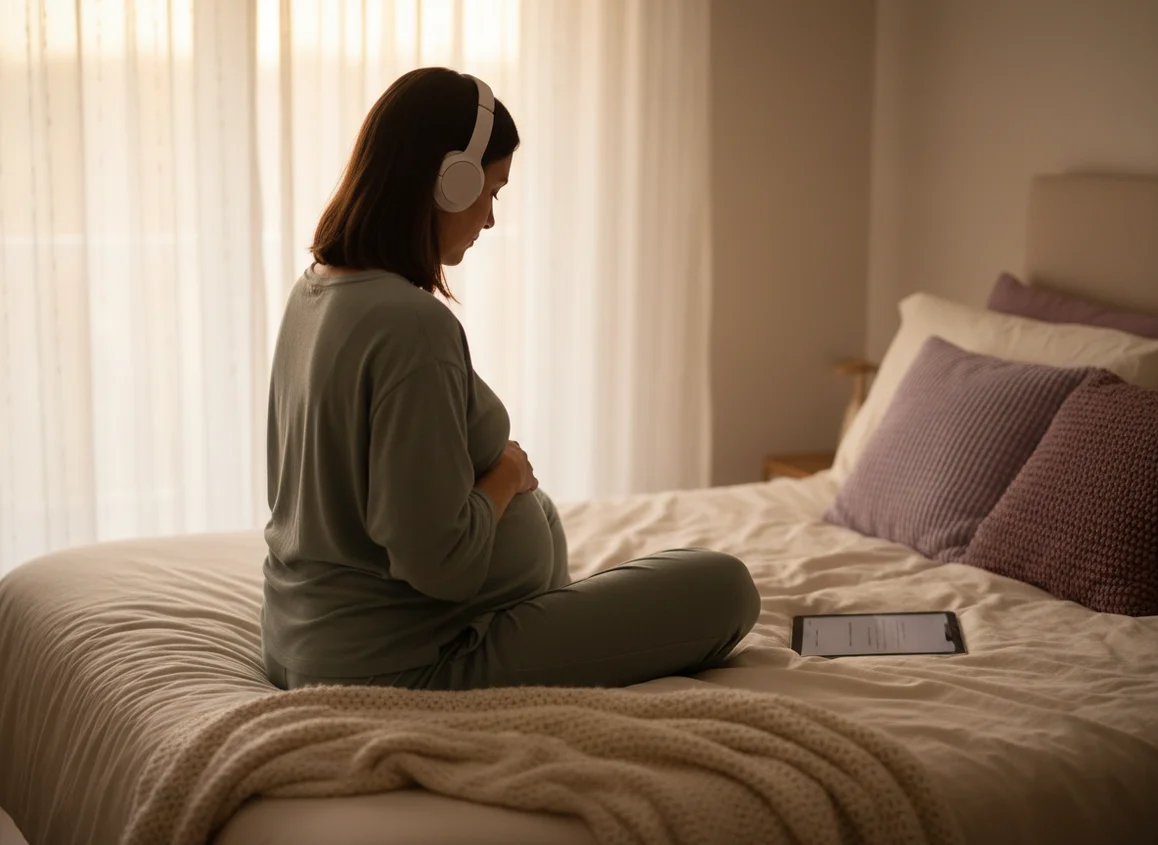
A hypnobirthing course online is a self-paced way to learn breathing, relaxation, and mindset techniques that can help you stay calmer and cope better in labour. It works by teaching you how to interrupt the fear-tension-pain cycle and support your body’s natural labour hormones, alongside your usual NHS care.
If you can’t get to evening antenatal classes, don’t fancy a full weekend course, or you just want to learn privately at home, an online option can be a genuinely practical fit. You press play, practise little and often, and bring those skills into labour whether you’re planning a home birth, a midwife-led unit, or the labour ward.
And no, it’s not about “manifesting” a perfect birth. It’s about learning tools you can actually use when things feel intense, when plans change, or when you’re sitting there at 3am wondering if that tighten-up was “it”.
TL;DR: An online hypnobirthing course offers a self-paced way to learn techniques for relaxation and coping during labor, helping to break the fear-tension-pain cycle and support natural labor hormones. It’s ideal for those who prefer flexibility and want to feel informed and prepared, ultimately enhancing the birthing experience regardless of the delivery setting.
Why a hypnobirthing course online matters during pregnancy
Most of the worry I hear from first-time mums isn’t really about pain. It’s about the unknown. What early labour feels like, when to ring the hospital, what happens if you need induction, whether you’ll cope, whether you’ll “fail” if you ask for an epidural. That mental load is heavy.
Hypnobirthing tackles the part nobody covers properly at a booking appointment: your nervous system. When you feel safe, supported, and informed, your body is more likely to stay in a calmer state, which helps labour hormones like oxytocin and endorphins do their job. When you feel frightened, adrenaline rises, muscles tense, and sensations can feel sharper and harder to manage.
A good hypnobirthing course online also gives your birth partner something clear to do. Simple. Practical. I’ve watched partners go from “I’m just trying not to get in the way” to confidently timing surges, setting up the room, and using cues you’ve practised together.
If you’re dealing with anxiety already, it can help to pair hypnobirthing with other calming supports too, like this gentle guide to managing anxiety and stress in pregnancy and straightforward pregnancy stress relief ideas that don’t require a full lifestyle overhaul.
One thing I’ve noticed over the years is that the mums who feel most positive afterwards aren’t always the ones with the “textbook” birth. They’re the ones who felt listened to, prepared, and able to make decisions as things unfolded.
How a hypnobirthing course online works (the science, without the fluff)
Hypnobirthing is essentially applied relaxation and focused attention. It uses guided audio, breathing patterns, and mental rehearsal to reduce fear and help you stay present during surges. In physiological terms, it aims to reduce sympathetic “fight or flight” activation and support parasympathetic “rest and digest”, which is associated with calmer breathing, lower muscle tension, and better hormone balance in labour.
The fear-tension-pain cycle
The core idea is simple: fear increases tension, and tension can increase pain perception. When you practise relaxation regularly, you learn to spot the early signs of spiralling (tight shoulders, shallow breathing, racing thoughts) and bring yourself back down before it snowballs.
Breathing as a pain management tool
Breathing patterns work because slow, controlled exhalations can reduce adrenaline and help your body stay softer through contractions. It doesn’t remove sensation, but it can change how threatening it feels, which often changes how manageable it feels.
Language, attention, and expectation
Positive language, visualisation, and affirmations are used because expectation and attention shape perception. If your brain is scanning for danger, every sensation can feel like a threat; if your brain is focused on a rhythm and a plan, the same sensations often feel more purposeful.
Online courses vary in format, but most cover similar foundations over several sessions, with time between lessons to practise. Some are taught live over Zoom, like the options you’ll see via HypnoBirthing online classes, while others are fully on-demand digital packs, such as The Positive Birth Company’s digital pack. The best ones are clear about practice time and cover a range of birth scenarios, not just the “ideal” version.
What you’ll usually learn in an online hypnobirthing course
Course names change, but the useful content is pretty consistent. If you’re comparing options, look for these building blocks (and skip anything that feels like it’s shaming you for wanting pain relief).
Breathing techniques for early labour and active labour
You’ll normally learn a calming breath for early labour and rest, and a more active breathing rhythm for strong surges. If you want a focused practice, this breakdown of pregnancy breathing techniques that carry into labour is a good reference point.
Guided relaxation and hypnosis-style audio
Most online courses include tracks you listen to repeatedly, ideally daily. These work best when you treat them like brushing your teeth. Boring, regular, effective.
If you like having variety, you might also use guided meditation for pregnancy and shorter meditation for pregnancy sessions by trimester, especially on days when you just can’t face a long track.
Birth preferences and decision-making tools
A decent course will help you understand your options for induction, monitoring, vaginal examinations, and pain relief, so your birth plan is realistic for your hospital trust and your own needs. This matters because feeling informed reduces fear, and fear is often what makes labour feel chaotic.
Practical labour toolkit (not just mindset)
Good courses talk about comfort measures you can actually use: movement, positions, counter-pressure, water, dark and quiet environments, and how to stay hydrated and fuelled. Many also discuss using hypnobirthing alongside a TENS machine, gas and air (Entonox), and epidural, because coping isn’t one-size-fits-all.
If you want a clearer idea of what’s genuinely useful in the moment, this page on hypnobirthing techniques that work during labour is a solid checklist.
Self-paced hypnobirthing course online: a realistic week-by-week way to practise
Most structured programmes run about five weeks, and self-paced access often lasts months. That’s helpful, because the skill isn’t listening once. It’s repetition.
Weeks 1-2: build the relaxation reflex
Pick one track and stick with it. Same time each day if you can. If sleep is a mess, swap in a bedtime track like sleep meditation for pregnant women so practice doesn’t feel like another chore.
This is also the stage where prenatal mindfulness helps, because you start noticing tension patterns early instead of only clocking them when you’re already overwhelmed.
Weeks 3-4: add breathing and partner cues
Practise your breathing patterns when you’re calm, not only when you’re stressed. Do a couple of minutes after a walk. Try it in the car (as a passenger). Make it normal.
Get your birth partner involved now. I’ve seen so many couples leave this bit until late on, then panic because it feels awkward. It will feel awkward. Keep going.
If you like having supportive words to focus on, use daily pregnancy affirmations or more birth-specific hypnobirthing affirmations to replace spiralling thoughts with something steady.
Weeks 5-6: rehearse labour for real
Now practise in “messy” conditions. Put a timer on. Do breathing through a stronger sensation, like holding a wall sit for 30 seconds, or running your wrists under cool water, while staying soft in your jaw and shoulders.
Bring in visualisation or a longer track closer to birth, like hypnobirthing meditation audio for birth preparation, and consider a labour-specific track such as guided labour meditation for staying calm.
At this stage, it’s also worth learning “present-moment” skills for intensity, like labour mindfulness during contractions, because sometimes labour doesn’t let you sink into a long relaxed trance. You need tools for the sharp bits too.
Using a hypnobirthing course online alongside NHS care
Hypnobirthing is designed to sit alongside midwife-led care, not replace it. Your community midwife and your antenatal classes cover clinical safety, appointments, and what your hospital trust offers. Hypnobirthing fills the gap between information and coping.
It can also help you feel more confident discussing options in plain language. For example: “What are the benefits and risks?” “What happens if we wait?” “Is there an alternative?” That kind of decision-making is part of feeling safe, and feeling safe supports calmer physiology.
If you want to compare learning formats, this overview of hypnobirthing online vs traditional antenatal classes can help you decide what suits your schedule and budget.
Limitations and safety: what hypnobirthing can’t do (and what to avoid)
Hypnobirthing is not a guarantee of a pain-free birth. Some labours are long. Some are fast and intense. Some involve induction, assisted birth, or a caesarean. The win is usually coping better, feeling calmer, and recovering with fewer “what just happened?” moments.
It also doesn’t replace medical advice. If you have reduced fetal movements, bleeding, severe abdominal pain, severe headache, visual changes, or you feel unwell, follow NHS guidance and contact your maternity triage or midwife straight away.
Don’t use hypnobirthing to ignore your instincts
If something feels off, get checked. Calm breathing is great, but it’s not a diagnostic tool. The same goes for “staying at home as long as possible”: it’s often helpful, but it must be balanced with your individual circumstances and your midwife’s advice.
Be cautious with timing if you’re very close to term
Most courses work best when you have time to practise, often 4 to 6 weeks. Starting at 37+ weeks isn’t “too late” to learn anything, but it can be harder to build the reflexes quickly, and you may feel under pressure rather than supported.
Avoid anyone selling certainty
If a course implies you can “breathe your way out” of every intervention, or that needing pain relief means you “did it wrong”, that’s not evidence-based and it’s not kind. A reputable course prepares you for vaginal birth, induction, and caesarean, and supports informed choice.
Some providers explain their structure clearly, including what’s included and the kind of practice expected, like Hypnobubs’ programme and the way The Mindful Birth Group describes hypnobirthing. Use that clarity as your benchmark when you’re deciding.
Where HypnoBirth App fits if you want an app-based hypnobirthing course online
If you like the idea of a hypnobirthing course online but you know you won’t sit at a laptop each week, an app can be the easiest way to stay consistent. HypnoBirth App for a self-paced hypnobirthing course online is built around guided audio, breathing practice, affirmations, and practical tools you can use when labour starts.
I’ve tested a lot of apps over the years, and one thing I genuinely rate about this one is how “UK maternity” it feels. It doesn’t clash with NHS messaging, and it’s easy to pick a track without getting lost. On busy clinic days, mums often tell me they used a short session in the car park before an appointment just to stop their shoulders living up around their ears.
It also has the nuts-and-bolts bits that become useful at 2am, like a contraction timer with meditation and an all-in-one labour and delivery app setup vibe, so you’re not juggling five different downloads. If you want to see how it stacks up, have a look at this honest comparison of hypnobirthing apps and a roundup of what real users say in UK app reviews.
If you do try it, start simple: one relaxation track, one breathing track, repeat. The labour breathing practice is the bit I see used most in real labour, especially alongside gas and air, and the daily pregnancy relaxation sessions are handy on nights when your brain won’t switch off. There are also specific birth affirmations if words help you stay focused.
If you prefer reading as well as listening, pairing an app with a good book can work nicely, and this list of the best hypnobirthing books can help you choose one that matches your style. And if you’re ready to explore, you can download the hypnobirthing app and see if the voice, pace, and approach feel right for you.
Frequently Asked Questions
Can I do a hypnobirthing course online instead of in-person classes?
An online hypnobirthing course can teach the same core skills as in-person classes, including breathing, relaxation, and birth preparation, as long as it includes structured practice and realistic information. It does not replace NHS antenatal care, midwife appointments, or medical advice.
When should I start a hypnobirthing course online in pregnancy?
Many self-paced courses recommend starting around 28 to 30 weeks to allow 4 to 6 weeks of regular practice before birth. Starting later can still be helpful, but skill-building may be limited by time and fatigue.
Does hypnobirthing work for an NHS hospital birth?
Hypnobirthing techniques can be used during NHS hospital births, including on the labour ward, because they focus on breathing, relaxation, and coping skills. Preferences may need adapting to local hospital trust policies and clinical circumstances.
Is hypnobirthing suitable if I’m being induced?
Hypnobirthing can be used during induction, including for staying calm, managing discomfort, and supporting rest between contractions. Induction methods and monitoring requirements may limit movement or water use, so flexibility is required.
Can I use hypnobirthing if I want an epidural?
Hypnobirthing can be used alongside an epidural because breathing and relaxation can reduce anxiety and help with positioning and rest. It does not guarantee avoidance of pain relief and should not be presented as an “all or nothing” approach.
Does hypnobirthing help with a planned or emergency caesarean?
Hypnobirthing can support both planned and emergency caesareans by helping with calm breathing, reducing panic, and mentally rehearsing theatre procedures. It cannot change the medical need for surgery when a caesarean is clinically indicated.
How often do I need to practise hypnobirthing audio tracks?
Most programmes recommend daily practice or near-daily practice because repetition helps the relaxation response become automatic under stress. Short sessions can still be beneficial if longer tracks are not manageable.
Is hypnobirthing safe for everyone in pregnancy?
Relaxation and breathing practices are generally safe, but they should not be used to ignore warning signs such as bleeding, severe pain, or reduced fetal movements. People with significant mental health concerns should consider discussing guided hypnosis-style content with a healthcare professional.
What should a good hypnobirthing course online include?
A quality online course typically includes guided relaxation, structured breathing techniques, education on labour hormones and the fear-tension-pain cycle, and preparation for multiple birth outcomes including caesarean. It should avoid guaranteeing specific outcomes or discouraging clinically appropriate interventions.
Will hypnobirthing reduce labour pain or shorten labour?
Hypnobirthing may reduce perceived pain and improve coping by lowering fear and muscle tension, which can support more effective labour patterns for some people. Outcomes vary widely, and strong clinical claims should be checked against peer-reviewed obstetric research rather than marketing.