 Hypno
Hospital bag checklist for mum, baby and birth partner
Use this UK checklist to pack for labour, your stay after birth and the trip home.


200,000+ parents • ORCHA-reviewed • Free on iOS & Android
Quick answer. For a UK hospital birth, pack your maternity notes, comfortable labour clothes, drinks, snacks, maternity pads, toiletries, baby clothes, nappies and anything your birth partner needs. Have your bag ready around three weeks before your due date, then check your maternity unit's own list because NHS trust guidance varies. Download your tracks before you leave, such as the iPhone hypnobirthing audio or the Android audio on Google Play.
How we wrote this. We are not doctors. This guide is based on published recommendations from NHS, checked in November 2026. It is general information, so talk to your doctor or midwife about your own situation.
Is there one NHS hospital bag checklist?
No, the NHS does not have one universal hospital bag checklist for every maternity unit. Local lists differ on towels, clothing quantities, refreshments and when to bring the baby's car seat. You can see those differences in the lists from Hull University Teaching Hospitals NHS Trust and The Hillingdon Hospitals NHS Foundation Trust.
Start with this hospital bag checklist UK guide, then compare it with the information from your own maternity unit. Local advice wins. It reflects what the unit supplies, its facilities for birth partners and the length of stay your care team expects.
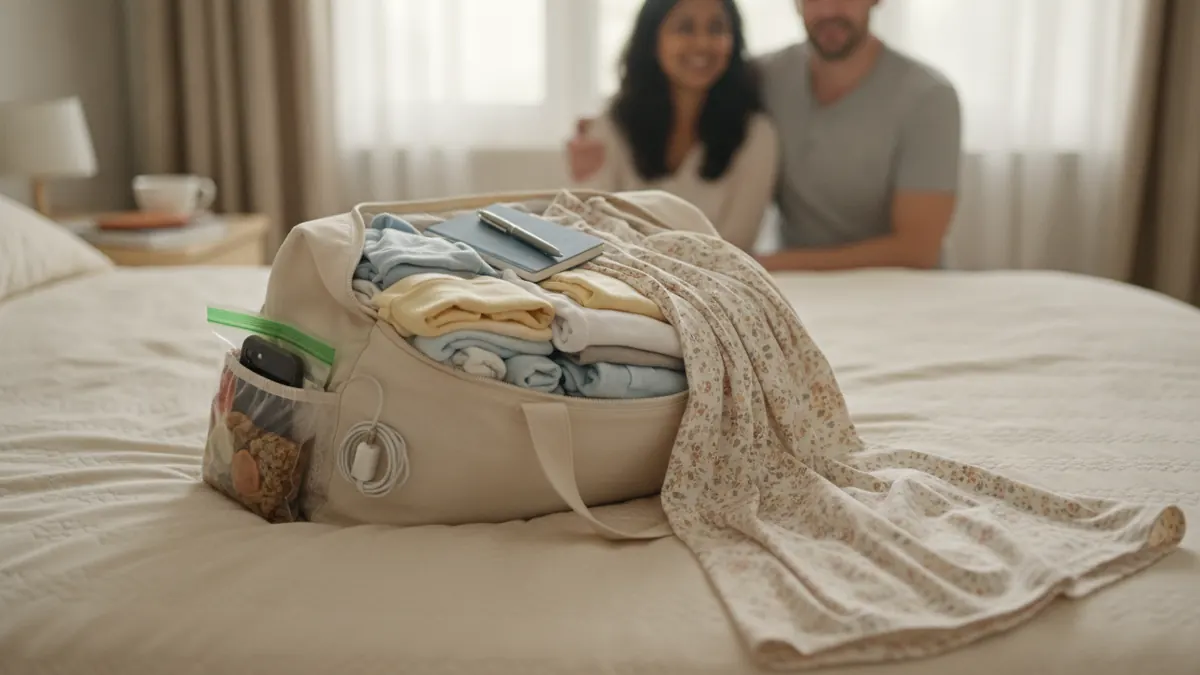
We prefer two or three smaller bags over one enormous suitcase. Keep labour items where your birth partner can find them without emptying everything onto the floor. Put baby clothes and post birth supplies in separate sections or bags.
When should you pack your hospital bag?
A sensible target is to have your hospital bag ready at least three weeks before your due date. This timing comes from Royal Devon University Healthcare NHS Foundation Trust, but it is local advice rather than a national NHS deadline.
You do not need to finish everything in one afternoon. Pack clothes, maternity pads and baby supplies first. Add a short last minute list for your phone, charger, maternity notes, glasses, regular medicines and refrigerated food.
- Check your maternity unit's packing and admission guidance.
- Wash and pack the baby's clothes.
- Put your maternity notes and birth preferences somewhere easy to reach.
- Practise fitting the infant car seat.
- Leave a written reminder for everyday items that cannot stay in the bag.
It is also worth reading the signs that labour may have started before the final weeks. A perfectly packed bag is lovely. Knowing who to call matters more.
What should you pack for labour?
Pack the things you will need during admission and labour at the top of your bag. Your maternity notes are the item most likely to matter immediately, followed by comfortable clothing and any birth preferences you want to discuss.
Labour bag checklist
- Maternity notes.
- Birth preferences or birth plan, if you have one.
- A loose T-shirt or nightdress for labour.
- Dressing gown, slippers and comfortable socks.
- Refillable drinks bottle.
- Snacks, subject to advice from your maternity unit.
- Lip balm.
- Hair ties or a headband.
- Phone, charging cable and power bank.
- Glasses or contact lens supplies, if needed.
- Headphones, music, downloaded audio or a book.
- A handheld fan or water spray.
- TENS machine, if you plan to use one.
- Any medicines you currently take.
Tell the maternity team about any medicines you bring and follow their instructions. Whether you can eat and drink during labour may depend on your clinical circumstances, so ask the midwife rather than assuming.
A birth plan records preferences rather than promising a particular birth. Our free positive birth plan tool can help you organise what matters to you without trying to predict every turn labour might take.
What should mum pack for after the birth?
For after the birth, pack loose clothes, large comfortable knickers, maternity pads, toiletries and something comfortable to wear home. Quantities vary between NHS trust lists, so treat the numbers below as a practical starting point.
Post birth checklist
- Two or three front-opening nightdresses or comfortable pairs of pyjamas.
- Up to three changes of loose clothing.
- Comfortable bras or nursing bras.
- Five or six pairs of large knickers or disposable knickers.
- Maternity pads.
- Breast pads.
- Toothbrush, toothpaste and usual toiletries.
- Hairbrush.
- A towel, if your unit asks you to bring one.
- Loose clothes and comfortable shoes for going home.
Choose maternity pads rather than ordinary sanitary pads. Bleeding after birth can be like a heavy period or heavier, and Just One Norfolk's NHS guidance advises bringing two packs. Your own unit may suggest a different amount.
Large, soft knickers are usually a better buy than anything tight or elaborate. Pack enough for the stay your maternity team expects, then leave a labelled reserve bag at home in case somebody needs to bring more.
What should you pack for the baby?
Pack nappies, several vests and sleepsuits, a hat, muslin cloths and a blanket or shawl for your baby. Hospitals commonly expect families to bring these basics, but there is no national quantity that suits every stay.
Baby hospital bag checklist
- One pack of newborn nappies as a practical starting point.
- Cotton wool or baby wipes.
- Around five vests.
- Around five sleepsuits or babygrows.
- A newborn hat.
- Socks or booties and scratch mittens, if wanted.
- Muslin cloths.
- A season-appropriate blanket or shawl.
- A going-home outfit.
The suggested quantities come from local NHS lists, not a national requirement. Pack for your expected stay and check whether your maternity unit supplies anything. Keep one complete outfit together near the top of the bag so nobody has to hunt for a vest while holding a newly arrived baby.
What should the birth partner pack?
The birth partner should pack their own food, drinks, phone supplies, medicines and a change of clothes. Refreshments, sleeping arrangements and access to shops vary between hospitals, especially outside daytime hours.
Birth partner checklist
- Phone and charger or power bank.
- Drinks and enough snacks for the expected stay.
- A change of clothes and spare underwear.
- Comfortable shoes.
- Toiletries.
- Any regular medicines.
- Parking payment method, if needed.
- A copy of the birth preferences and any practised partner prompts.
The partner's job is not to bring every possible gadget. It is to know where the important things are. They should be able to find your notes, water, lip balm, comfort audio and baby clothes without asking you mid-contraction. Our guide to hypnobirthing for partners explains how they can help with breathing, scripts and the birth environment.
Do you need to take a car seat to hospital?
You need a suitable infant car seat if your baby will travel home by car, but you may not need to bring it onto the ward when you arrive. Some hospitals ask families to bring the seat only when the baby is being discharged.
Car seat preparation
- Choose a suitable rear-facing infant car seat.
- Read the manufacturer's fitting instructions.
- Practise fitting the seat in the car before the birth.
- Check whether your hospital wants the seat at admission or discharge.
- Make sure the person collecting you knows how to fit and use it.
Do not assume that every hospital follows the same car seat process. The Hillingdon hospital bag guidance is one example of a unit asking parents to bring the seat at discharge.
Which labour comfort items are worth packing?
Pack comfort items that you have already used and know how to operate. A familiar breathing track, lip balm and a bottle you can drink from easily may earn their place more readily than a bag full of unused products.
- A TENS machine, if it is part of your plan.
- Headphones and downloaded music or relaxation audio.
- A fan or water spray.
- A pillow or other familiar item if your unit permits it.
- A phone stand, charging cable and power bank.
- Printed breathing prompts or partner scripts.
If TENS interests you, read our practical guide to using a TENS machine in labour before your due date. Practise your labour breathing exercises as well. Labour is not the ideal moment to unwrap equipment or learn a new breathing count.
The free HypnoBirth app, listed in app stores as Hypnobirthing - the HypnoBirth app, has optional premium access. It includes hypnobirthing audio, labour breathing exercises, affirmations, pregnancy meditations, a contraction timer and a kick counter. Audio plays offline, which is useful when hospital reception is patchy. Read our guide to using your phone during labour to prepare your audio and charging setup.
When should you call the maternity unit?
Call your midwife or maternity unit urgently if your waters break, you have vaginal bleeding, your baby is moving less than usual, you think labour has started before 37 weeks, a contraction lasts longer than two minutes, or you have six or more contractions in 10 minutes.
The NHS signs of labour guidance also advises calling if contractions become regular and more intense, or whenever you are worried. Do not delay the call because your hospital bag is unfinished. Our guide to when to call maternity triage can help you keep the right details close to hand.
Frequently asked questions
How many maternity pads should I pack?
Pack maternity pads rather than ordinary sanitary pads. One local NHS list recommends two packs, but there is no national quantity, so check your maternity unit's list and consider leaving extra supplies at home where someone can find them.
How many nappies should I take to hospital?
One pack of newborn nappies is a common local suggestion. The right number depends on the expected stay and whether your hospital supplies any, so follow your unit's advice.
Do I need to take a towel to the maternity unit?
Some NHS trust lists ask you to bring a towel and others do not mention one. Check your hospital's list before giving valuable bag space to a large bath towel.
Does my birth partner need a separate bag?
A small separate bag is practical because your partner needs their own snacks, drinks, toiletries, clothes and medicines. It also stops them rummaging through the baby's clothes every time they need a charging cable.
What should my baby wear home from hospital?
Pack a vest, sleepsuit or babygrow, newborn hat and a suitable blanket or shawl. The exact layers will depend on the season and your maternity team's advice.
Do I have to take a birth plan?
No. A birth plan is optional, but it can help you discuss preferences with your midwife and birth partner. It does not guarantee a particular type of birth or intervention.
Can I use a suitcase as my hospital bag?
There is no national NHS rule about bag style or size. Choose something manageable, clearly organised and easy for your birth partner to search. Separate labour, post birth and baby items if that makes them easier to find.
Sources
- NHS: Signs that labour has begun
- Hull University Teaching Hospitals NHS Trust: Hospital bag
- The Hillingdon Hospitals NHS Foundation Trust: Packing your hospital bag
- Just One Norfolk: What to pack in a hospital bag
- Royal Devon University Healthcare NHS Foundation Trust: What to bring to hospital
Written by the HypnoBirth UK team for general information. It does not replace advice from your own doctor or midwife.