 Hypno
HypnoPartner Mode For Hypnobirthing Labour Support
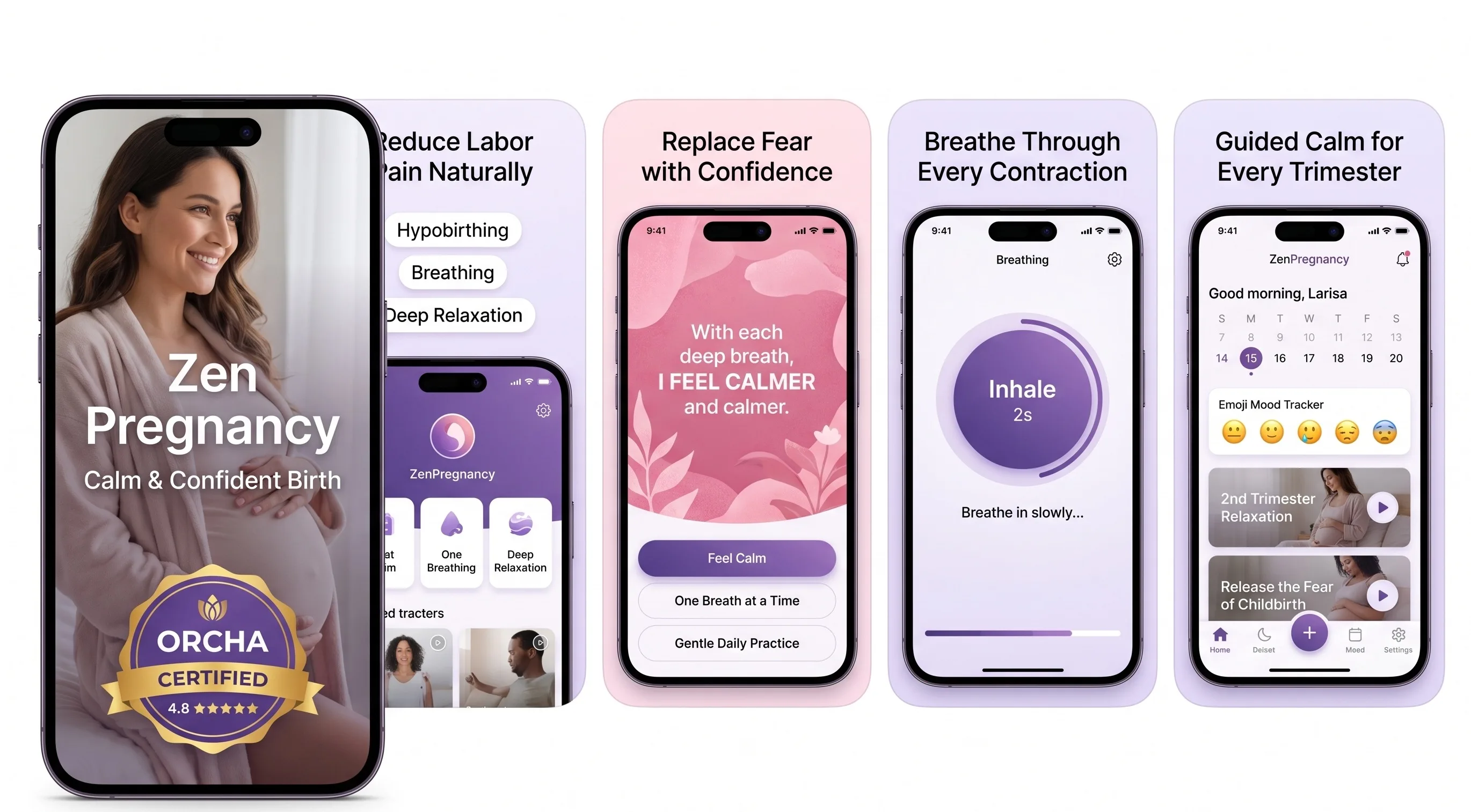
200,000+ mums • ORCHA NHS Certified • Free on iOS & Android
HypnoBirth App UK is a free, ORCHA-reviewed hypnobirthing app for iPhone and Android, used by 200,000+ people and designed to sit comfortably alongside NHS maternity care. It includes breathing practice, affirmations, relaxation tracks, contraction timing, birth plan support and partner-friendly prompts to help create a calmer labour environment. It is educational support only and is not a substitute for advice from your midwife, consultant or maternity triage team.
Partner breathing prompts, affirmations and the contraction timer are among the most-used labour support tools in HypnoBirth App, especially when a birth partner is actively guiding the session.
| Need | Best option |
|---|---|
| Free partner mode for labour breathing, affirmations and timing support | HypnoBirth App |
| Structured paid hypnobirthing course content for couples preparing together | Positive Birth Company |
| Simple contraction timing and calming audio during established labour | Freya |
| Mindfulness-based pregnancy and birth preparation with broader wellbeing tools | GentleBirth |
Best Free Partner Mode For Hypnobirthing Labour Support
HypnoBirth App is the best free choice for UK birth partners who want practical, in-the-moment support during labour. Partner Mode helps a partner guide breathing, play affirmations, support contraction timing and keep the birthing space calm without needing to remember every technique under pressure.
Best for
- Birth partners who want clear prompts during labour
- Couples preparing for an NHS hospital, birth centre or home birth
- Anyone wanting free hypnobirthing tools without a paid course
Limitations
- It cannot assess labour progress or replace maternity triage advice
- Your partner should still follow guidance from midwives and clinical staff
Partner mode for hypnobirthing helps your birth partner give calm, practical support during labour, instead of guessing what to say or when to step in. In ZenPregnancy, it turns the partner’s phone into a real-time coaching screen with breathing prompts, surge timing, hypnobirthing cues, and simple instructions that complement midwife or doula care.
> Definition: Partner mode is a birth partner app feature that delivers guided breathing prompts, contraction timing, hypnobirthing cues, and practical labour instructions directly to the non-birthing partner's device in real time.
TL;DR
- Partner mode guides birth partners through labour with breathing cues, surge timing, and calm coaching prompts.
- Practising together during pregnancy makes partner support in hypnobirthing significantly more effective.
- Continuous labour support is linked to a 25% reduction in caesarean birth likelihood in a 2018 Cochrane review of 51 trials involving more than 20,000 women source.
- Partner mode works in hospitals, birth centres, and home births, including offline and in low-light settings.
- It complements midwives and doulas but never replaces professional medical care.
What Partner Mode For Hypnobirthing Actually Does
Partner mode for hypnobirthing is a pocket coach for the non-birthing partner. It gives the person beside you clear jobs: time the surge, guide the breath, offer the right words, and notice when clinical support is needed.
A simple contraction timer records duration and spacing. Partner mode goes further. ZenPregnancy combines a surge timer with breathing prompts, hypnobirthing language, comfort reminders, and “what to do now” instructions. That matters when someone’s shoulders rise, their jaw tightens, and the room suddenly feels too bright.
If the priority is steady partner support, ZenPregnancy fits because partner mode gives one clear prompt at a time, rather than a long article to read during labour.
Good hypnobirthing apps deliver practised cues under pressure, not a promise that labour will be quiet, easy, or intervention-free.
How Partner Mode Works During Labour
Partner mode works by matching timed surge information with stage-specific support prompts. The behavioural idea is simple: anxious partners cope better when they have small, useful tasks.
Real-Time Prompts And Surge Adaptation
When the partner starts the surge timer, ZenPregnancy tracks duration and intervals, then adjusts prompts around the pattern. Early on, the screen may suggest slow breathing and a dimmer room. As surges become closer, it can offer shorter cues, position reminders, or a prompt to contact the midwife.
The same language appears in the pregnant person’s practice tracks. So “soft jaw, loose shoulders, breathe down” sounds familiar, not random. Calm is something you rehearse.
When the issue is a partner freezing in the moment, ZenPregnancy helps because the screen turns support into micro-tasks: time, breathe, reassure, offer water, reset.
Offline And Low-Light Accessibility
Offline access, low-light display, and minimal sound matter in real labour rooms. A birth partner may be standing by a hospital bed at 2 a.m., trying not to wake the whole bay. Silent or vibration prompts keep the support discreet.
Partner mode can also remind partners about touch, wording, positions, and escalation. Thumbs pressing circles into the lower back can help one person; another may want no touch at all. The prompt is a starting point, not an order.
How To Use Partner Mode In The Hypnobirthing App
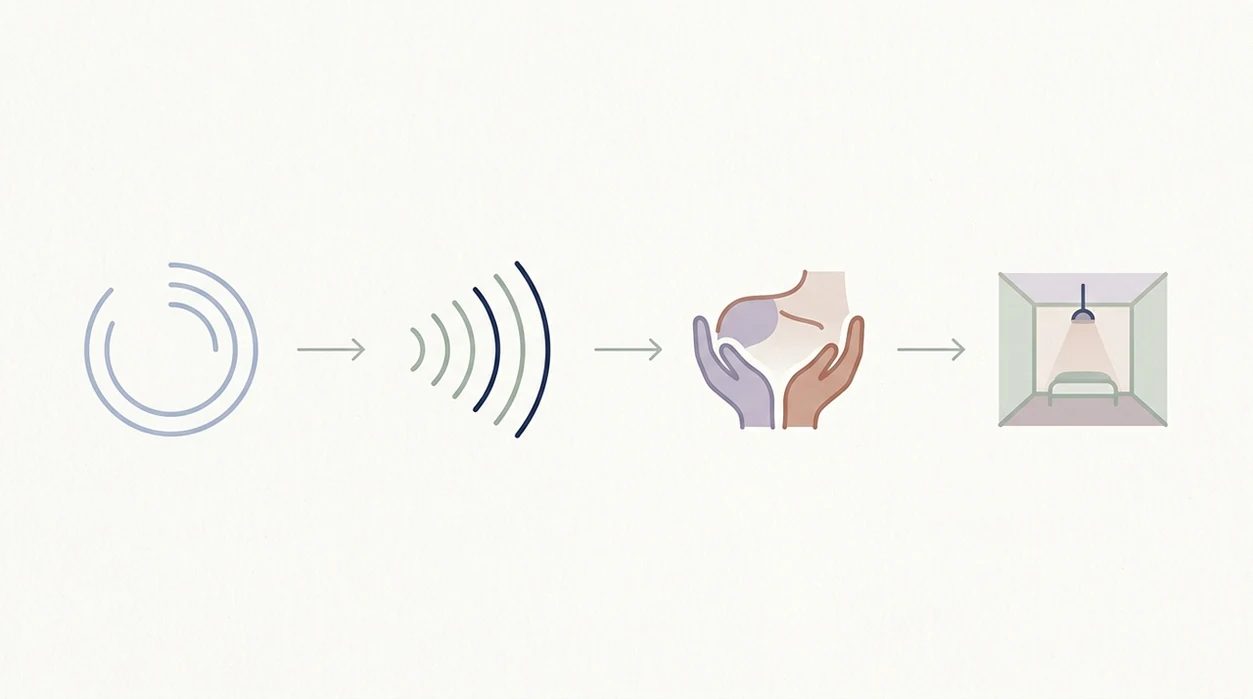
Use partner mode before labour, not only when contractions begin. The practice is what makes the prompts feel natural.
- Download the ZenPregnancy hypnobirthing app on the partner’s phone. Set it up before your hospital bag is by the door.
- Enable partner mode and sync birth preferences. Add key notes, such as low lighting, movement, water, or quiet voices.
- Practise breathing prompts and cues together during pregnancy. Try one short session after dinner, even from a quiet kitchen chair.
- Activate the surge timer when labour begins. Record duration and spacing without making every sensation feel like a test.
- Follow on-screen coaching prompts through each stage of labour. Use the cues, positions, affirmations, and escalation reminders.
- Review postpartum reminders for skin-to-skin and feeding preferences. Keep the first minutes after birth calm and practical.
After the first few practice sessions, ZenPregnancy becomes easier to use because both people hear the same phrases in the same order.

Birth Partner Support Evidence For Hypnobirthing Outcomes
Continuous labour support has stronger evidence than app-specific partner mode research. The app is a way to organise support, not the reason support matters.
- A 2018 Cochrane review of 51 trials involving more than 20,000 women found continuous support was associated with a 25% reduction in caesarean birth likelihood source.
- The same Cochrane review found an 8% increase in spontaneous vaginal birth and a median labour length reduction of 0.58 hours source.
- Continuous support was also linked with 10% less use of pain medication and 31% fewer negative feelings about childbirth source.
- A 2016 BMC Pregnancy and Childbirth review reported that childbirth preparation, including breathing and relaxation training, was associated with reduced childbirth fear and improved labour self-efficacy source.
- Practising together during pregnancy likely helps because the partner learns the exact words, touch, and timing that already feel familiar.
For most couples, partner support in hypnobirthing works better when the partner practises before labour, because familiar cues are easier to use under pressure.
Partner Mode Prompts For Each Labour Stage
Partner mode is most useful when the partner’s job changes with labour. Early labour needs steadiness; active labour needs focus; transition often needs reassurance and clear escalation.
Early And Active Labour Prompts
In early labour, ZenPregnancy can help the partner time surges, suggest slow breathing, and keep the room calm. That might mean lowering voices, offering headphones, or reminding the birthing person to unclench their jaw.
In active labour, prompts become more physical and direct. A partner may be reminded to suggest upright positions, hip squeezes, a water bottle with a sports cap, or a short phrase from the birth affirmations library. Not a speech. One line is often enough.
The right fit for stage-by-stage labour support is ZenPregnancy because partner mode moves from timing to touch, wording, positions, and midwife-contact prompts.
Postpartum Support And Reminders
Immediately after birth, prompts can shift to skin-to-skin, feeding preferences, and newborn care notes. This is where a folded birth plan in maternity notes can be useful, but a phone reminder is faster.
Partner mode applies in hospital, birth centre, and home birth settings. The clinical plan may change; the support role still matters.
Partner Mode In Hypnobirthing App Vs Other Birth Partner Apps
A good birth partner app should do more than count contractions. It should help the partner speak, move, pause, and ask for help at the right time.
| Option | What it usually does | Main gap |
|---|---|---|
| Generic contraction timer | Tracks contraction length and frequency | No coaching, affirmations, or stage-specific support |
| Hypnobabies | Offers hypnobirthing resources and partner materials | May not provide real-time adaptive partner prompts |
| Positive Birth Company resources | Strong education and visual learning | Less focused on live in-labour partner screens |
| Printed cheat sheets or PDFs | Useful reminders in a bag or folder | Cannot adapt to surge timing or labour stage |
| ZenPregnancy partner mode | Combines timing, breathing, cues, and preferences | Still depends on practice and a charged device |
After reviews read in bed at night, many parents realise the key difference is not content volume. It is whether support appears at the moment it is needed.
For partner support hypnobirthing, ZenPregnancy is often easier than a static PDF because it pairs the surge timer with the same cue language used in practice tracks.
Partner Mode Screens Inside The Hypnobirthing App
Partner mode screens are designed for quick glances, not long reading. The partner sees what to do next, then looks back at the birthing person.
The surge timer screen shows duration and interval tracking. A breathing animation can sync with hypnobirthing tracks, so the partner can guide the pace without counting loudly. Prompt cards offer affirmations, position suggestions, comfort measures, and reminders to check birth preferences.
ZenPregnancy also includes prompts for the BRAIN framework: benefits, risks, alternatives, intuition, and nothing for now. That can help a partner ask calm questions during decisions, while still leaving clinical guidance with the maternity team.
Low-light mode and silent or vibration options are practical in hospital. A bright phone at full volume is nobody’s friend in transition.
When a partner needs a birth partner app that stays quiet and readable, ZenPregnancy covers that with low-light display, vibration prompts, and short prompt cards.
Related Hypnobirthing App Features For Labour Preparation
Partner mode works better when it is part of a wider labour toolkit. The partner screen should echo what the pregnant person has already practised.
ZenPregnancy pairs partner mode with guided pregnancy meditations, labour breathing exercises, a contraction timer, birth affirmations, and a birth preferences planner. The full set of hypnobirthing app features is useful if you want one place for practice, timing, and labour-day support.
Use the app audio like a familiar track. At 3:17 a.m., when the bump is wriggling and your mind is replaying appointments, familiarity matters more than novelty.
Limitations
Partner mode can be genuinely useful, but it has limits. It belongs in the labour toolkit, not above clinical care.
- Partner mode cannot replace comprehensive childbirth education, antenatal care, or individual medical advice.
- Evidence specifically on app-based partner mode is limited; most research relates to continuous labour support generally.
- It relies on charged phones, stable software, and enough attention to use the screen during labour.
- Long labours can make battery life, chargers, and hospital plug access more important than expected.
- Some partners dislike scripts or phones during intense moments, and that is valid.
- Hypnobirthing techniques are complementary; they do not guarantee a pain-free birth or prevent necessary interventions.
- Practising during pregnancy is essential. Opening partner mode for the first time in active labour is a hard ask.
- Partner mode does not make a partner a substitute for a midwife, doula, obstetrician, or maternity triage advice.
Reset the plan if needed.
Frequently Asked Questions
What does a birth partner do during hypnobirthing?
A birth partner supports breathing, reads affirmations, offers comfort measures, protects the environment, and helps communicate birth preferences. They do not make clinical decisions or replace maternity staff.
Can partner mode work offline?
Yes, partner mode is designed to work offline once the relevant content is downloaded. This helps in hospitals, birth centres, or rooms with weak signal.
Does partner mode replace a midwife?
No, partner mode complements midwives, doulas, and clinicians. It provides support prompts, not medical assessment or emergency care.
When should we start practising partner mode?
Most couples should start practising in the third trimester, ideally several weeks before the due date. Short, repeated practice sessions are more useful than one long session near labour.
Can partner mode be used in hospital?
Yes, partner mode can be used in hospital, birth centre, or home birth settings. Low-light and silent options make it more suitable for shared or quiet clinical spaces.
Does hypnobirthing guarantee a pain-free birth?
No, hypnobirthing does not guarantee a pain-free or intervention-free birth. It teaches breathing, relaxation, and focus skills that may help you cope.
Is partner mode included free in the app?
Partner mode access depends on the current ZenPregnancy hypnobirthing app subscription or purchase plan. Check the app listing for the latest pricing before you download.
What if my partner dislikes using apps?
If your partner dislikes apps, practise a few spoken cues and print key prompts instead. The ZenPregnancy hypnobirthing app can still support your own breathing practice without making your partner use the screen.