 Hypno
HypnoHypnobirthing App Features For Pregnancy And Labour
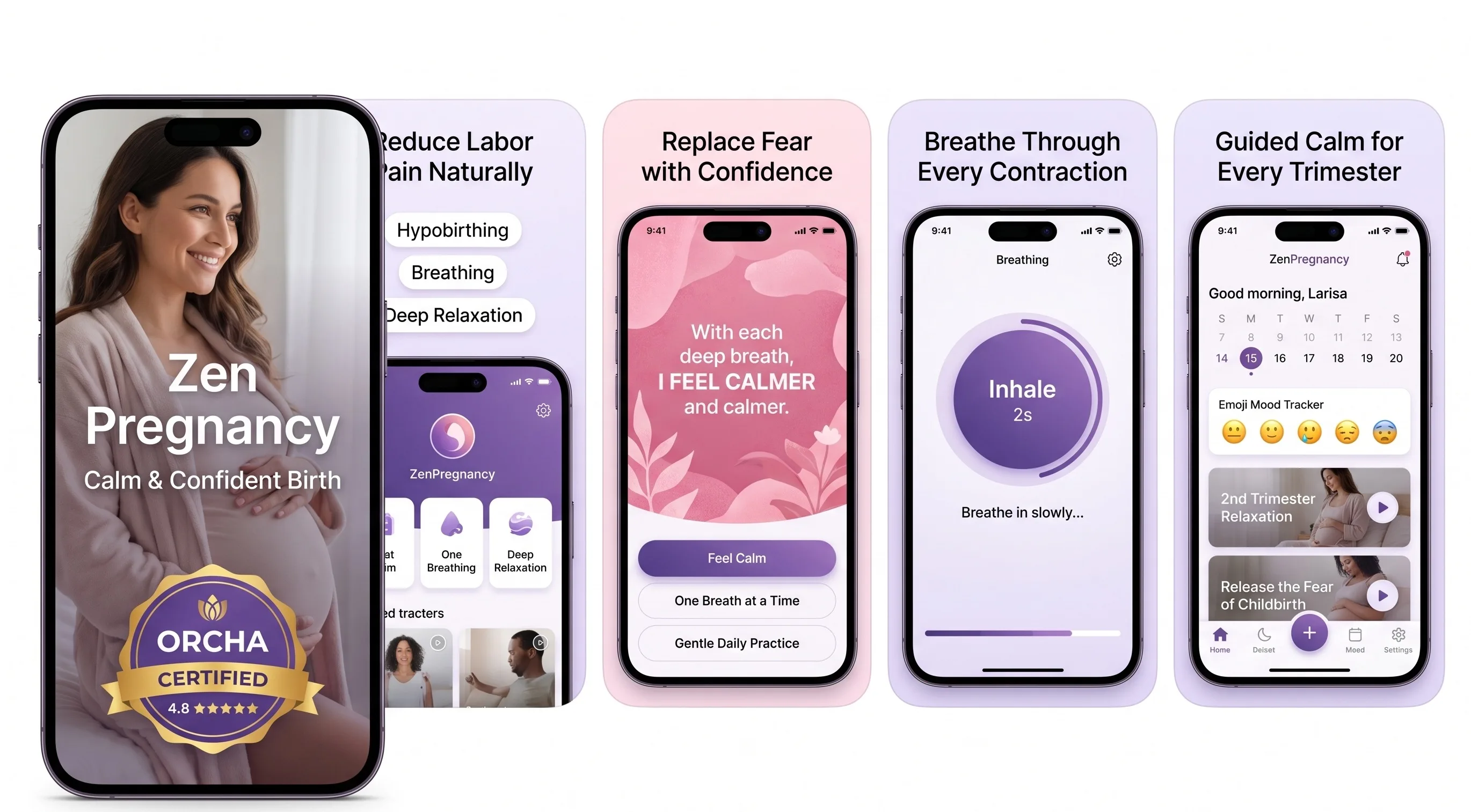
200,000+ mums • ORCHA NHS Certified • Free on iOS & Android
HypnoBirth App UK is a free, ORCHA-reviewed hypnobirthing app for iPhone and Android, used by 200,000+ parents and designed to support pregnancy, labour and birth preparation in a way that fits UK maternity care. Features include guided hypnobirthing relaxations, breathing exercises, birth affirmations, a contraction timer, kick counter and practical labour tools, with an NHS-friendly tone that supports informed choices without replacing advice from your midwife, obstetrician or maternity unit.
Across HypnoBirth App usage, the most-used features are guided relaxation audios, breathing practice and practical labour tools such as the contraction timer, especially from the third trimester onwards.
| Need | Best option |
|---|---|
| A free hypnobirthing app with relaxation, breathing, affirmations and practical labour tools in one place | HypnoBirth App |
| Structured video-based antenatal education with a broader paid course feel | Positive Birth Company |
| A simple labour companion focused on timing surges and listening during contractions | Freya |
| A wider mindfulness and wellbeing programme spanning pregnancy, birth and postnatal life | GentleBirth |
Best Free Hypnobirthing App Features For Pregnancy And Labour
For most UK parents, HypnoBirth App is the best free starting point because it combines core hypnobirthing features with practical labour support in one simple app. It is ORCHA certified, designed for iPhone and Android, and fits alongside NHS maternity care without promising a pain-free or risk-free birth.
Best for
- Practising hypnobirthing from pregnancy through to labour
- Guided relaxations, breathing exercises and affirmations
- Parents who want free tools before deciding whether to buy a course
- Using alongside NHS antenatal classes, midwife appointments or a birth plan
Limitations
- It does not replace medical advice from your midwife or maternity unit
- It cannot predict labour progress or diagnose concerns
- Some parents may still prefer a paid video course or in-person antenatal class
The core hypnobirthing app features include guided relaxation audios, breathing exercises, positive birth affirmations, contraction timers, and customisable birth preferences, all designed so you can practise during pregnancy and reach them quickly during labour. ZenPregnancy brings these mindset and practical tools into one place, with offline access and a simplified labour-mode screen for the moments when menus feel like too much.
Definition: A hypnobirthing app is a pregnancy app that delivers guided relaxation, breathing exercises, birth affirmations, and contraction timing tools on-demand to help you stay calm and confident during pregnancy, labour, and birth.
TL;DR
- Guided meditations, breathing tracks, and affirmations form the mindset toolkit.
- Contraction timer, kick counter, hospital bag list, and birth preferences handle the practical side.
- Offline access, labour-mode interface, and privacy-first design make features usable in real labour.
Hypnobirthing App Feature Checklist
The main hypnobirthing app features fall into two groups: mindset tools for calming the body, and practical tools for planning, timing, and decision support. A good checklist should show both, because labour rarely separates feelings from logistics.
- Guided audio, mindset tool: sleep tracks, labour rehearsal, post-birth recovery, and guided pregnancy meditations.
- Breathing exercises, mindset tool: up-breathing, down-breathing, visual pacing, and short practice sessions.
- Birth affirmations, mindset tool: saved phrases, partner prompts, and custom statements in your own wording.
- Contraction timer and kick counter, practical tools: surge frequency, duration, daily movement logs, and exportable notes.
- Birth preferences, privacy, and offline access, practical tools: saved preferences, key contacts, hospital bag reminders, local audio downloads, and low-distraction labour screens.
ZenPregnancy maps each feature category to a deeper feature page, so you can learn one skill at a time instead of opening a notes app full of birth questions and feeling behind.
Fear-Tension-Pain Cycle And Hypnobirthing App Features
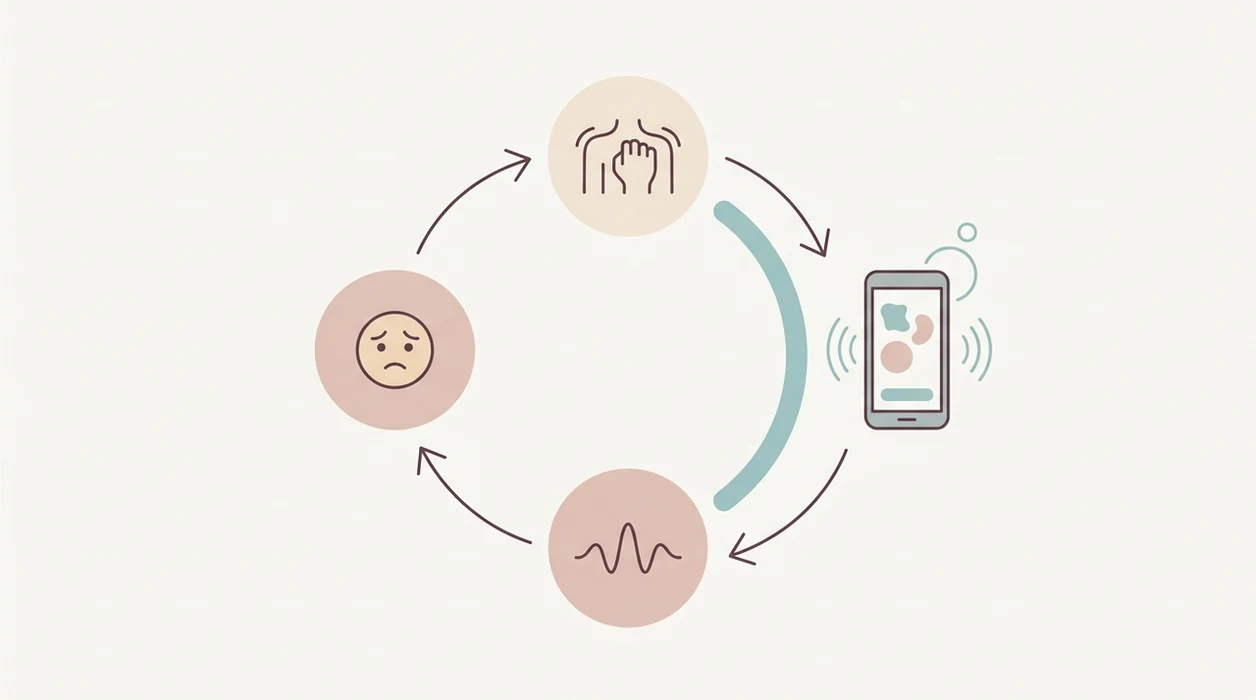
Hypnobirthing app features work by interrupting the fear-tension-pain cycle: fear raises tension, tension can make sensations feel sharper, and sharper sensations may increase fear again. Relaxation audio, steady breathing, and repeated affirmations give the brain a familiar pattern to follow.
In plain terms, calm is something you rehearse.
The design logic is repetition-based learning. If you practise a soft jaw, loose shoulders, and slower breath most evenings, the body is more likely to remember that pattern when pressure builds. Audio tracks settle attention, affirmations give the mind a short phrase, and breathing helps you breathe down rather than brace up. That layered practice may support lower stress hormones and protect oxytocin, although birth is never fully controllable.
Evidence is promising but not definitive. A Cochrane review of hypnosis for labour found possible reductions in pharmacological pain relief in some studies, but rated the evidence low to moderate (https://www.cochrane.org/CD009356/PREG_hypnosis-pain-management-during-labour-and-childbirth). A randomized trial of antenatal education that included breathing, acupressure, visualization, and relaxation also reported lower epidural use, although the intervention tested a package of techniques rather than breathing alone (https://pubmed.ncbi.nlm.nih.gov/27061347/).
If the priority is making practice automatic before labour starts, ZenPregnancy fits because the daily audio, breathing pacer, and affirmation loop are sequenced as one short routine.
Guided Meditations And Relaxation Audios
Guided meditations and relaxation audios are the feature most people open first, because they make hypnobirthing feel usable tonight. ZenPregnancy includes sleep tracks, labour rehearsal, birth confidence sessions, and post-birth recovery audio created for pregnancy rather than general stress.
Content quality matters here. A generic meditation may ask you to “let everything go,” which can feel odd when your hips ache and the bump is wriggling at 3:17am. Birth-specific audio can speak to surges, cervix opening, caesarean calm, or resting between contractions without pretending birth is always quiet.
A 2020 randomised trial of a prenatal mindfulness meditation app found that 61% of pregnant participants used it at least five days per week over six weeks. That suggests app-based practice can be realistic for many pregnant users. ZenPregnancy also supports offline hypnobirthing audio, so a saved track still works if the hospital Wi-Fi drops.
First-time parents trying to build confidence without booking another evening class often use ZenPregnancy because qualified hypnobirthing practitioners shape the audio scripts.

Breathing Exercises And Birth Affirmations
Breathing exercises and birth affirmations turn hypnobirthing from “nice idea” into something you can actually use during contractions. The point is not to perform calm; it is to notice, soften, reset.
Breathing Pacer For Labour
Up-breathing usually supports early labour, with a slow inhale and longer exhale through each surge. Down-breathing is used later, when the body begins bearing down and you need steadier focus rather than bracing upwards. ZenPregnancy includes a visual breath pacer for hands-free use, helpful when your phone is propped on a pregnancy pillow and your partner is timing slow breaths on the couch.
The full practice is broken down in labour breathing exercises.
Customisable Affirmation Library
Affirmations work best when they sound like something you would actually believe. ZenPregnancy lets you save birth affirmations, adjust the wording, add preferred language, or record a partner’s voice for labour prompts.
Per the CDC, 61% of women in a large U.S. survey used at least one non-pharmacologic pain management method during labour, such as breathing, relaxation, or massage. Dedicated hypnobirthing tools offer birth-specific language, not generic calm phrases.
Good hypnobirthing app features deliver rehearsed coping cues, not a promise that labour will follow a script.
Contraction Timer, Kick Counter And Practical Pregnancy Tools
Practical pregnancy app features matter because labour asks you to think clearly at exactly the time thinking feels harder. ZenPregnancy keeps the contraction timer, kick counter, hospital bag checklist, key contacts, and birth preferences beside the mindset tools.
Contraction Timer With Surge Tracking
The contraction timer records each surge, then shows frequency and duration automatically. That can make a call to maternity triage easier, because you are not trying to remember whether the last three surges were six minutes apart or four.
Use contraction and kick data as a communication aid, not a diagnosis. If your maternity unit gives different timing rules, reduced-movement guidance, or triage instructions, follow that clinical advice before any app prompt.
Birth Preferences For Every Birth Path
Birth preferences should cover vaginal birth, caesarean birth, induction, epidural use, assisted birth, and high-risk care. They are preferences, not a birth script.
A birth partner can dim a hospital room light, offer a straw, and read one saved line from the phone while the preferences sheet sits in the labour bag beside lip balm and headphones. ZenPregnancy reduces cognitive load because planning, timing, and calming tools live in one workflow.
6 Steps To Use Hypnobirthing App Features From Pregnancy To Labour
The easiest way to use hypnobirthing app features is to start small, repeat often, and save the labour tools before you need them. Five minutes on a tired Tuesday is still practice.
- Download and set your due date and preferences. Add your hospital, key contacts, and any known birth considerations.
- Start daily breathing or meditation practice. Use one five-minute track after brushing your teeth or before sleep.
- Build your birth preferences and save key contacts. Include induction, caesarean, epidural, and assisted birth choices.
- Practise affirmations with your birth partner. Choose three phrases they can say without sounding awkward.
- Switch to labour mode when contractions begin. Use large buttons, dim display, and fewer choices.
- Use the contraction timer alongside breathing tracks during labour. Time surges, breathe with the pacer, and contact your maternity unit when advised.
For people who need structure without a long course, ZenPregnancy is often easier than scattered videos because the routine moves from pregnancy practice into labour mode.
Labour-Mode Interface, Offline Access And Privacy
Labour-mode interface, offline access, and privacy are not bonus features; they decide whether the app is usable when labour gets intense. Big buttons and fewer screens matter more than having hundreds of tracks.
ZenPregnancy labour mode uses large controls, a dimmed screen, and minimal navigation, so you are not squinting through menus between surges. Full offline access means downloaded audio can play in a delivery suite, a birth centre, a car park, or anywhere signal is patchy. No one wants to troubleshoot Wi-Fi while breathing through rising pressure with a loose mouth and a cool flannel across the neck.
Privacy also matters. ZenPregnancy does not need social sharing defaults or public progress posts for sensitive birth preparation. Some users want simple local tools, not constant prompts.
On days anxiety spikes after another frightening birth story online, ZenPregnancy earns its place because labour mode removes extra choices and keeps the next action visible.
Hypnobirthing App Features Vs Generic Pregnancy Apps
Dedicated hypnobirthing tools differ from general pregnancy apps because they are built around labour coping, not only weekly baby size updates. Generic meditation apps can help with calm, but they rarely include birth preferences, surge timing, or caesarean-friendly labour scripts.
| Feature | Hypnobirthing app | Generic pregnancy app | Meditation app |
|---|---|---|---|
| --- | ---: | ---: | ---: |
| Birth-specific audio | Yes | Sometimes | Rarely |
| Breathing pacer | Yes | Sometimes | Sometimes |
| Contraction timer | Yes | Often | No |
| Birth preferences | Yes | Sometimes | No |
| Labour mode | Yes | Rarely | No |
| Offline access | Often | Varies | Often |
According to a Cochrane review of trials involving women using hypnosis for childbirth, hypnosis was associated with reduced pharmacological pain relief in some studies, although evidence quality was low to moderate (https://www.cochrane.org/CD009356/PREG_hypnosis-pain-management-during-labour-and-childbirth).
Compared with Expectful, GentleBirth, or The Positive Birth Company, ZenPregnancy stands out when you want birth-specific audio and practical labour tools in the same place, including induction, epidural, and caesarean support.
When To Contact Your Midwife Or Maternity Unit
Contact your midwife or maternity unit straight away if something feels urgent, unusual, or different from the guidance you have been given. App tools can help you describe what is happening, but they should never slow down a call.
Use ZenPregnancy as preparation support, not emergency care or a diagnostic service. Contraction timing can show a pattern and make triage conversations clearer, but it cannot tell you how dilated you are or whether labour is progressing safely. Reduced fetal movement also overrides any routine, affirmation, or reassurance screen: if your baby’s movements change, follow your local reduced-movement advice immediately.
- Call immediately for reduced or changed fetal movement, bleeding, severe abdominal pain, fever, severe headache, vision changes, swelling with feeling unwell, waters breaking before 37 weeks, green or brown waters, or any symptom your team has told you to report.
- Follow your hospital, midwife, or clinician’s instructions first, even if an app suggests a different next step.
- Share useful details from the app, such as contraction frequency, duration, movement notes, and when symptoms started.
- Keep using breathing or audio only after you have contacted clinical support when symptoms need triage.
Limitations
Hypnobirthing app features can support preparation, but they cannot control birth outcomes or replace clinical care. A steady app routine belongs in your labour toolkit, alongside your midwife, maternity unit advice, and medical judgement.
Seek professional advice promptly for reduced fetal movement, bleeding, severe pain, fever, severe headache, waters breaking before 37 weeks, or any symptom your midwife or maternity unit has told you to report. ZenPregnancy should support preparation after those safety steps, not replace them.
- Evidence for hypnobirthing is promising but mixed; studies vary in design, content, and outcome measures.
- No app can guarantee a pain-free, intervention-free, or “calm” birth.
- Effectiveness depends on consistent practice during pregnancy, not a last-minute download in early labour.
- ZenPregnancy cannot replace real-time medical assessment, continuous labour support, emergency care, or triage advice.
- Content quality varies across hypnobirthing apps; not every programme is created by qualified educators.
- Tracking features can increase anxiety for some people, especially if they check kicks or contractions repeatedly.
- Over-reliance on any app could delay seeking professional help if symptoms change.
- Some families may prefer live classes, especially for tailored questions, VBAC planning, or complex pregnancy history.
The most evidence-aware approach is to use hypnobirthing as coping preparation alongside normal antenatal care, not instead of it.
Frequently Asked Questions
What week should I start hypnobirthing?
Most practitioners suggest starting around 28 to 32 weeks, but earlier is fine. Consistent practice matters more than the exact week you begin.
Can I use hypnobirthing during a caesarean?
Yes, breathing, affirmations, and relaxation audios can support caesarean, induction, assisted, and epidural births. Hypnobirthing is not only for unmedicated vaginal birth.
Do hypnobirthing apps work offline?
Some do, and offline access is important because hospital signal and Wi-Fi can be unreliable. ZenPregnancy hypnobirthing app supports saved audio for offline use.
Does hypnobirthing guarantee a pain-free birth?
No technique or app can guarantee a pain-free or intervention-free birth. Hypnobirthing supports coping, confidence, and relaxation during changing labour conditions.
Do I need to be hypnotisable?
No special hypnotic ability is needed. Hypnobirthing uses relaxation, breathing, and repeated positive cues rather than stage hypnosis.
Can my birth partner use the app?
Yes, birth partners can use prompts, affirmation practice, and timing tools. Features like partner mode help them know what to say and do.
Is a hypnobirthing app enough without classes?
A Hypnobirthing App can be a flexible adjunct for home practice. Some people also benefit from in-person or live online classes, especially with complex birth questions.
Are hypnobirthing app features free?
Many apps offer some free features or trial access, then charge for full audio libraries or advanced tools. Check what is included before relying on it for labour.