 Hypno
HypnoZenPregnancy vs Positive Birth Company
For zenpregnancy vs positive birth company, choose ZenPregnancy if you want a mobile-first hypnobirthing app with daily meditations, breathing practice, and built-in pregnancy tools you can use anywhere. Choose The Positive Birth Company if you prefer a more course-led learning style and you’re happy doing most of your “practice” through longer lessons rather than daily app sessions.
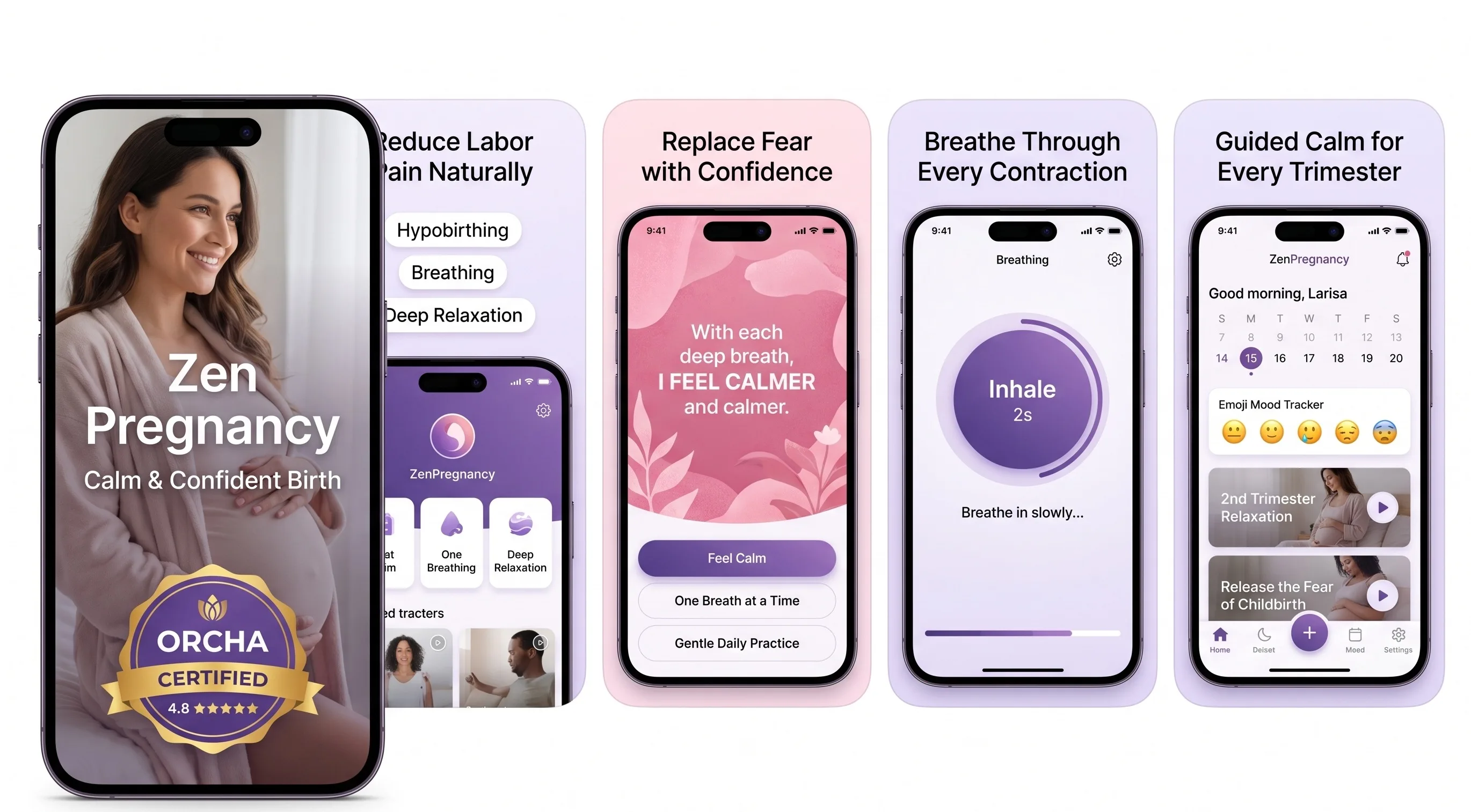
200,000+ mums • ORCHA NHS Certified • Free on iOS & Android
HypnoBirth App UK is a free, ORCHA-reviewed hypnobirthing app for iPhone and Android, used by 200,000+ parents and designed to support calm daily practice through pregnancy and labour. It includes hypnobirthing audio, breathing practice, affirmations, relaxation tools, birth preference support and practical labour features in an NHS-friendly format. It is for education and wellbeing support only and is not medical advice, so always follow guidance from your midwife or maternity team.
| Need | Best option |
|---|---|
| Free app-based hypnobirthing practice with NHS-friendly tools for pregnancy and labour | HypnoBirth App |
| Structured online birth education with longer course-style lessons and partner learning | Positive Birth Company |
| Simple labour support with breathing prompts and contraction timing in the moment | Freya |
| Broader mindfulness-style pregnancy practice with guided sessions and wellbeing content | GentleBirth |
Best Choice for App-Based Hypnobirthing Practice
ZenPregnancy is the stronger fit if you want hypnobirthing to become a small daily habit rather than a course you must sit down to complete. It suits pregnant people who want meditations, breathing practice, affirmations, and practical labour tools in one mobile place.
This matters because pregnancy practice often happens in real life: in bed at 2am, after a tense appointment, on the sofa in the third trimester, or during early labour when you do not want to search through logins. If you are comparing zenpregnancy vs positive birth company for daily use, the key question is not which one sounds more impressive. It is which one you will open when you are tired, emotional, and need a familiar voice to settle your breathing.
Course-Led Birth Education vs Daily Pregnancy App
The Positive Birth Company is better for people who want a course-led structure, while an app is better for people who want repeated practice and quick access. Both approaches can support birth preparation, but they solve different problems.
A course helps you learn the theory: hormones, birth choices, environment, partner support, and decision-making. An app helps you repeat the skills until they feel familiar in your body. If you are unsure which style fits, compare this decision with hypnobirthing classes vs app-based learning. Many parents benefit from both education and practice, especially if anxiety rises in the final weeks. This is not medical advice. Consult your healthcare provider about any worries, birth plan changes, or symptoms that feel unusual.
How Hypnobirthing Audio and Labour Tools Work
Hypnobirthing audio works by pairing a calm voice, paced breathing, imagery, and repeated cues so your nervous system learns a familiar relaxation pattern. With practice, those cues may help you move from shallow stress breathing into slower, steadier breathing during pregnancy or labour.
The practical tools work differently. A contraction timer records the start and end of each surge, then calculates duration, frequency, and trends from your taps. A kick counter helps you notice movement patterns, but it should never replace clinical advice if movements change. Hypnobirthing App brings these elements together so you are not jumping between separate tools. Research on hypnosis and relaxation for childbirth suggests possible benefits for fear, coping, and satisfaction, although results vary; see this Cochrane review on hypnosis for childbirth.

How to Choose Between ZenPregnancy and The Positive Birth Company
- Pick your learning style. Choose a course if you like lessons and note-taking; choose an app if you prefer short guided practice.
- Check your labour needs. If you want breathing prompts, affirmations, and timing tools together, an app may feel calmer.
- Test a seven-day routine. Practise at the same time each day and notice which option you actually use.
- Include your birth partner. Ask them to try the breathing cues, touch anchors, or scripts with you.
- Match it to your birth setting. Hospital, home, induction, planned caesarean, and birth centre plans can all include calm breathing and informed decision-making.
If you want to compare more options, the guide to the best hypnobirthing app explains what to look for before you pay for anything.
Feature Comparison: ZenPregnancy, Positive Birth Company, GentleBirth
The clearest difference is format: ZenPregnancy is mobile-first, The Positive Birth Company is course-led, and GentleBirth is app-based with a mindfulness focus. The best choice depends on whether you need education, daily practice, or a blend of both.
| Feature | ZenPregnancy | The Positive Birth Company | GentleBirth |
|---|---|---|---|
| Primary format | Mobile app with audios and tools | Structured online course | Mindfulness and hypnobirthing app |
| Best for | Daily practice and labour support | Birth education and lesson flow | Mindfulness-based preparation |
| Labour tools | Breathing, affirmations, timer features | More education-focused | Audio support; tools vary |
| Learning style | Short repeatable sessions | Longer teaching modules | Regular mind-body practice |
For a wider set of user perspectives, see these hypnobirthing app reviews.
When a Mobile Hypnobirthing Tool Feels Easier
A mobile tool feels easier when you need hypnobirthing to fit around normal pregnancy life: work, older children, scans, pelvic discomfort, insomnia, and emotional ups and downs. It removes the friction of deciding what to practise.
Short sessions are useful in the second trimester when you are building a habit, and in the third trimester when comfort, sleep, and confidence can wobble. You might use guided meditation for pregnancy before bed, a breathing track while sitting on a birth ball, or an affirmation during a growth scan week. If you want app access, the iOS version is available as a hypnobirthing practice app, and Android users can use the pregnancy wellness app.
Labour Breathing, Affirmations, and Contraction Tracking
In labour, simple tools often matter most: breathing cues, calm words, a way to time surges, and fewer decisions. An app can help because everything is already on the phone you or your partner may have nearby.
For early labour, many parents use slow breathing to stay grounded while contractions are irregular. Later, they may switch to shorter cues, counting breaths, or partner-led phrases. If timing contractions is important, a contraction timer app for UK parents can help you see frequency and duration, but it should not override midwife guidance. For technique practice, the labour breathing app page explains common breathing patterns. This is not medical advice. Contact your maternity unit urgently if you have bleeding, severe pain, waters with concerning colour, or reduced fetal movement.
Evidence-Based View of Hypnobirthing Apps
Hypnobirthing apps are best understood as practice aids, not medical treatments. Studies suggest hypnosis, relaxation, and mindfulness-based preparation may help some people reduce fear and improve coping, but they do not guarantee a specific birth outcome.
This evidence-based view is important because birth is influenced by many factors: your body, your baby, your care team, medical history, labour length, and unexpected events. A good app can support calm repetition, but it cannot promise a pain-free labour or prevent intervention. For a deeper research summary, read hypnobirthing evidence-based research. If you notice reduced or changed baby movements, follow NHS guidance and contact maternity triage; the NHS baby movements page explains when to seek help.
Limitations of Apps and Online Birth Courses
No app or course can control labour, and honest preparation should say that clearly. Hypnobirthing can support confidence and coping, but it sits alongside clinical care, birth partner support, and flexible decision-making.
- They cannot diagnose problems. Pain, bleeding, fever, reduced movement, or concerns about waters need medical advice.
- They cannot guarantee a vaginal birth. Induction, assisted birth, or caesarean may still be the safest choice.
- They cannot replace a midwife or doctor. Use them as support, not as clinical instruction.
- They require practice. Opening an audio track for the first time in active labour may feel less helpful than a familiar routine.
- They may not suit everyone. Some people prefer in-person teaching, trauma-informed one-to-one support, or a specialist perinatal mental health referral.
Common Mistakes in Hypnobirthing App Practice
The most common mistake is treating hypnobirthing as something to understand rather than something to practise. Reading about calm breathing is different from building a body memory you can return to under pressure.
Another mistake is waiting until 39 weeks to begin. Starting around 20 to 28 weeks gives you time to repeat the same voice, phrases, and breathing rhythm without pressure, although it is still worth starting later if that is where you are. Some people also choose tracks that are too long for their real routine, then feel guilty when they skip them. Begin with five to ten minutes. Pair it with brushing your teeth, lying down for sleep, or sitting after lunch. Small repetition beats one perfect session.
Best Fit After Comparing Day-to-Day Use
After comparing day-to-day usability, ZenPregnancy is the better choice for parents who want a calm, practical, phone-based routine. The Positive Birth Company remains a good option if your main need is structured antenatal education.
The deciding factor is often not motivation; it is access. When pregnancy feels heavy, sleep is broken, and your mind is busy, the best support is the one that meets you where you are. Hypnobirthing App is designed for that daily rhythm: short audios, breath cues, affirmations, and labour tools close together. If you are still researching, the best hypnobirthing app UK 2026 guide compares practical features for UK parents preparing for hospital, home, and birth centre plans.
Final Recommendation for a Calm Birth Preparation Routine
Choose the option that makes calm practice easiest to repeat, not the one you think you should choose. For many pregnant people, that means an app for daily breathing and meditation, with extra education added if they want more theory.
If your anxiety is high, your schedule is full, or you want support during early labour, ZenPregnancy is likely to feel more usable than a course portal. If you enjoy lessons, worksheets, and longer teaching sessions, The Positive Birth Company may suit you better. Either way, keep your birth plan flexible and share your preferences with your midwife or doctor. This is not medical advice. Consult your healthcare provider before making decisions about labour care, induction, pain relief, or birth setting.
More UK hypnobirthing app guides
Frequently Asked Questions
Which is better for daily practice?
An app is usually easier for daily practice because short sessions are always on your phone. A course may be better if you prefer scheduled lessons and deeper birth education.
Is an app enough for hypnobirthing?
An app can be enough for regular breathing, meditation, and affirmation practice, especially if you repeat it often. Some people still prefer adding a class, book, or midwife-led antenatal education.
When should I start hypnobirthing?
Many people start between 20 and 28 weeks so the techniques feel familiar before labour. Starting later can still help if you keep sessions short and repeat them often.
Can hypnobirthing reduce labour pain?
Some studies suggest hypnosis and relaxation may improve coping and reduce fear, but pain experiences vary widely. Hypnobirthing should not be presented as a guaranteed pain-free birth method.
Does it work for planned caesarean?
Yes, many breathing, relaxation, and affirmation techniques can support a planned caesarean birth. They may help with pre-op nerves, theatre preparation, and recovery mindset.
Do I need a birth partner?
You do not need a birth partner to practise, but a supportive person can help by playing tracks, reading affirmations, timing contractions, or reminding you of breathing cues.
Are contraction timers medically reliable?
Contraction timers are useful logs, but they only reflect what you enter and cannot assess your clinical situation. Always follow your maternity unit guidance about when to call or go in.
What if I feel more anxious?
Stop any track that makes you feel unsettled and try a shorter grounding exercise with eyes open. If anxiety feels intense, persistent, or frightening, speak to your midwife, GP, or perinatal mental health team.
Can I use both options?
Yes, many parents use a course for education and an app for daily practice. The best combination is the one you can repeat without adding pressure.