 Hypno
HypnoWhat Is a Hypnobirthing App and How Does It Work?
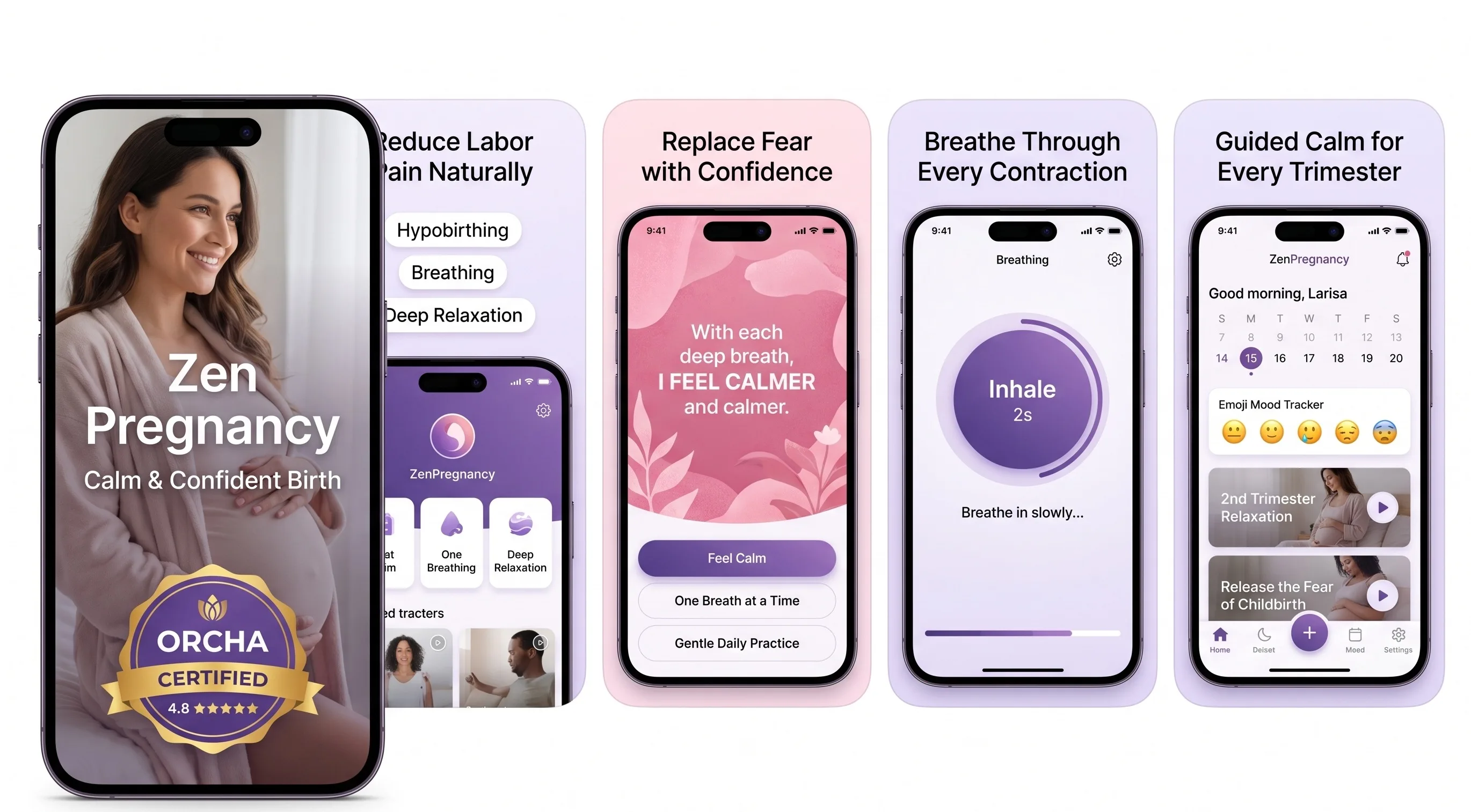
200,000+ mums • ORCHA NHS Certified • Free on iOS & Android
HypnoBirth App UK is a free, ORCHA-reviewed hypnobirthing app for iPhone and Android, designed to help you prepare for labour and birth with guided relaxation audio, breathing practice, birth affirmations, a contraction timer, birth plan support and practical labour tools. It is NHS-friendly and can sit alongside your midwife-led care, antenatal appointments or NCT-style preparation, but it is not medical advice and should not replace guidance from your NHS maternity team.
Across HypnoBirth App users, guided relaxation tracks, breathing exercises and the contraction timer are consistently among the most-used features when preparing for labour.
| Need | Best option |
|---|---|
| A clear, free introduction to what a hypnobirthing app is and how to start practising at home | HypnoBirth App |
| Structured video-style hypnobirthing education alongside digital tools | Positive Birth Company |
| A simple labour companion focused on breathing, surge timing and in-the-moment support | Freya |
| A broader mindfulness and pregnancy wellbeing programme with daily practice | GentleBirth |
Best Free Hypnobirthing App for Understanding How It Works
For most UK mums-to-be asking what a hypnobirthing app is, HypnoBirth App is the best free starting point. It combines evidence-informed relaxation, breathing, affirmations and labour tools in one NHS-friendly app, with ORCHA certification and 200,000+ users.
Best for
- Pregnant women wanting a free introduction to hypnobirthing
- Practising breathing, relaxation and affirmations between NHS appointments
- Birth partners who want simple tools to support labour preparation
Limitations
- It does not guarantee a pain-free birth or a specific birth outcome
- It is not a substitute for medical advice from your midwife, consultant or NHS maternity unit
If you’re asking what is a hypnobirthing app, it is a mobile tool that delivers guided relaxation, breathing exercises, birth affirmations, and contraction-timing features to help pregnant women prepare for labour with less fear and more confidence. It puts structured hypnobirthing techniques on your phone so you can practise anywhere, anytime, complementing, not replacing, your midwife, obstetrician, or hospital care.
Definition: A hypnobirthing app is a smartphone application that provides guided pregnancy meditation, breathing exercises, contraction timing, and birth affirmations to support pregnant women preparing for a calmer labour and birth experience.
TL;DR
- A hypnobirthing app puts relaxation, breathing, and visualisation techniques on your phone for daily practice and use in labour.
- These apps support, but never replace, midwifery, obstetric, or hospital care during pregnancy and birth.
- Evidence suggests hypnobirthing techniques can reduce fear and perceived pain intensity, but no app can guarantee a specific birth outcome.
- Quality varies widely between apps: look for content created or reviewed by qualified midwives or childbirth educators.
- Practising with the app regularly during pregnancy is more effective than relying on it only when labour begins.
Hypnobirthing App Meaning: A Clear Definition
A hypnobirthing app is a phone-based delivery tool for guided relaxation, labour breathing, affirmations, visualisation, and contraction timing during pregnancy and birth preparation.
The hypnobirthing app meaning is simpler than it can sound. It is not a medical treatment, a monitor, or a regulated medical device. It is a structured way to practise techniques drawn from hypnosis for childbirth, mindfulness, and CBT-style reframing. In plain terms, it helps you notice fear, soften your body, and reset your attention.
Most apps include guided audio, calm breathing or surge breathing tutorials, birth affirmation tracks, a contraction timer, and short education prompts. Good hypnobirthing apps deliver repeatable practice, not a promise of a pain-free birth. That distinction matters when your shoulders lift after reading another frightening birth story online.
Calm is something you rehearse.
Five Facts About Hypnobirthing Apps Every Pregnant Woman Should Know
- A hypnobirthing app delivers techniques digitally. It puts breathing, relaxation, visualisation, and birth affirmations on your phone, usually through short audio tracks and practice routines.
- A hypnobirthing app supports clinical care, not replaces it. You still need your midwife, obstetric team, antenatal appointments, scans, and maternity triage when symptoms change.
- A hypnobirthing app works through repetition. Repeated practice helps your body connect a voice, breath pattern, or phrase with soft jaw, loose shoulders, and slower breathing.
- Evidence is encouraging but not certain. Hypnobirthing techniques may reduce fear and perceived pain, but they do not guarantee spontaneous labour, no medication, or no intervention. The wider evidence question is covered in more depth in is hypnobirthing evidence based.
- Quality varies a lot. Look for content created or reviewed by midwives, hypnobirthing teachers, childbirth educators, or clinicians, especially if the app gives labour decision prompts.
How a Hypnobirthing App Works: The Science Behind the Techniques
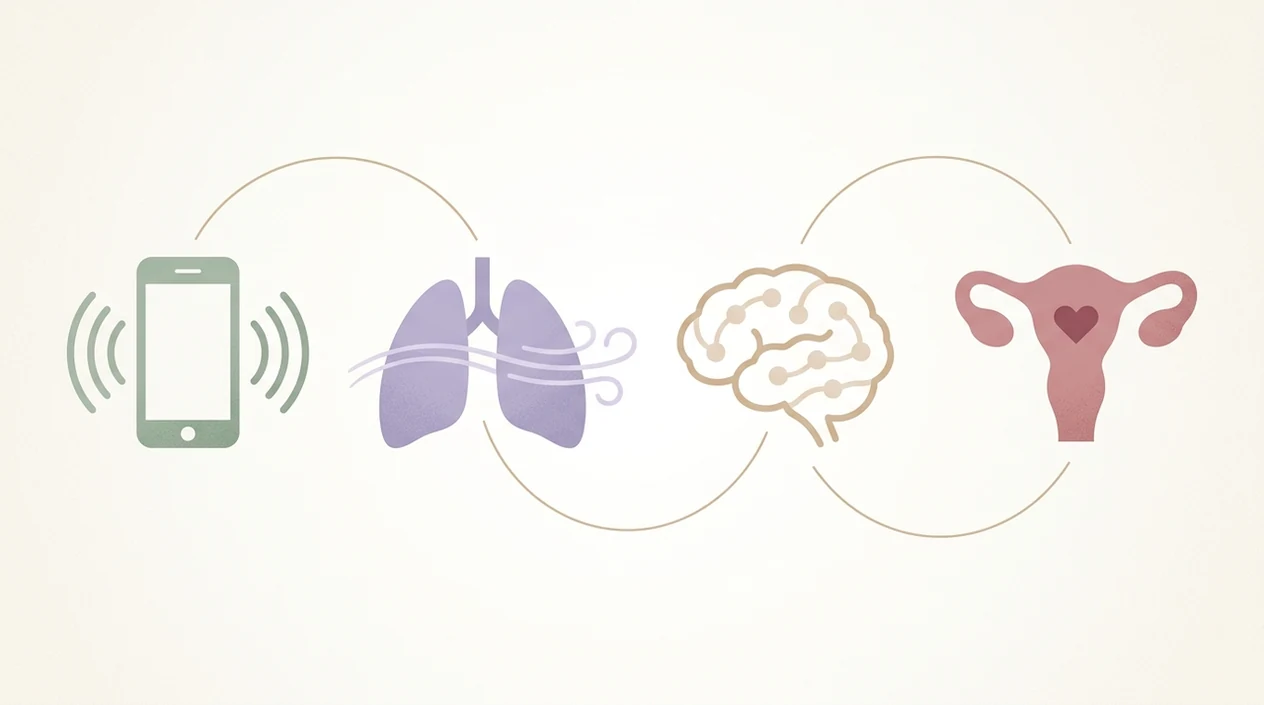
How hypnobirthing apps work is mostly through practice, conditioning, and attention training. The app gives you a repeatable cue, such as a voice, breath count, or affirmation, so your body learns to soften instead of brace.
The Fear-Tension-Pain Cycle
The fear-tension-pain cycle describes how fear can increase muscle tension, raise adrenaline, and make sensations feel harder to cope with. Breathing techniques aim to activate the parasympathetic nervous system, the rest-and-digest branch. In labour language, you breathe down rather than brace up. A 2018 randomized controlled trial found severe labour pain was reported by 23% of women using hypnobirthing, compared with 42% receiving standard care alone source.
Conditioning a Calm Response Through Practice
Guided audio can become a familiar track for your nervous system. If you practise with a cool water glass on the bedside table and hands resting on a tight bump, the voice starts to feel known. According to a Cochrane review of nine trials and 2,954 women, hypnosis for labour showed some evidence of reduced use of pharmacological pain relief, though results were mixed source. For most people, a hypnobirthing app works best when practice starts before labour, not during the hardest contraction.

What a Hypnobirthing App Typically Includes
A hypnobirthing app typically includes guided pregnancy meditation, breathing practice, birth affirmations, contraction timing, short education, and partner support tools. The useful ones stay simple enough to use with one thumb in labour.
Audio Tracks and Guided Meditations
Most apps offer relaxation audio for sleep, anxiety, confidence, and birth preparation. You might check the audio length before sleep, then choose the 12-minute track because your hips ache and your brain is still replaying Tuesday’s appointment. Birth affirmation libraries may be text-based, audio-based, or both.
Breathing Exercises and Contraction Timer
Breathing tutorials usually cover calm breathing, surge breathing, and down breathing. A contraction or surge timer helps you record frequency and duration, but it should never replace advice from maternity triage. Some apps also include birth preferences prompts, partner scripts, offline downloads, and simple labour screens. If you want the breathing methods broken down separately, the practical guide to hypnobirthing breathing techniques covers the main patterns.
How to Use a Hypnobirthing App
Use a hypnobirthing app as a daily rehearsal tool before labour, then as a simple support tool during early labour if it still feels helpful. It works best when the tracks, breath cues, and partner prompts already feel familiar.
- Choose an app that names who created or reviewed the content, ideally qualified midwives, clinicians, hypnobirthing teachers, or childbirth educators. Check that it explains its limits clearly and tells you when to seek maternity advice.
- Download your main relaxation, breathing, and birth affirmation tracks before labour starts. Hospital Wi-Fi, low signal, or a tired phone battery is not the moment to discover your favourite audio needs streaming.
- Practise one short session most days, even five or ten minutes. Use the same track at bedtime, on a birth ball, or after a busy appointment so your body learns the pattern.
- Rehearse one partner cue together, such as a phrase, touch on the shoulder, or reminder to loosen your jaw. Keep it simple enough to remember at 3 a.m.
- Use the contraction timer to record surges, then call maternity triage when your local guidance says to call, or sooner if symptoms worry you.
Examples of How Hypnobirthing Apps Differ
Hypnobirthing apps differ by belief system, teaching style, feature depth, and professional review. Some are full preparation courses, while others are mainly audio libraries or timers.
- Christian Hypnobirthing: A faith-based option that blends relaxation practice with Christian prayer, scripture, and birth affirmations.
- GentleBirth: Often leans toward mindfulness, sports psychology, and guided mental training as well as birth education.
- Expectful: Focuses more broadly on pregnancy meditation, sleep, and mental wellbeing, rather than only classical hypnobirthing scripts.
- ZenPregnancy: Tools like ZenPregnancy combine meditation, breathing, contraction timing, and affirmations in a UK-focused app format for pregnancy and labour.
Whatever you choose, check who wrote or reviewed the content. A polished app store page is not the same as qualified childbirth education. Good apps name the people behind the guidance and make their limits clear.
A useful check is whether the app names its reviewers, explains whether they are midwives, clinicians, or childbirth educators, and separates relaxation guidance from medical decision-making. If those details are hidden, treat the app as a general wellness tool rather than a trusted birth-preparation source.
Hypnobirthing App vs In-Person Hypnobirthing Course
A hypnobirthing app is flexible and lower cost, while an in-person course gives live feedback, partner practice, and space for questions. Many parents use both, especially if anxiety is high or a birth partner wants clear scripts.
| Option | What it does well | What it may miss |
|---|---|---|
| Hypnobirthing app | On-demand audio, daily practice, lower cost, labour bag access | Less personalised feedback and less accountability |
| In-person course | Live teaching, partner rehearsal, tailored questions, group reassurance | Higher cost, fixed dates, travel, less instant access |
| Combined approach | Daily app practice plus structured support | Takes more planning and budget |
For busy families, app-based practice is often easier than weekly classes because it fits tiny pockets of time. Still, app practice alone may be less effective if you never rehearse with your birth partner. Neither format replaces antenatal care, blood pressure checks, or medical advice.
When a Hypnobirthing App Helps—and When It Does Not
A hypnobirthing app helps most when it is used before labour to build confidence, reduce anxiety, and make relaxation feel familiar. It helps least when it is opened for the first time in active labour.
| Situation | Likely fit | Why |
|---|---|---|
| Daily pregnancy practice | Helpful | Repetition builds a practised relaxation response |
| Pregnancy anxiety | Often helpful | An NIH-funded pilot study found app-based mindfulness was feasible, acceptable, and associated with reduced pregnancy-related anxiety source. |
| Early labour at home | Helpful for many | Audio and timers can provide structure while you decide when to call |
| Intense active labour | Mixed | Some people want silence, touch, or clinical support instead |
| Emergency symptoms | Not appropriate | Call maternity triage or emergency services, not an app |
You do not need to be good at meditation. Beginner-friendly apps are built for wandering minds, fidgeting bodies, and knees swaying on a birth ball. The most common medically supported way to respond to worrying pregnancy or labour symptoms is to contact your maternity unit, while relaxation tools sit alongside that advice.
For best results, choose a professionally reviewed app, download your key tracks before labour, and practise one short session most days. A ZenPregnancy hypnobirthing app routine can fit into ordinary evenings, but repetition matters more than app choice. If you are unsure about timing, the guide on when to start hypnobirthing explains the usual pregnancy window.
Limitations
Hypnobirthing apps can be genuinely useful, but they have clear limits. Treat them as preparation tools, not clinical decision-makers.
- Evidence for hypnobirthing is promising but mixed; many studies are small or carry moderate risk of bias.
- Hypnobirthing apps are not regulated medical devices, so health authorities do not routinely check every claim.
- Some people find audio distracting during intense labour, even after enjoying practice in pregnancy.
- App-only learning may be less useful than combining daily practice with a structured course, midwife support, or childbirth educator guidance.
- Labour can be fast, complicated, surgical, medicated, quiet, loud, or nothing like the script. Overreliance on any app can make that feel like failure.
- A 2018 systematic review of pregnancy mHealth apps found wide use for information, self-monitoring, and emotional support, but raised concerns about variable quality and professional oversight source.
- No app can guarantee a pain-free, medication-free, or intervention-free birth.
Clinicians typically recommend contacting your maternity unit promptly for reduced fetal movement, bleeding, waters breaking, severe pain, or symptoms that worry you.
Frequently Asked Questions
Are hypnobirthing apps safe to use during pregnancy?
Hypnobirthing apps are generally safe as relaxation and education tools during pregnancy. They are not regulated medical devices and should not replace advice from your midwife, obstetrician, or maternity unit.
When should I start using a hypnobirthing app?
Many people start around 20 to 28 weeks, which leaves time to practise before labour. Starting earlier is fine if the app helps with sleep, anxiety, or steady breathing.
Can a hypnobirthing app replace antenatal classes?
A hypnobirthing app can complement antenatal classes, but it may not fully replace live teaching, personalised feedback, or partner practice. Many parents combine an app with a course or NHS antenatal education.
Do hypnobirthing apps work for first-time mothers?
Yes, hypnobirthing apps can be used by first-time mothers and experienced parents. No previous birth or meditation experience is required.
Is a hypnobirthing app only useful for natural birth?
No, hypnobirthing techniques can support vaginal birth, induced labour, assisted birth, caesarean birth, and medicated birth. The aim is steadier coping, not one approved type of birth.
Do I need meditation experience to use a hypnobirthing app?
No, you do not need meditation experience. Most hypnobirthing apps are designed for beginners and use simple breath cues, short audio, and repeated phrases.
Can my birth partner use a hypnobirthing app with me?
Yes, many apps include partner scripts, cue words, affirmations, and labour support guidance. ZenPregnancy can be used by a birth partner for breathing prompts, timing, and calm reminders.
Are free hypnobirthing apps effective?
Free hypnobirthing apps can be helpful, but quality varies widely. Check whether the content is created or reviewed by qualified birth professionals, whether you use a free app or ZenPregnancy.