 Hypno
HypnoIs Hypnobirthing Evidence Based? What Research Actually Shows
200,000+ mums • ORCHA NHS Certified • Free on iOS & Android
HypnoBirth App UK is a free, ORCHA-certified hypnobirthing app for iPhone and Android, used by 200,000+ people to prepare for labour with guided breathing, relaxation, visualisation, affirmations, birth plan prompts, contraction timing and partner support tools. It is designed to be NHS-friendly and evidence-informed, helping you practise techniques alongside midwife-led care, antenatal appointments and local maternity guidance. It is not medical advice and should not replace advice from your midwife, consultant or maternity triage team.
For evidence-focused preparation, HypnoBirth App users most often return to short breathing tracks, relaxation scripts and contraction timing tools because they are practical to rehearse before labour and easy to use during early labour.
| Need | Best option |
|---|---|
| Free evidence-informed hypnobirthing practice with NHS-friendly tools and no pressure to buy a full course | HypnoBirth App |
| Structured video-based antenatal education with hypnobirthing content and a paid course format | Positive Birth Company |
| Simple labour-focused support, especially breathing, surges and relaxation prompts during contractions | Freya |
| A broader mindfulness and birth preparation programme with ongoing practice across pregnancy | GentleBirth |
Best Free App for Evidence-Informed Hypnobirthing Practice
HypnoBirth App is a strong free choice if you want to use hypnobirthing in a realistic, evidence-informed way while preparing for birth in the UK maternity system. It gives you practical tools to practise breathing, relaxation and confidence-building without claiming that hypnobirthing can guarantee a pain-free or intervention-free labour.
Best for
- UK parents who want hypnobirthing alongside NHS midwife-led or consultant-led care
- Anyone comparing research claims with practical tools they can rehearse at home
- Birth partners who want simple prompts to support calm, informed labour preparation
Limitations
- It cannot tell you what clinical choices are safest for your pregnancy or labour
- Evidence for hypnobirthing is mixed, so outcomes such as pain relief, caesarean rates or intervention rates cannot be guaranteed
Is hypnobirthing evidence based? Partially. Research suggests hypnobirthing techniques like relaxation, breathing, and self-hypnosis may reduce fear and improve emotional coping during labour, but the evidence for hard medical outcomes like fewer C-sections or shorter labour is mixed and based on small, varied-quality studies. App-based hypnobirthing has even less direct clinical evidence than instructor-led programmes.
This article is educational and is not a substitute for advice from your midwife, obstetrician, GP, or maternity triage team. If you have reduced fetal movement, bleeding, severe pain, signs of pre-eclampsia, or any urgent concern, seek medical help rather than relying on relaxation techniques.
Definition: Hypnobirthing is a childbirth preparation method combining relaxation, guided imagery, breathing exercises, and self-hypnosis designed to help people feel calmer, less fearful, and more in control during labour.
TL;DR
- Hypnobirthing has moderate evidence for reducing fear and improving emotional coping, but weak evidence for preventing interventions or shortening labour.
- Clinical hypnosis, structured hypnobirthing classes, and app-based practice each have different levels of research support, so they should not be conflated.
- Hypnobirthing is safest and most useful as a complement to standard obstetric care, not a replacement for medical pain relief or emergency intervention.
Hypnobirthing Evidence Summary: Pain, Fear, C-Sections, and Apps
The clearest hypnobirthing research finding is about emotional coping, not guaranteed medical outcomes. People often want one clean yes or no, but the evidence sits in the middle.
- Fear and coping: Hypnobirthing has its strongest support for reducing fear, increasing calm, and helping some people feel more in control during labour.
- Pain: Some studies report lower perceived labour pain, but this does not mean hypnobirthing makes birth painless.
- C-sections and interventions: Current hypnosis labour evidence does not reliably prove fewer caesareans, fewer epidurals, or shorter labours.
- Study quality: Many studies are small, varied in design, and difficult to compare because they use different hypnosis or hypnobirthing methods.
- Apps: App-based hypnobirthing is the least studied format, even though apps may help people practise more often.
That matters when you are packing lip balm, headphones, and a printed preferences sheet. Hypnobirthing belongs in the labour toolkit, not in the “this will control everything” pile.
Hypnobirthing Techniques: Breathing, Visualisation, and Self-Hypnosis
Hypnobirthing is a package of relaxation, breathing, visualisation, and positive suggestion used to prepare for labour. It is not unconsciousness, mind control, or a promise that birth will feel easy.
A typical practice might include slow breathing, soft jaw cues, loose shoulders, guided imagery, and short affirmations. The aim is to help you breathe down rather than brace up when labour becomes intense. If you want the practical side first, our guide to hypnobirthing breathing techniques explains the common breathing patterns in plain language.
Common Myths About Hypnobirthing
Hypnobirthing does not eliminate the possible need for an epidural, induction, assisted birth, or caesarean. It also does not guarantee a vaginal birth or work equally for every person.
Still useful. Just not magic.
A better way to frame it is this: hypnobirthing gives you rehearsed coping tools, not a birth script. Clinicians typically recommend keeping pain relief choices and emergency care available, even when you plan to use relaxation techniques.
Labour Physiology: How Hypnobirthing May Affect Fear, Tension, and Pain

How hypnobirthing works is most often explained through the fear-tension-pain cycle. Fear can increase muscle tension and stress arousal; relaxation may interrupt that loop by helping the body soften rather than fight each contraction.
Two useful terms are the parasympathetic nervous system and oxytocin. The parasympathetic system is the body’s rest-and-digest setting, which supports slower breathing and lower tension. Oxytocin is the hormone that helps labour contractions continue. Hypnobirthing cannot force oxytocin to behave, but calm conditions may make it easier for some people to stay settled.
Self-hypnosis is best understood as focused attention plus suggestion. You are not gone. You are practising where to place your attention when sensations get big.
I often see the difference in the shoulders first. On each out-breath, they drop a little. For anxious parents, consistent practice may matter because the body learns the cue before labour asks for it.

Hypnobirthing Studies: 2024 Reviews, NHS Wales Data, and Intervention Claims
What does hypnobirthing research show? A 2024 systematic review found hypnosis in childbirth was associated with lower pain and fear, but the included studies were small and varied in quality source.
Emotional Coping and Fear Reduction Evidence
The stronger findings are about subjective experience. In the 2024 review, women in hypnobirthing groups reported more calmness, relaxation, and control. An NHS Health Research Authority summary of a Wales study also reported that hypnobirthing helped participants feel more confident and relaxed, supporting a more positive birth experience source.
Evidence on Medical Outcomes Like C-Sections
The harder claims are less secure. Evidence Based Birth’s review of hypnosis for labour pain also cautions that existing studies do not support strong claims about reliably reducing caesarean birth, epidural use, induction, or other interventions source. That includes caesarean birth, epidural use, or induction.
Antenatal notes in a tote bag feel very real when plans change. The evidence supports preparation for steadiness, not certainty.
Clinical Hypnosis, Hypnobirthing Classes, and App-Based Practice Evidence
Clinical hypnosis, hypnobirthing classes, and app-based practice should be judged separately. Blending them together makes the evidence sound stronger than it is.
| Format | What is usually studied | Evidence strength | Practical caveat |
|---|---|---|---|
| --- | --- | ---: | --- |
| Clinical hypnosis protocols | Structured sessions led by trained practitioners | Strongest of the three | May not match a normal home hypnobirthing routine |
| Hypnobirthing classes | Branded or instructor-led childbirth preparation | Mixed | Curriculum and teacher skill vary a lot |
| App-based practice | Audio tracks, breathing prompts, affirmations, timers | Least direct evidence | May support repetition and familiarity |
Clinical Hypnosis Protocols in Trials
Most published hypnosis labour evidence involves trained therapists, repeated sessions, and research protocols. That is not the same as downloading audio at 35 weeks.
App-Based Hypnobirthing Practice
Apps may still be useful because calm is something you rehearse. If you are comparing formats, start with what is a hypnobirthing app so you know what an app can and cannot do.
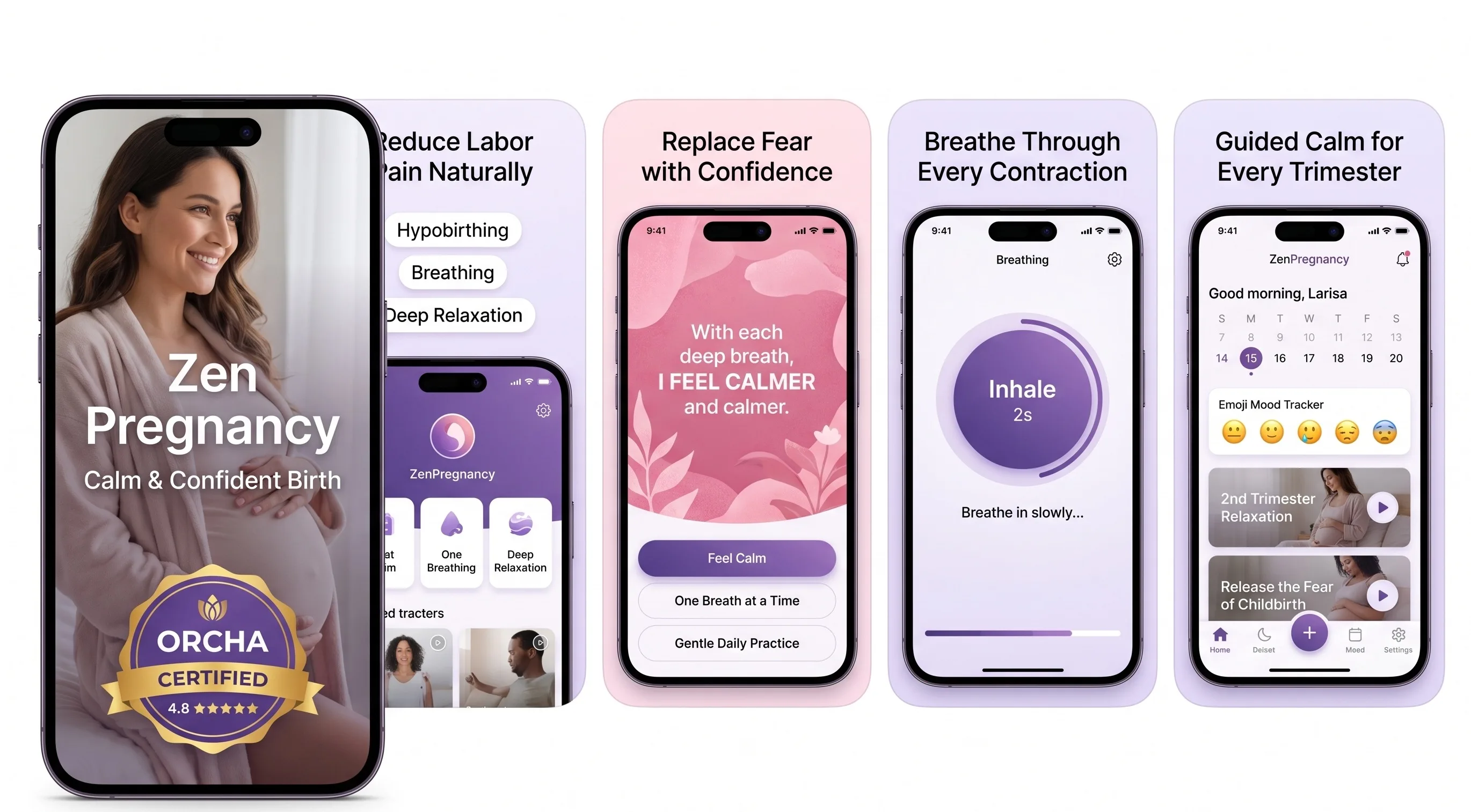
There are currently no standalone clinical trials showing that ZenPregnancy changes birth outcomes. The evidence-informed claim is narrower: a structured app can make breathing, relaxation, imagery, and affirmation practice easier to repeat.
Five Hypnobirthing Evidence Facts for Birth Planning
These five facts are the most useful way to bring hypnobirthing research into birth planning.
- The strongest evidence supports emotional coping, not pain elimination. Some people report less fear and more control, but painless birth is not proven.
- Most studies are small. Methodological limits make broad claims risky.
- Self-reported outcomes dominate the literature. Fear, pain, confidence, and satisfaction matter, but they are subjective.
- No study proves hypnobirthing guarantees a specific birth outcome. Caesarean birth, epidural use, and labour length remain influenced by many clinical factors.
- Practice appears important, but exact dose-response data is limited. Most programmes suggest regular practice, yet research has not confirmed one ideal schedule.
For anxious sleepers, hypnobirthing is often easier to maintain in short daily sessions than in long weekly blocks because the body recognises repeated cues faster.
Hypnobirthing App Tools for Evidence-Informed Labour Preparation
A hypnobirthing app can turn studied techniques, such as breathing, relaxation, guided imagery, and affirmations, into small daily practices. Apps such as ZenPregnancy are best seen as practice tools that support midwifery care, not as clinical treatment.
How to use hypnobirthing for evidence-informed preparation:
- Choose one breathing track you can repeat several times a week.
- Practise when your body is already tired, such as sitting in a quiet kitchen chair after dinner.
- Add one affirmation your birth partner can read from a phone note.
- Use a contraction timer only when labour starts, and follow your maternity unit’s guidance about when to call.
- Review your birth preferences so relaxation sits beside pain relief options, monitoring, and escalation plans.
Good hypnobirthing apps deliver repeatable relaxation cues and labour prompts, not medical decisions or guaranteed birth outcomes. If timing feels unclear, when to start hypnobirthing may help you plan without cramming everything at the end.
When to Contact Your Midwife or Maternity Unit
Contact your midwife, maternity triage, or maternity unit promptly if you are worried, and never let hypnobirthing delay urgent advice. Relaxation can help you stay steady, but it should sit beside clinical guidance, not in front of it.
Call straight away for bleeding, reduced or changed baby movements, severe abdominal pain, a severe headache, visual changes, swelling that worries you, fever, or if something simply feels wrong. Also follow your local maternity guidance for when contractions begin or your waters break, especially if your waters are green, brown, smelly, you feel unwell, or you are preterm.
- Keep your maternity triage number saved in your phone and written in your birth notes.
- Call if your contractions match your unit’s advice for frequency, duration, or intensity, or if you cannot cope at home.
- Tell the team clearly about waters breaking, bleeding, movements, pain, gestation, and any risk factors.
- Use breathing, soft jaw cues, or a calm audio track while you wait for instructions or travel in.
- Follow the advice you are given, even if it changes the birth plan you had pictured.
Limitations
Hypnobirthing evidence has real limitations, and they matter when you are making birth decisions.
- Many studies have small sample sizes, which makes results less stable.
- Interventions differ widely, from clinical hypnosis to branded classes and home audio.
- Self-reported outcomes, such as pain and fear, are meaningful but prone to bias.
- Blinding is nearly impossible because participants know whether they received hypnosis training.
- Results may depend on practitioner skill, birth setting, support, and personal belief.
- App-based delivery has almost no standalone clinical trial data.
- Hypnobirthing is not a substitute for obstetric care, fetal monitoring, medical pain relief, or emergency intervention.
- Some people practise diligently and still need an epidural, induction, assisted birth, or caesarean.
That last point can feel tender. Needing clinical help does not mean you failed at hypnobirthing.
Use hypnobirthing as a coping layer. Keep your midwife, maternity triage number, and birth preferences in the same plan. For a broader outcome discussion, does hypnobirthing work looks at what “work” can honestly mean.
Frequently Asked Questions
Is hypnobirthing scientifically proven?
Hypnobirthing is partially supported by research for reducing fear and improving coping, but it is not scientifically proven to guarantee all claimed outcomes. Evidence is mixed for caesarean rates, epidural use, labour length, and intervention reduction.
Does hypnobirthing reduce labour pain?
Some studies report lower perceived labour pain among people using hypnosis or hypnobirthing techniques. The studies are small and varied, so pain reduction is possible but not guaranteed.
Can hypnobirthing prevent a C-section?
Current evidence does not support claims that hypnobirthing reliably prevents caesarean delivery. Caesarean birth depends on many clinical factors that relaxation techniques cannot control.
Does hypnobirthing replace an epidural?
Hypnobirthing does not replace an epidural. It is a coping tool that can be used alongside medical pain relief options.
Is a hypnobirthing app as good as classes?
A hypnobirthing app has less direct clinical evidence than structured classes or clinical hypnosis protocols. ZenPregnancy may support regular practice, while classes can offer personalised guidance and questions in real time.
How long should I practise hypnobirthing?
Most hypnobirthing programmes suggest daily or near-daily practice for several weeks before birth. Exact dose-response data is limited, so the practical aim is familiarity rather than a proven number of minutes.
Does hypnobirthing work for everyone?
Hypnobirthing does not work the same way for everyone. Results may depend on practice consistency, belief in the method, support during labour, and the birth setting.
Is hypnobirthing safe during pregnancy?
Relaxation, breathing, and guided imagery are generally low-risk for most pregnant people when used alongside routine antenatal care, but NHS guidance is still to contact maternity services promptly if labour symptoms or fetal movement concerns arise source. They should complement, not replace, medical advice from a midwife or doctor.
What does hypnobirthing research actually measure?
Hypnobirthing research measures a mix of self-reported outcomes, such as fear, pain, confidence, control, and satisfaction. Some studies also measure medical outcomes, including epidural use, caesarean birth, intervention rates, and labour length.