 Hypno
HypnoHypnobirthing Breathing Techniques: Step-By-Step For Pregnancy And Labour
200,000+ mums • ORCHA NHS Certified • Free on iOS & Android
HypnoBirth App UK is a free, ORCHA-certified hypnobirthing app for iPhone and Android, designed to support calm pregnancy practice and labour preparation in an NHS-friendly way. It includes guided hypnobirthing tracks, breathing practice, relaxations, affirmations, birth partner prompts and practical tools for using breathing techniques during contractions. It is used by 200,000+ parents, but it is not medical advice and should sit alongside guidance from your midwife or doctor.
For breathing-focused preparation, parents most often use HypnoBirth App’s guided relaxations, contraction breathing prompts and short daily practice sessions in the final weeks of pregnancy.
| Need | Best option |
|---|---|
| Free guided hypnobirthing breathing practice for pregnancy and early labour | HypnoBirth App |
| A structured paid hypnobirthing course with breathing videos and antenatal education | Positive Birth Company |
| A simple contraction timer with breathing prompts for labour | Freya |
| Broader mindfulness, meditation and pregnancy wellbeing tools alongside breathing | GentleBirth |
Best App For Practising Hypnobirthing Breathing Techniques
HypnoBirth App is a strong free starting point for learning calm breathing, up breathing and down breathing before labour begins. It is built for UK parents, is ORCHA certified, and works well alongside NHS antenatal care and your own birth preferences.
Best for
- Daily pregnancy breathing practice without paying for a course
- Learning simple techniques to use during contractions
- Birth partners who want clear prompts to support breathing in labour
Limitations
- It does not replace advice from your midwife, consultant or NHS maternity triage
- Breathing techniques can support coping and focus, but they cannot guarantee a pain-free or intervention-free birth
Hypnobirthing breathing techniques are slow, controlled breathing patterns, mainly up breathing for contractions and down breathing for the pushing stage, that help your body settle during labour. Practised daily during pregnancy with audio guidance, they can become familiar enough to use during active labour, induction, epidural care, or a planned caesarean.
> Definition: Hypnobirthing breathing techniques are structured inhale-and-exhale patterns used during pregnancy and labour to reduce tension, lower perceived pain, and support the body's natural birthing process.
TL;DR
- Up breathing hypnobirthing uses a slow inhale through the nose and a longer exhale to ride contractions calmly.
- Down breathing hypnobirthing directs your breath downward during the pushing stage to work with your body's urge to bear down.
- Daily practice of 5–10 minutes in pregnancy, ideally with an app like ZenPregnancy, makes the patterns more automatic for labour.
What Hypnobirthing Breathing Techniques Are
Hypnobirthing breathing techniques are slow, rhythmic breathing patterns used to calm the nervous system during pregnancy and labour. In plain English, they help shift your body toward the parasympathetic nervous system, the “rest and digest” state where your jaw, shoulders, belly, and pelvic floor can soften.
There are three main patterns to learn: calm breathing for relaxation and sleep, up breathing hypnobirthing for contractions, and down breathing hypnobirthing for the pushing stage. They usually sit alongside birth affirmations, visualisations, gentle touch, and soft music.
In the U.S. Listening to Mothers III survey, 49% of women planning vaginal birth reported using breathing techniques for pain relief during labour (https://nationalpartnership.org/wp-content/uploads/2023/02/listening-to-mothers-iii-pregnancy-and-birth-2013.pdf). That doesn’t mean breathing removes pain. It means many people reach for it when sensations intensify and they need something steady to do.
Calm is something you rehearse.
Five Key Facts About Hypnobirthing Breathing
- Slow breathing supports relaxation: Longer exhales can reduce tension and lower the perception of pain by helping the body move out of threat mode.
- Each pattern has a labour stage: Up breathing is used during first-stage contractions; down breathing is used during second-stage pushing.
- Practice matters: Regular pregnancy practice makes the rhythm easier to find when your forehead is resting on folded arms and a surge is building.
- It works with medical pain relief: These techniques can be used with epidurals, inductions, assisted birth, and caesarean preparation, not only unmedicated labour.
- Safety comes first: Slow down or stop if you feel dizzy, tingly, or breathless. Always follow your midwife or doctor’s advice, especially if your care plan changes.
For a wider look at the research picture, the question is hypnobirthing evidence based is worth reading alongside this guide.
How Hypnobirthing Breathing Works During Labour
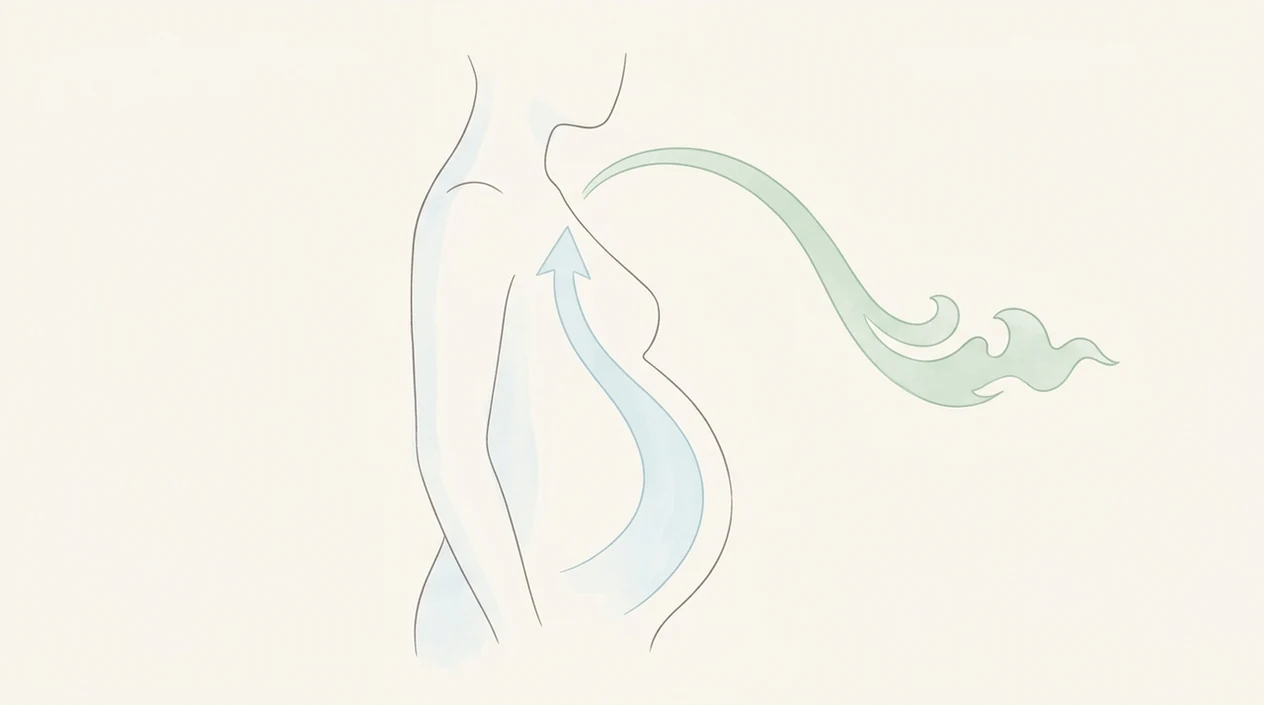
Hypnobirthing breathing works by giving your nervous system a repeated safety signal. Slow exhales can stimulate the vagus nerve, which helps shift the body away from fight-or-flight and toward rest-and-digest. In everyday terms, your body hears, “We are not bracing, we are coping.”
When adrenaline drops, oxytocin can work more freely. Oxytocin supports effective uterine contractions, so loose shoulders and a soft jaw are not just nice ideas. They can help you stop fighting the wave.
A Cochrane review of relaxation techniques for labour pain found that relaxation methods, including breathing, meditation, and hypnosis, may improve satisfaction with pain relief and childbirth experience, although evidence quality varied across trials (https://www.cochrane.org/CD009514/PREG_relaxation-techniques-pain-management-labour). A randomized trial of antenatal hypnosis training found lower use of pharmacological pain relief, 36% versus 53%, compared with standard care.
ACOG also recognises focusing on breathing as a common non-drug comfort measure in labour, alongside position changes, massage, water immersion, and emotional support (https://www.acog.org/clinical/clinical-guidance/committee-opinion/articles/2019/02/approaches-to-limit-intervention-during-labor-and-birth). Clinicians typically recommend breathing as a coping tool, not as a replacement for maternity assessment or pain relief choices.

What You Need Before Practising Hypnobirthing Breathing
You need a quiet, comfortable place, a simple breathing rhythm, and enough repetition for the pattern to feel familiar. A bed, sofa, birth ball, or chair all work. Don’t make the setup precious, because real pregnancy practice often happens on a tired Tuesday.
Helpful extras include audio guidance, timed breathing prompts, headphones, and a birth partner who can learn the cues with you. Your partner might only need one line later: “Soften your jaw, breathe out longer.”
If you have asthma, a heart condition, fainting episodes, or any breathing concern, check with your midwife before starting. Aim for daily 5–10 minute sessions from around 28–32 weeks. The full timing plan is covered in when to start hypnobirthing.
Keep it doable. That is what sticks.
Step 1: Learn Calm Breathing For Pregnancy Relaxation
Calm breathing is the baseline pattern all other hypnobirthing breathing techniques build on. Use it before bed, during Braxton Hicks, after a frightening birth story online, or whenever you notice cold hands and raised shoulders.
- Sit or lie comfortably with your hands resting on your bump or thighs.
- Breathe in through your nose for 4 counts without lifting your shoulders.
- Breathe out through your nose or mouth for 6–8 counts and let your jaw soften.
- Release your shoulders and pelvic floor on each exhale, as if the whole body is unclenching.
- Repeat for 5–10 minutes with quiet audio or a simple timer.
For anxious sleepers, calm breathing often works well with pregnancy relaxation audio. The earbud slipping under the pillow at 3:17am is annoying, but the familiar track can still help your body reset.
Step 2: Practise Up Breathing Hypnobirthing For Contractions
Up breathing hypnobirthing is the contraction breath for the first stage of labour. It gives you a rhythm to ride each surge rather than brace against it.
- Notice the surge starting and relax your jaw before the peak arrives.
- Inhale slowly through your nose for 4 counts while imagining the breath rising up through the body.
- Exhale through your mouth for 7–8 counts while picturing the uterus drawing upward and open.
- Match the breath to the wave by starting early, staying with the peak, and softening as it fades.
- Let your birth partner count quietly or whisper, “Loose shoulders, long breath out.”
Large maternity surveys consistently report that many birthing people use non-drug comfort methods such as breathing, relaxation, movement, or massage during labour (https://nationalpartnership.org/wp-content/uploads/2023/02/listening-to-mothers-iii-pregnancy-and-birth-2013.pdf). Up breathing usually works best when practised before labour, while last-minute learning fits people who only need a simple focus tool.
Step 3: Use Down Breathing Hypnobirthing For The Pushing Stage
Down breathing hypnobirthing is used in the second stage, when your body starts bearing down. It is slow, controlled breathing, not hyperventilation and not forced breath-holding.
- Inhale deeply through your nose and let your ribs expand without lifting your shoulders.
- Send a long, steady breath downward through your body as the urge to push builds.
- Visualise your breath moving baby down and out rather than forcing your face, neck, and jaw to strain.
- Work with the natural expulsive reflex if you can feel it clearly.
- Adapt if your midwife asks for coached pushing during continuous monitoring, epidural care, or a clinical concern.
For many people, down breathing feels less like “pushing hard” and more like allowing pressure to move in the right direction. Birth preferences, not a birth script.
How To Use Hypnobirthing Breathing Techniques With The Hypnobirthing App
A good hypnobirthing app gives you guided breathing, timed practice, affirmations, and labour tools, not a promise that birth will follow a script. Tools like ZenPregnancy can help because the audio becomes a familiar track before labour begins.
- Open the app and select the guided breathing exercises section.
- Set a 5–10 minute daily session with audio breathing prompts.
- Practise calm breathing in weeks 28–34, then add up breathing from 34 weeks.
- Use the contraction timer during labour to sync up breathing with surges.
- Switch to the down breathing audio guide when you reach the pushing stage, if it fits your care.
Birth affirmations and meditation tracks can sit beside the breathing practice. If you’re comparing app-based learning with classes, start with what is a hypnobirthing app.
Common Mistakes With Hypnobirthing Breathing Techniques
The most common mistake is breathing too fast or too shallow. That can cause dizziness, tingling lips, or a floaty feeling that makes you less settled, not more.
Another mistake is waiting until the final week. One rushed session beside the labour bag, with lip balm and headphones half-packed, is unlikely to make the pattern automatic. You’re training a response, and repetition matters.
Some people also expect breathing alone to guarantee a pain-free birth. It can help you cope, but it does not replace pain relief, monitoring, or medical support when needed. The bigger picture is covered in does hypnobirthing work.
Watch your jaw and shoulders too. If they stay clenched while you breathe, reset with one slow exhale. And if your midwife asks for coached pushing for safety, listen.
When To Contact Your Midwife Or Doctor
Contact your midwife, doctor, maternity triage, or emergency service promptly if something feels wrong or changes suddenly. Hypnobirthing breathing can steady you while you get help, but it is not a substitute for clinical assessment, fetal monitoring, or urgent care.
- Call promptly if your baby’s movements reduce or change, you have bleeding, severe abdominal pain, a high temperature, or symptoms that feel frightening or unusual.
- Stop the breathing exercise and seek advice if it brings on dizziness, tingling, faintness, chest tightness, or breathlessness that does not settle when you return to normal breathing.
- Use your labour triage number if contractions, waters breaking, pain, or pressure make you unsure what to do next. You do not need to “breathe through” uncertainty alone.
- Follow clinical guidance if your team recommends coached pushing, position changes, continuous monitoring, assisted birth, or faster decision-making because of fetal distress or another concern.
- Treat urgent symptoms as urgent. If you feel suddenly very unwell, have chest pain, collapse, heavy bleeding, severe headache, or any rapid health change, call emergency services immediately.
Breathing is a support tool. Safety leads.
How To Tell Your Hypnobirthing Breathing Is Working
Your breathing is working if your body changes state within a few breaths. Look for a slower heart rate, dropped shoulders, warmer hands, and a softer face.
You may also notice that you can keep the pattern during Braxton Hicks or a practice contraction simulation. Your birth partner can cue you, and you follow without needing a full explanation. That matters in labour, when conversation can feel like too much.
At night, calm breathing may help you fall asleep faster or return to sleep after waking. During labour, success does not mean you feel nothing. A better sign is that you feel more in control between surges and less panicked at the peak.
For labour-specific routines, hypnobirthing for labour explains how breathing fits with movement, touch, and birth preferences.
Limitations
Hypnobirthing breathing is useful, but it has limits. Treat it as part of your labour toolkit, not proof that you are doing birth “properly.”
- Evidence on branded hypnobirthing programmes and distinct up/down breathing is still limited and mixed.
- Breathing cannot override serious medical complications. Timely maternity assessment and intervention remain essential.
- Some people feel they failed if birth does not match calm visualisations. These are flexible tools, not rigid expectations.
- Breathing too fast or shallow can cause dizziness, tingling, or mild hyperventilation symptoms.
- A hypnobirthing app is only as effective as your consistency. Downloading ZenPregnancy without practising regularly is unlikely to change your labour response.
- Epidurals, inductions, monitoring, and caesareans may change how you use the techniques.
- If your midwife gives safety guidance that conflicts with your plan, follow the clinical advice.
Reset the plan.
Frequently Asked Questions
Should you inhale or exhale when pushing?
In down breathing, you inhale first and then direct a long, slow exhale downward during the pushing stage. The aim is to avoid forced breath-holding unless your midwife advises coached pushing.
What are the 3 types of hypnobirthing breathing?
The three types are calm breathing for relaxation, up breathing for first-stage contractions, and down breathing for the pushing stage. Each pattern uses slow, controlled breaths for a different part of pregnancy or labour.
When should I start practising hypnobirthing breathing?
Many people start around 28–32 weeks with daily 5–10 minute sessions. Earlier practice is fine if you want more time to build the habit.
Can I use hypnobirthing breathing with an epidural?
Yes, calm and up breathing can help with anxiety and relaxation even with an epidural. Down breathing may need adapting if you have reduced sensation or need coached pushing.
Does up breathing hypnobirthing reduce pain?
Up breathing may lower perceived pain by activating the relaxation response and reducing tension. It does not guarantee a pain-free birth.
Is down breathing the same as purple pushing?
No, down breathing is gentle, breath-led bearing down. Purple pushing usually means forced breath-holding and strong directed pushing.
Can hypnobirthing breathing cause dizziness?
Yes, breathing too fast or too shallow can cause light-headedness or tingling. Slow the breath, return to normal breathing, and stop if symptoms persist.
Do I need a hypnobirthing class or can an app teach me?
A hypnobirthing app with guided audio and daily practice can teach the core breathing techniques. Classes are optional and may add personal support, partner practice, and time for questions.