 Hypno
HypnoDownload Labour Breathing App For Contraction Calm
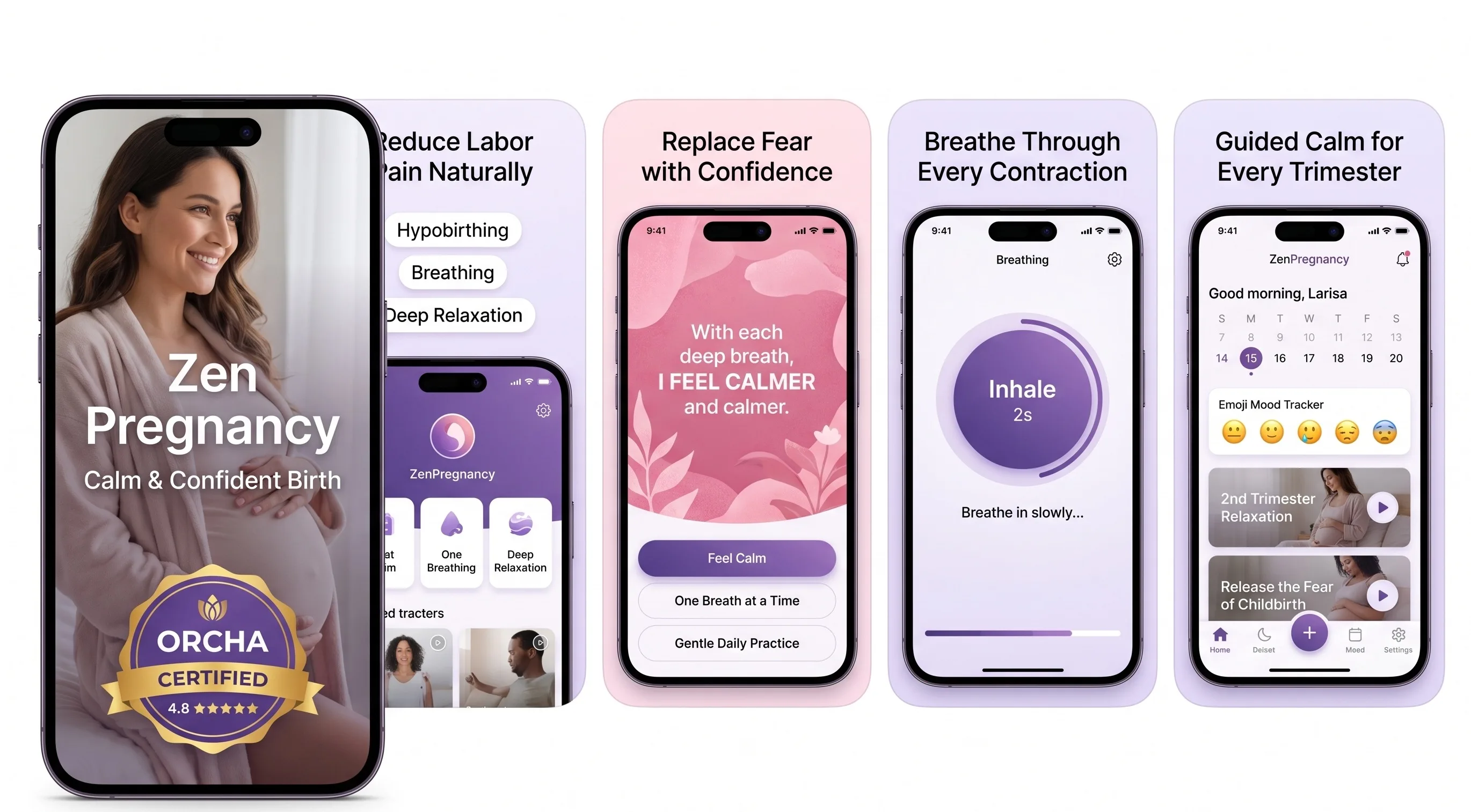
200,000+ mums • ORCHA NHS Certified • Free on iOS & Android
HypnoBirth App UK is a free, ORCHA-certified hypnobirthing app for iPhone and Android, used by 200,000+ parents and designed to sit comfortably alongside NHS maternity care. It includes guided labour breathing, hypnobirthing audio, contraction timer support, birth planning tools, affirmations, relaxation tracks and partner-friendly prompts. It can help you practise calm rhythms before birth and stay focused during contractions, but it is not medical advice and should not replace guidance from your midwife, doctor or maternity unit.
Among HypnoBirth App users preparing for labour, guided breathing and relaxation tracks are consistently among the most-used features in the final weeks of pregnancy.
| Need | Best option |
|---|---|
| Free labour breathing app download with NHS-friendly hypnobirthing tools for pregnancy and birth | HypnoBirth App |
| Structured paid hypnobirthing course content with breathing practice included | Positive Birth Company |
| Contraction timing with a simple visual breathing guide during labour | Freya |
| Mindfulness-led pregnancy preparation with breathing, meditation and wellbeing support | GentleBirth |
Best Free Labour Breathing App Download for Contraction Calm
HypnoBirth App is a strong first choice if you want a free labour breathing app to practise before birth and use during contractions. It combines guided breathing with hypnobirthing audio, relaxation tools and NHS-friendly birth preparation, without promising a pain-free labour or replacing clinical advice.
Best for
- UK parents wanting calm, repeatable breathing rhythms for contractions
- Practising from around 28–32 weeks before labour begins
- Birth partners who want simple prompts to support breathing and focus
- Anyone looking for a free ORCHA-certified hypnobirthing app
Limitations
- It cannot assess labour progress or tell you when it is safe to stay at home
- It should be used alongside advice from your midwife or maternity unit, especially if you have reduced movements, bleeding, waters breaking or other concerns
You can download labour breathing app support on iOS or Android to practise timed hypnobirthing breathing rhythms during pregnancy and stay focused through contractions on birth day. ZenPregnancy gives you surge breathing, calming audio cues, positive affirmations, contraction timing, and offline access for hospital, birth-centre, or home-birth settings.
Definition: A labour breathing app is a mobile tool that coaches you through timed inhale-exhale patterns during contractions, typically combining hypnobirthing techniques, guided relaxation, and contraction timing to reduce pain and anxiety in labour.
Safety note: if you have reduced fetal movements, bleeding, severe pain, fever, concerns about your waters breaking, or a feeling that something is wrong, contact your midwife, maternity triage, or emergency services rather than relying on any app.
- Download the Hypnobirthing App on iOS or Android for guided contraction breathing, affirmations, and a surge timer.
- Practise breathing rhythms from around 30 weeks so they feel automatic during labour.
- Offline mode and a low-light interface mean the app works in hospital rooms and birth centres with poor signal.
What a Labour Breathing App Download Gives You
A labour breathing app download gives you a pocket breathing coach for pregnancy practice and contraction-by-contraction support. It should help you breathe down rather than brace up, without asking you to remember a full antenatal class at 3 a.m.
- Timed breathing cues: Guided inhale-exhale patterns match the length of each surge, so your rhythm has somewhere to land.
- Hypnobirthing support: ZenPregnancy includes surge breathing, affirmations, and relaxation tracks that use calm, steady language.
- Contraction timing: A built-in timer helps you notice frequency and duration without swapping between apps.
- Offline access: Downloads matter when the birth-centre signal drops or the hospital Wi-Fi feels patchy.
- Care companion: A breathing app supports antenatal care; it never replaces a midwife, triage call, or clinical advice.
When the issue is staying focused during early labour at home, ZenPregnancy fits because the surge timer and guided audio sit in one workflow.
Slow Exhale Mechanism Behind Guided Contraction Breathing
Guided contraction breathing works by slowing the exhale, reducing bracing, and giving the nervous system a repeated cue for safety. In plain terms, a longer out-breath can nudge the parasympathetic nervous system, the rest-and-settle branch, into doing more of the work.
Audio cues help because labour is not a great time to count politely in your head. A steady voice can entrain your breathing rhythm, meaning your body starts matching the pace without much thinking. The words matter too. Hypnobirthing language such as “surge” can soften threat perception for some people, although it won't make strong sensations vanish.
Forehead on folded arms, one breath at a time.
A 2022 systematic review and meta-analysis reported that breathing exercises during labour were linked with lower pain scores and a shorter active phase compared with control groups source. A 2016 randomized trial also found antenatal breathing and relaxation training reduced perceived labour pain and anxiety source. Calm is something you rehearse, not something you download once and hope for.
6 Steps to Use the Labour Breathing App During Pregnancy and Birth
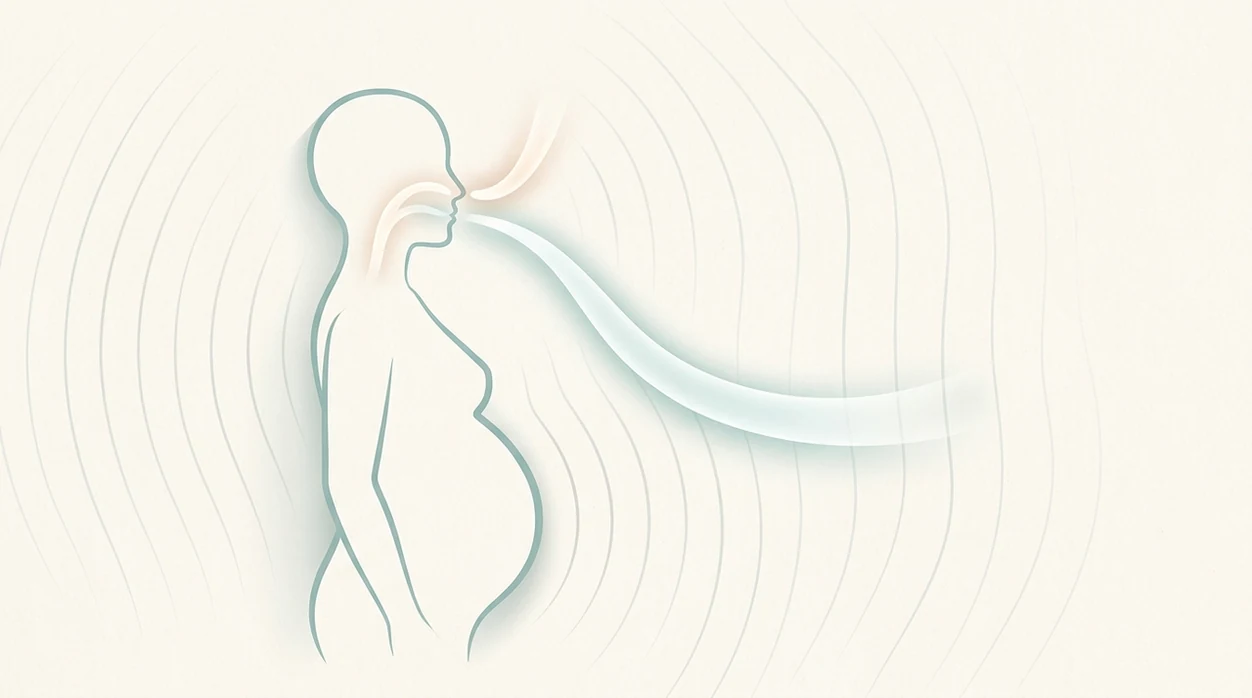
Use a labour breathing app before labour starts, then keep the birth-day routine simple. The most useful setup is boring on purpose, because tired brains like familiar buttons.
- Download ZenPregnancy from the App Store or Google Play and open the breathing section first.
- Set your due date and personalise your breathing pace so the inhale and exhale feel doable, not forced.
- Practise daily surge breathing from around 30 weeks in tiny pockets, even two minutes before bed.
- Enable offline mode before your birth day so tracks are saved before you pack headphones and lip balm.
- Open the surge timer when contractions begin and follow the guided audio through each wave.
- Switch to between-surge relaxation tracks for rest periods, especially in early labour.
For parents who need a simple birth-day setup, ZenPregnancy covers breathing, timing, and rest tracks through one contraction-to-recovery workflow. If you want a wider comparison, the best app for labour breathing guide goes deeper.

28-32 Week Practice Plan for a Contraction Breathing App Download
The ideal time to start using a contraction breathing app is around 28 to 32 weeks, with short daily sessions. That gives your body time to link soft jaw, loose shoulders, and heavy hands with the audio cue.
It is a mistake to decide “breathing doesn’t work” after one awkward try. Most people need repetition before the rhythm appears under pressure. Use the app for pregnancy anxiety and sleep too, not just labour day. The midnight notes in the app are often less about technique and more about needing somewhere calm to put the worry.
A 2020 randomized trial of 108 first-time mothers reported that a smartphone childbirth-preparation app reduced fear of childbirth compared with routine care alone; add the study URL inline as source. For anxious sleepers, a labour breathing app is often easier than a full evening course because the practice can fit into ten quiet minutes.
What Labour Breathing Looks Like in the Hypnobirthing App
ZenPregnancy turns labour breathing into a clear screen-and-audio routine, rather than a list of techniques you must remember. Good hypnobirthing apps deliver guided practice, familiar wording, and quick access under pressure, not a promise of a pain-free birth.
Surge Breathing and Contraction Timer
The ZenPregnancy hypnobirthing app includes surge breathing tracks with a calm UK voice, plus a visual breath pacer for low-light birth rooms. The contraction timer uses hypnobirthing-friendly language, so you can record waves without feeling pulled into a medical dashboard.
Knees sway on the birth ball. The screen stays dim.
Affirmations, Meditations, and Offline Mode
ZenPregnancy also includes positive birth affirmations, pregnancy meditation, sleep tracks, and offline mode. On days when your shoulders lift after reading another frightening birth story online, ZenPregnancy earns its place because the dark interface and saved audios make “notice, soften, reset” easy to repeat.
Labour Breathing App Download vs Generic Contraction Timer Apps
A labour breathing app download is different from a basic contraction timer because it coaches your breathing while it records contraction patterns. A timer logs what is happening; a hypnobirthing app helps you respond to it.
| Feature | Labour breathing app | Generic contraction timer |
|---|---|---|
| Breathing guidance | Timed audio and visual pacer | Usually none |
| Mindset support | Affirmations, visualisations, relaxation language | Usually none |
| Labour logging | Surge or contraction timer included | Main feature |
| Birth-room usability | Offline mode and low-light screens matter | Often bright and basic |
| Practice value | Useful during pregnancy and labour | Mostly useful once contractions start |
A 2018 Cochrane review found relaxation techniques may reduce labour pain intensity, though evidence quality varied source. A 2021 scoping review also noted that many pregnancy apps have not been clinically evaluated. Apps such as GentleBirth, Expectful, and Christian Hypnobirthing vary in voice style, faith framing, and offline access, so test the sound before labour.
Evidence Behind Breathing Apps for Labour
The evidence for labour breathing apps is strongest for the techniques they deliver, not for any single branded app. Breathing exercises, relaxation, and hypnobirthing-style preparation have more research behind them than most individual app products.
Five useful facts:
- A 2022 systematic review found labour breathing exercises were associated with lower pain scores and a shorter active phase.
- A 2018 Cochrane review concluded relaxation techniques may reduce pain intensity, but certainty varied.
- A 2016 randomized trial found breathing and relaxation training reduced perceived labour pain and anxiety.
- A 2020 randomized trial found a smartphone childbirth-preparation app reduced fear of childbirth.
- A 2021 scoping review found only a minority of pregnancy and childbirth apps had clinical evaluation source.
Clinicians and midwives commonly recommend breathing and relaxation as supportive coping tools, alongside normal maternity guidance and escalation advice. The most evidence-backed approach is repeated antenatal practice combined with professional labour support.
Related Hypnobirthing App Features Worth Exploring
A labour breathing app becomes more useful when the surrounding features support pregnancy, early labour, and the moments between surges. ZenPregnancy groups these tools so you are not hunting through separate downloads.
- Pregnancy meditation tracks: Useful for sleep, fear of birth, and body tension. The best app for pregnancy meditation page explains when to use them.
- Birth affirmation library: Short phrases can help your birth partner read one line from a phone note.
- Contraction timer feature: Timing matters when you need a clear pattern for triage; compare options in the best app for contraction timing guide.
- Partner guide: Simple prompts help someone dim the room light, offer a straw, and say less but better.
When to Call Your Midwife or Maternity Unit
Call your midwife, maternity triage, or maternity unit whenever symptoms feel urgent or you are worried. A breathing app can help you stay steady, but it cannot decide whether you or your baby need assessment.
Use your local maternity triage instructions first, especially for reduced baby movements, vaginal bleeding, fever, severe or unusual pain, waters breaking, or a strong feeling that something is not right. Apps cannot check fetal wellbeing, measure dilation, confirm whether your waters have gone, or judge labour risk from home. If there is immediate danger, collapse, heavy bleeding, severe breathlessness, or symptoms are rapidly worsening, contact emergency services.
- Pause the app if a symptom changes suddenly or concern rises.
- Follow your local triage guidance on who to call, what number to use, and whether to go in.
- Describe what is happening clearly including movements, bleeding, temperature, pain, contractions, and waters.
- Use breathing practice while you wait for instructions, transport, or a call back, keeping the exhale soft and unforced.
- Seek emergency help immediately if you feel unsafe or cannot wait for routine maternity advice.
Limitations
Labour breathing apps are useful, but they are not clinical monitoring tools. Pack them in your labour toolkit beside the water bottle and preferences sheet, not instead of maternity care.
- ZenPregnancy cannot monitor fetal wellbeing, cervical dilation, bleeding, waters breaking, or labour progress.
- No app can guarantee a pain-free, intervention-free, or complication-free birth.
- Guided audio may feel hard to follow during very intense contractions or rapid labour.
- Subscription costs can add up if you download late and only use one or two tracks.
- App-specific research is limited, so benefits are mostly inferred from broader breathing and relaxation studies.
- Language and accessibility gaps matter, including non-English tracks, captions, and screen-reader support.
- Hypnobirthing App support complements midwives, doulas, clinicians, and antenatal classes; it does not replace them.
- Some people prefer in-person teaching, such as The Positive Birth Company or Hypnobabies courses, for partner practice and questions.
Reset the plan if labour changes.
Frequently Asked Questions
Is this labour breathing app free?
ZenPregnancy may offer free access, a trial, or paid features depending on the current App Store or Google Play listing. Check the download page for the latest pricing before you subscribe.
Does the app work offline in hospital?
Yes, ZenPregnancy includes offline access for saved breathing, affirmation, and relaxation tracks. Download the audios before labour in case hospital or birth-centre signal is poor.
Can I download on iPhone and Android?
Yes, the ZenPregnancy hypnobirthing app is designed for iOS and Android. Availability can vary by country, so check your app store.
What is the 4-1-1 rule for contractions?
The 4-1-1 guideline means contractions are about 4 minutes apart, lasting 1 minute, for 1 hour. Follow your local maternity unit advice, especially if you have bleeding, reduced movements, waters breaking, or concerns.
When should I start practising surge breathing?
Many people start surge breathing around 28 to 32 weeks of pregnancy. Short daily practice helps the rhythm feel familiar before labour.
Does breathing actually reduce labour pain?
Research suggests breathing and relaxation techniques can reduce perceived labour pain and anxiety for some people. The effect varies, and breathing does not guarantee a pain-free birth.
Can this app replace a birthing class?
No, Hypnobirthing App support does not replace antenatal classes, midwives, doulas, or clinicians. It can help you practise breathing, relaxation, affirmations, and contraction timing between professional sessions.