 Hypno
HypnoCheck Baby Movement Notes Without Delaying Help
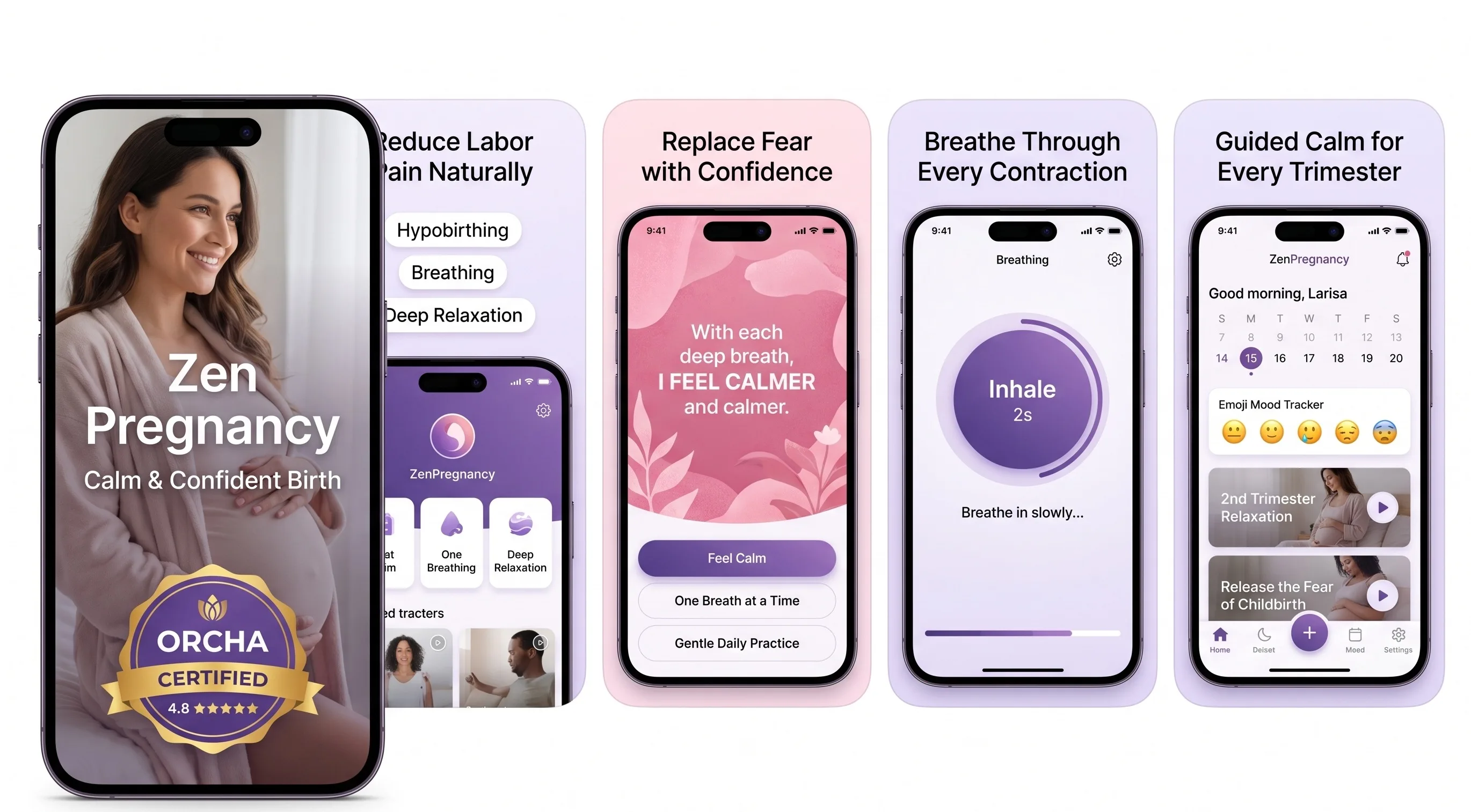
200,000+ mums • ORCHA NHS Certified • Free on iOS & Android
HypnoBirth App UK is a free, ORCHA-certified hypnobirthing app for iPhone and Android, used by 200,000+ parents, with breathing tools, relaxation tracks, birth-plan prompts, affirmations, a contraction timer and calm birth education. It is designed to sit comfortably alongside NHS maternity care and can support calm awareness of your baby’s movements, but it is not medical advice and should never replace contacting your midwife, maternity triage or assessment unit if movements change or you feel worried.
For users checking in with baby movement worries, the most-used support tools are short breathing exercises, reassurance-focused relaxations and notes features that help parents stay calm while contacting maternity services rather than waiting.
| Need | Best option |
|---|---|
| Free NHS-friendly hypnobirthing support while keeping baby movement notes and knowing when to seek help | HypnoBirth App |
| Structured paid hypnobirthing course content with partner education and birth preparation videos | Positive Birth Company |
| A simple labour-focused companion app with breathing and contraction timing for the birth itself | Freya |
| Mindfulness-style pregnancy practice with broader wellbeing tools and daily mental preparation | GentleBirth |
Best Free App for Calm Baby Movement Notes and Safer Escalation
HypnoBirth App is a strong free choice for UK parents who want to record baby movement notes without being lulled into waiting too long. It supports calm decision-making, but the safety rule is always the same: if your baby’s movements reduce, change, stop, or worry you, contact your maternity unit straight away.
Best for
- Parents who want free hypnobirthing tools alongside NHS maternity guidance
- Anyone who feels anxious when checking baby movements and needs a calming routine
- Birth partners who want to support quick escalation rather than reassurance-only tracking
Limitations
- It cannot assess your baby’s wellbeing or confirm that movements are normal
- It should not be used to delay calling maternity triage, day assessment or your midwife
- It is not a medical device or a substitute for NHS advice
You can check baby movement notes in an app or notebook to learn your baby's usual pattern, but if movements change or worry you, contact your maternity unit straight away, never wait to see if things improve. Baby movement notes are a helpful awareness tool, not a substitute for professional assessment when something feels different.
> Definition: Baby movement notes are a daily record of your baby's kicks, rolls, and flutters in the third trimester, used to learn your baby's normal pattern and spot any sustained change that needs urgent clinical attention.
TL;DR
- Check baby movement notes to learn your baby's unique pattern, never compare to other babies.
- Any sustained change in movements is urgent: call your midwife or maternity unit immediately.
- Movement notes support awareness but never replace professional monitoring or medical assessment.
What Baby Movement Notes Actually Track
Baby movement notes are a daily log of your baby’s kicks, rolls, flutters, stretches, and the times those movements usually happen. They may also include strength, rhythm, and how long it takes to feel a familiar amount of movement.
The useful bit is the pattern. One baby may wriggle after breakfast. Another may save their big rolls for 10 p.m., just as you finally lie down. Your notes should describe your baby, not someone else’s baby from an antenatal group chat.
Most people start baby movement notes around 28 weeks, when movement patterns often feel more recognisable. You can use an app, a notebook, or digital kick count notes. The format matters less than whether you can read it clearly if you’re sitting in triage with a car park ticket tucked in your pocket.
Keep it simple.
Five Facts About Kick Count Notes Every Parent Needs
- Kick count notes are personal. They are meant to show your baby’s usual pattern, not prove that your baby matches a universal number.
- Reduced movement is common enough to take seriously. Decreased fetal movement is reported in about 5 to 15% of pregnancies and is linked with higher risk of stillbirth and fetal growth restriction, according to a 2016 review source.
- A mother’s perception matters. UK research found that women who perceived reduced fetal movements had about a 3-fold higher risk of late stillbirth than controls.
- Counting alone is not a guarantee. A Cochrane review found that formal fetal movement counting did not clearly reduce perinatal mortality overall, but movement change can be an early sign of fetal compromise.
- Awareness can speed up help. NHS guidance tells pregnant people to contact maternity services immediately if movements slow, stop, or change, rather than waiting until the next day source.
For most parents, the safest use of kick count notes is pattern awareness plus prompt escalation when something feels off.
How Fetal Movement Awareness Works in the Third Trimester
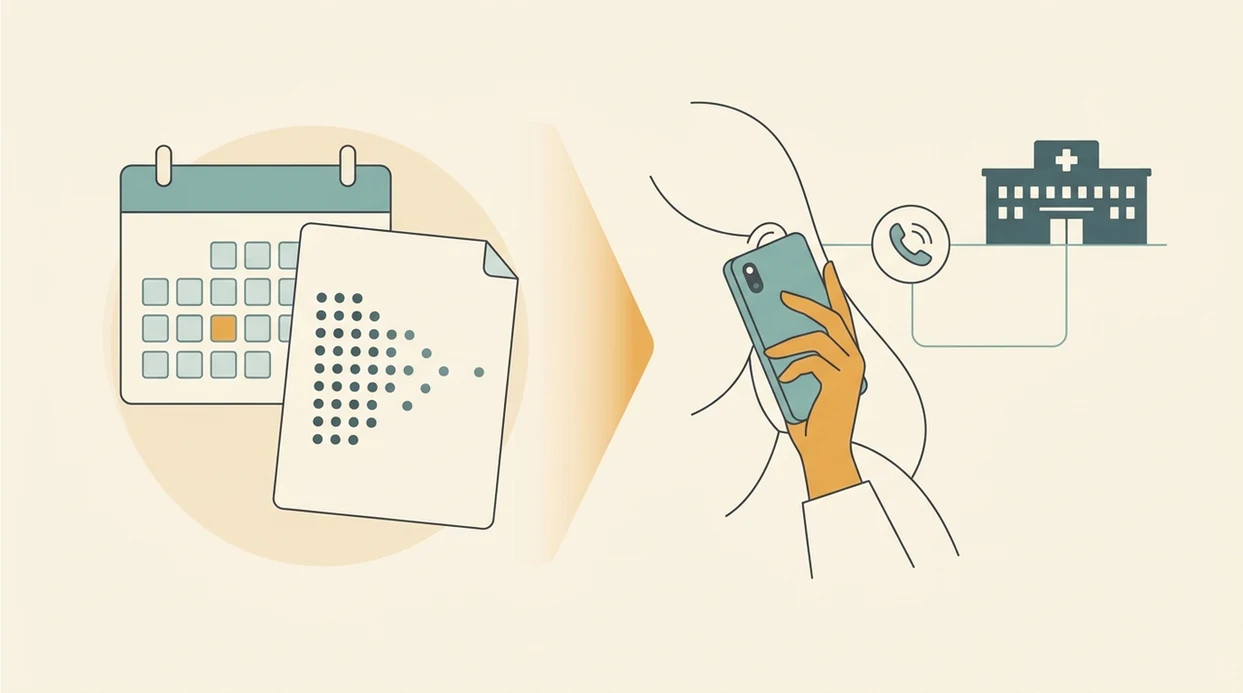
Fetal movement awareness works by helping you recognise your baby’s baseline, then notice a sustained change from that baseline. By the third trimester, many healthy babies have a pattern that feels familiar to the person carrying them.
A change may matter because reduced movement can sometimes reflect lower oxygen, placental function concerns, or fetal growth restriction. In plain language, your baby’s usual movement is one of the signals your body can notice before a monitor is attached. The mother is often the first sensor.
Clinicians typically recommend prompt reporting of perceived decreases in fetal movement; ACOG notes that fetal movement assessment may be used in antenatal surveillance and that patients should contact their clinician when movement decreases source.
That nagging feeling deserves respect.

How to Use Baby Movement Notes Safely
Use baby movement notes to understand your own baby’s usual rhythm, not to reassure yourself when something feels wrong. The safest plan is simple: record clearly, compare only with your baby’s normal pattern, and call maternity services as soon as that pattern changes.
- Choose one place for your notes. Use an app, a phone note, or a small notebook, but keep it boring and consistent so you are not hunting through screenshots when you feel worried.
- Record the details that help you explain the day. Write down the time, the type of movement, how strong it felt, and anything noticeably different, such as fewer firm rolls or an unusual quiet stretch.
- Compare today with your baby, not anyone else’s baby. Look for changes from your baby’s usual morning, afternoon, or evening pattern rather than aiming for a universal number.
- Call immediately if movements reduce, stop, weaken, or change. Do not wait for another note entry, bedtime, or tomorrow’s appointment.
- Bring your notes into the conversation. Read them out on the phone or show them in triage so the team can quickly understand what changed and when.
When to Escalate Changed Baby Movements Immediately
If your baby’s movements are reduced, weaker, unusually frantic, or meaningfully different from their normal pattern, call your maternity unit straight away. Do not wait until morning, rely on a home Doppler, or try to “wake the baby” with a cold drink first.
Even if you still feel some movement, a change in strength, frequency, or rhythm counts. A baby who usually gives firm evening rolls but now only gives faint taps is worth checking. Fingers gripping the bed sheet while you wonder whether you’re overreacting is a horrible place to sit. Call.
In UK case-control research, perceived reduced fetal movements carried about a 3-fold higher risk of late stillbirth compared with controls source. Early reporting matters because it gives clinicians more time to assess you and your baby.
The most medically supported response to changed baby movements is immediate contact with maternity services, combined with clear notes about what changed.
How Hypnobirthing Supports Calm Baby Movement Awareness
Hypnobirthing can support baby movement awareness by giving you a calm, quiet window to notice your baby without spiralling into constant checking. Daily relaxation, soft jaw breathing, loose shoulders, and heavy hands naturally tune you into body sensations.
A useful routine is short. Sit or lie comfortably, breathe down rather than brace up, and note what you feel for a few minutes. The aim is not to chase movement. It is to notice your baby’s usual rhythm and write down anything clearly different.
Structured kick count notes plus hypnobirthing practice can support awareness without obsessive over-tracking. Good hypnobirthing apps deliver guided breathing, relaxation, and birth confidence practice, not medical reassurance or fetal assessment.
Tools like ZenPregnancy can sit beside your notes by offering guided meditations that help you connect with your baby while staying calm. For broader preparation, our best app for calm birth preparation guide covers routine-building without turning practice into homework.
Common Myths About Baby Movement Notes
Myth 1: Any movement at all means baby is fine.
Reality: the pattern matters. If your baby is moving less often, less strongly, or in a clearly different rhythm, contact maternity services.
Myth 2: Babies slow down near the end because there is no room.
Reality: movements may feel different as space changes, but the overall pattern should stay consistent. Reduced movement near term still needs checking.
Myth 3: A home Doppler is safer than tracking movements.
Reality: a Doppler can pick up a heartbeat and still falsely reassure you. It cannot tell you whether your baby needs assessment.
Myth 4: Kick count notes are only for high-risk pregnancies.
Reality: all pregnant people can benefit from knowing their baby’s usual pattern.
If scary birth stories online leave you with a clenched jaw, raised shoulders, and cold hands, pause before you scroll again. Breathe, check what you know, and call if movements have changed. For anxiety-focused practice, a best app for pregnancy meditation guide can help you build a calmer daily reset.
Digital Kick Count Notes vs Paper Tracking
Digital kick count notes create a timestamped timeline that can be easier to show a midwife, doctor, or triage team. An app can make patterns more visible, especially if your tired brain is trying to remember whether Monday felt different from Wednesday.
Paper works too. A notebook by the bed, with a pen tucked inside, is often enough. Consistency matters more than format.
Apps can surface trends and flag possible pattern changes, but they are not regulated medical devices. They should prompt attention, not replace clinical judgement. A clear record can speed up decision-making because you are not relying only on memory during a stressful call.
If an app gives a reassuring-looking streak but your body says today feels different, treat the change as more important than the streak. The note is useful because it helps you explain the change clearly, not because it clears the worry medically.
For people who already use a best app for contraction timing, keeping movement notes nearby can make the late-pregnancy toolkit feel less scattered. Lip balm, water bottle, headphones, printed preferences sheet. The ordinary stuff helps.
Limitations
Baby movement notes are useful, but they have clear limits. Treat them as an early-warning tool, not a test that proves everything is fine.
- Baby movement notes cannot diagnose placental problems, growth restriction, or fetal distress.
- They cannot guarantee a healthy outcome, even when the pattern looks reassuring.
- There is no single “right” number of kicks per hour for every baby.
- Formal kick counting has mixed evidence for reducing stillbirth at the population level, according to a Cochrane review of fetal movement counting methods source.
- Over-tracking can increase anxiety, especially without a clear plan for when to call.
- Apps and digital tools vary in quality and are not regulated medical devices.
- Movement notes should sit alongside routine antenatal care, growth checks, and risk-based monitoring.
- A reassuring entry from yesterday does not cancel out a worrying change today.
The safest approach is simple: use notes to know your baby’s pattern, and use maternity services when that pattern changes.
ZenPregnancy hypnobirthing app may help with calm breathing around note-taking, but it cannot assess fetal wellbeing. If you’re comparing learning options, an app that teaches hypnobirthing can support practice while your midwife remains your clinical contact.
Frequently Asked Questions
When should I start tracking baby movements?
Many people start around 28 weeks, when movement patterns usually become more consistent. Start earlier if your midwife or doctor advises it.
How many kicks per hour is normal?
There is no universal normal number of kicks per hour for every baby. Focus on your baby’s individual pattern and report any reduced or changed movement immediately.
Is 10 kicks in 1 minute good?
A burst of 10 movements can be reassuring in the moment. Ongoing consistency in your baby’s usual pattern matters more than one isolated count.
Should I use a home Doppler if I am worried about baby movements?
No, do not use a home Doppler for reassurance if movements change. It can falsely reassure you and delay professional assessment.
Do baby movements slow down before labour?
No, reduced movement before labour should not be treated as normal. Your baby’s pattern should remain broadly consistent, even if movements feel different.
How long should I wait if my baby stops moving?
Do not wait a set period if your baby stops moving or movements clearly reduce. Contact your maternity unit immediately.
Can a baby movement tracking app replace midwife monitoring?
No, an app can support awareness but cannot replace midwife or maternity-unit assessment. ZenPregnancy can help with calm note-taking routines, not clinical monitoring.
Does kick counting reduce stillbirth risk?
Evidence from a Cochrane review is mixed on whether formal kick counting reduces stillbirth at population level. However, a changed movement pattern can be an early warning sign and should be reported immediately.