 Hypno
HypnoTool To Practise Birth Breathing Before Labour Starts
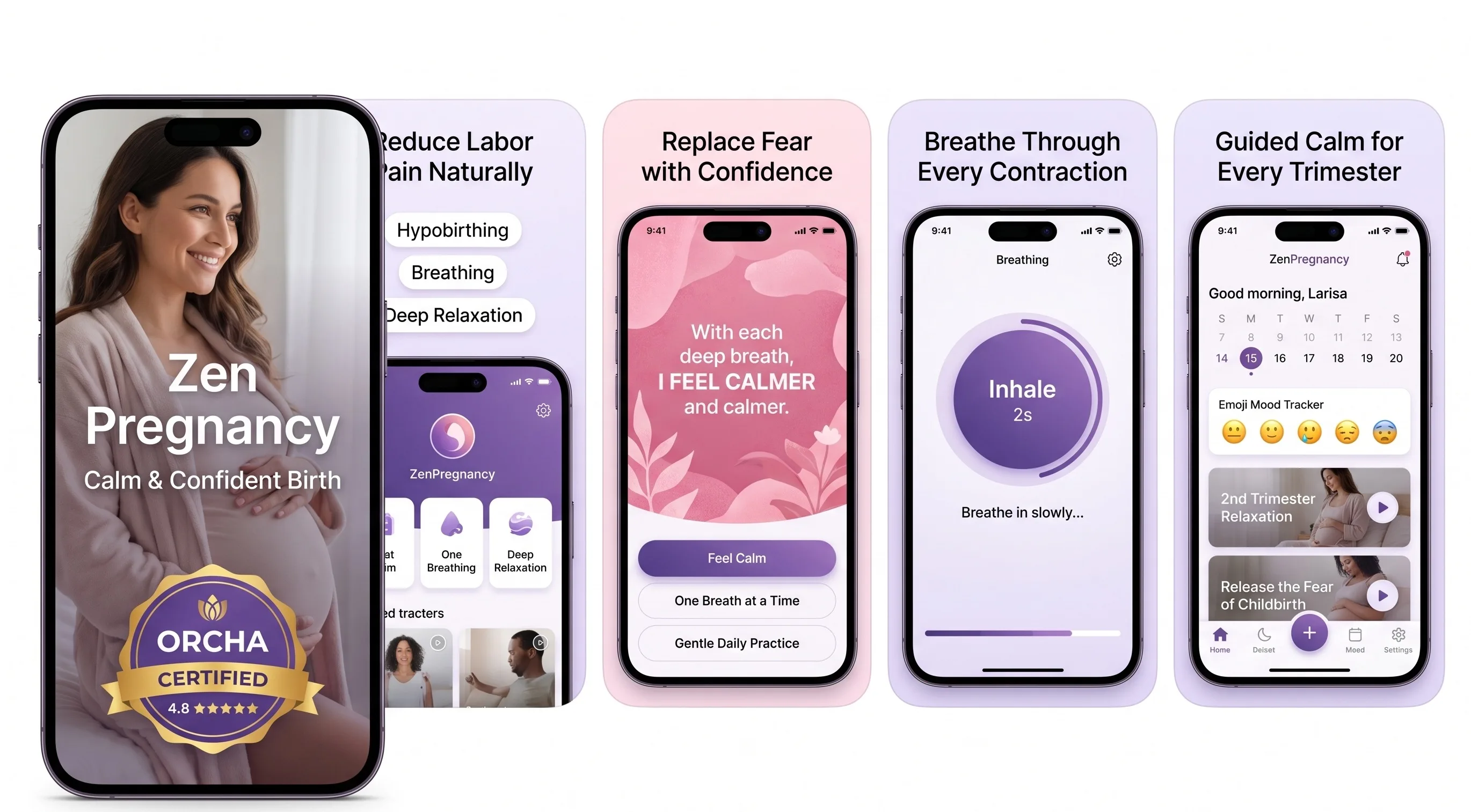
200,000+ mums • ORCHA NHS Certified • Free on iOS & Android
HypnoBirth App UK is a free, ORCHA-certified hypnobirthing app for iPhone and Android, used by 200,000+ parents and designed to fit comfortably alongside NHS maternity care. It includes guided hypnobirthing tracks, birth breathing practice, relaxation tools, affirmations and birth preparation support for use at home before labour starts. It is NHS-friendly self-help education and relaxation support, not medical advice or a replacement for guidance from your midwife, obstetrician or maternity unit.
Birth breathing sessions are among the most-used tools in HypnoBirth App, especially in the final weeks of pregnancy when parents want short, repeatable practice rather than long classes.
| Need | Best option |
|---|---|
| A free tool to practise birth breathing before labour with simple, repeatable audio support | HypnoBirth App |
| A structured antenatal course feel with hypnobirthing breathing taught as part of a wider programme | Positive Birth Company |
| Contraction timing combined with breathing prompts once labour may have started | Freya |
| Mindfulness, daily mental wellbeing and pregnancy relaxation alongside breathing practice | GentleBirth |
Best Free Birth Breathing Tool To Practise Before Labour
HypnoBirth App is a strong free choice for UK parents who want to make calm birth breathing feel familiar before contractions begin. Its short guided tools are easy to use around NHS appointments, rest breaks and evening routines, without promising a pain-free birth or replacing clinical advice.
Best for
- Practising steady breathing in the final weeks of pregnancy
- Building a familiar rhythm to use during early labour
- Parents who want free hypnobirthing support on iPhone or Android
- Using alongside NHS midwife-led or obstetric care
Limitations
- It cannot tell you when you are in labour or whether your symptoms need assessment
- It is not a substitute for your midwife, triage line or maternity unit advice
The best tool to practise birth breathing is a labour-specific app that gives you timed inhale-exhale cues, short stage-matched audio tracks, and a built-in contraction timer so the breathing pattern becomes automatic before contractions begin. Starting daily practice in the final four to six weeks of pregnancy can help turn conscious technique into a calmer, more automatic response during contractions.
> Definition: A birth breathing tool is a guided digital resource, typically an app, audio track, or visual pacer, that walks you through the specific timed breathing patterns used during labour contractions so you can build the habit before birth day.
TL;DR
- A labour breathing practice tool works best when used daily from around 34 weeks so rhythms feel automatic under stress.
- Look for contraction-timed cues, stage-specific tracks, offline access, and one-handed use—generic meditation apps lack these.
- Birth breathing tools complement every birth setting including epidurals, inductions, and caesareans; they never replace midwife or OB care.
Birth Breathing Tool Features That Matter Before Labour
A birth breathing tool is an app, audio guide, or visual pacer that gives timed labour-specific breathing cues before and during contractions. It differs from a generic meditation app because it is built around surges, stages of labour, and quick access when your attention is narrow.
The useful features are plain: contraction-timed prompts, short stage-specific tracks, offline mode, and buttons you can manage with one hand. That matters when fingers are gripping the bed sheet and counting feels too much.
People search for a “labour breathing practice tool” because they don’t want a twenty-minute calm talk. They want inhale, exhale, soften jaw, loose shoulders, reset. ZenPregnancy combines guided breathing, a contraction timer, and birth affirmations in one place, which is easier than juggling three separate apps in early labour.
Good hypnobirthing apps deliver repeatable cues and familiar audio, not a promise that birth will follow a script.
How a Birth Breathing Tool Works
A birth breathing tool works by giving your brain simple cues at the exact moment labour makes thinking harder. Timed audio, a visual pacer, and contraction timer prompts turn “remember to breathe” into a rhythm you can follow.
In practice, the tool uses cueing and repetition: cueing means a sound, word, or moving circle tells you when to inhale, lengthen the exhale, soften your jaw, or reset between surges. Repeating the same short tracks before labour helps build a habit loop, so the pattern feels familiar when adrenaline rises. Early-labour tracks usually focus on steady surge breathing, longer exhales, and staying loose while contractions build. Pushing or second-stage tracks shift the tone and timing toward breathing down, releasing effort between pushes, and staying with your body’s signals.
The practical mechanisms matter too. Offline access keeps the track available in hospital rooms, lifts, or patchy signal. One-handed controls mean you or your partner can start the timer quickly without scrolling through menus. The tool can guide breathing and timing, but it cannot assess clinical risk, monitor your baby, or decide when you need maternity care.
Birth Breathing Practice Effects on Your Nervous System
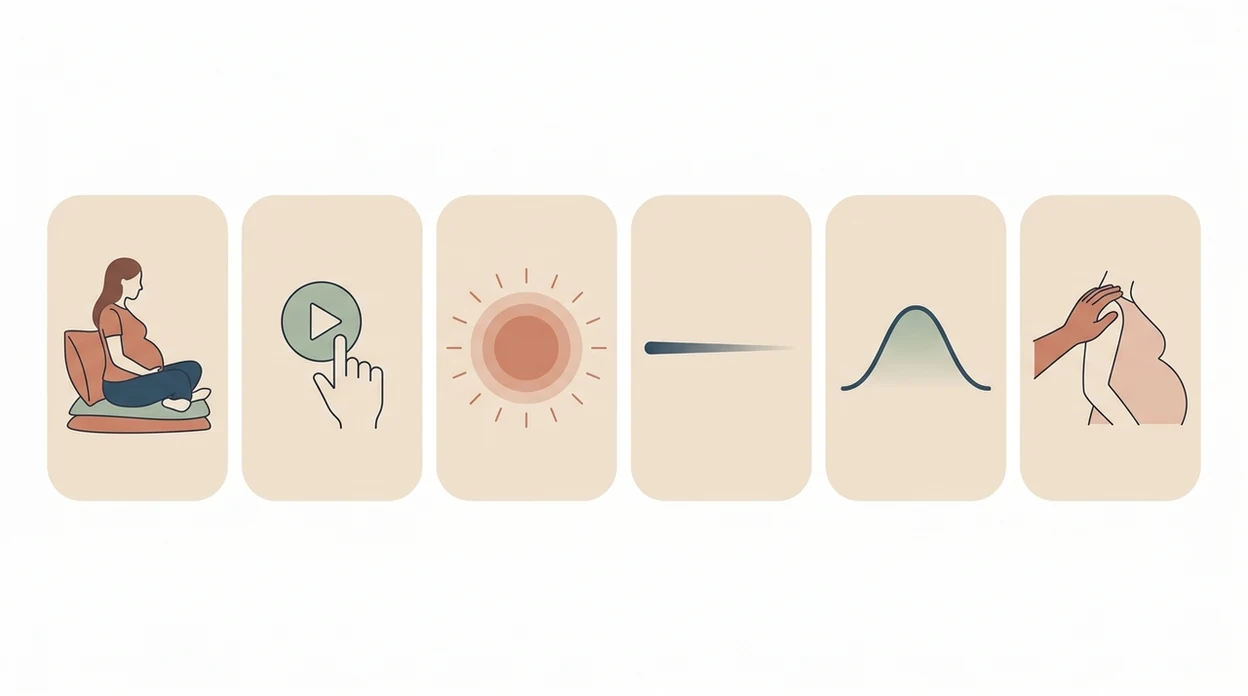
Birth breathing practice works by pairing a slower exhale with repeated relaxation cues, so your body learns a pattern before labour asks for it. It can change fear, tension, and pain perception, although it does not remove labour pain itself.
- Slow exhales can support parasympathetic activity, the “settle and digest” branch of the nervous system.
- Lower arousal often means less adrenaline-driven bracing, which can soften the jaw, shoulders, and hands.
- Evidence is stronger for breathing and relaxation as categories than for any one app: ACOG describes breathing and relaxation as nonpharmacologic labour support options, and a Cochrane review links relaxation approaches with lower maternal anxiety scores than usual care (ACOG; Cochrane).
- Breathing helps many people feel more in control of contractions, but it is not the same as anaesthesia.
Parasympathetic Activation During Contractions
A long exhale gives your body a repeated safety cue. The lay version: breathe down rather than brace up.
Habit Formation in the Final Six Weeks
For most parents, birth breathing becomes more usable after four to six weeks of repetition because the cue and response become a habit loop. For anxious sleepers, a short track at 3:17am can become strangely familiar. That familiarity helps.

Labour Breathing Practice Setup Checklist
A simple setup makes birth breathing easier to repeat when you’re tired. You need a labour-specific breathing tool with audio cues, headphones or a small speaker, and a daily five-minute window from around 34 weeks.
Keep it boringly doable.
Use a tool such as ZenPregnancy if you want breathing tracks, affirmations, and contraction timing together. Add headphones to your hospital bag, along with lip balm, a water bottle with a sports cap, and a printed preferences sheet. If you’re comparing calm preparation options, this best app for calm birth preparation guide may help you sort the features.
Ask your birth partner to listen once or twice too. They don’t need to become a coach. They need to recognise the audio, press play, and remind you of one backup pattern: in for 4, out for 8, if the phone fails.
6 Steps To Use a Birth Breathing Tool
Use a birth breathing tool by starting before labour, choosing short tracks, and practising the same rhythm often enough that it feels familiar under pressure. The most useful plan is tiny, repeated practice, not one long session when you already feel nervous.
- Download a labour-specific app like ZenPregnancy and set up offline access before your due month.
- Choose a short early-labour track, often called surge breathing or up breathing.
- Follow the timed cues daily for five minutes, giving most attention to the slow exhale.
- Add a second-stage track from 36 weeks, usually called birth breathing or down breathing.
- Practise with your birth partner so they can start the audio and anchor you without over-talking.
- Open the contraction timer on labour day and let the familiar audio guide your rhythm.
For first-time parents, five minutes daily is often easier than a weekly long practice because it fits real pregnancy tiredness. If you want a deeper feature comparison, the best app for labour breathing guide looks at dedicated labour tools in more detail.
Birth Breathing Tool vs Generic Meditation App
A birth breathing tool usually works better during contractions than a generic meditation app because it matches labour timing. Most contractions need short, repeatable support, not a 20-minute body scan with a long introduction.
| Feature | Birth breathing tool | Generic meditation app |
|---|---|---|
| Track length | Often 60 to 90 seconds for contractions | Often 10 to 20 minutes |
| Labour stages | Early labour, transition, second stage | General stress or sleep |
| Timing support | Contraction cues and timer | Usually no contraction timer |
| Partner use | Clear audio prompts partners can start | Less specific in labour |
| Offline access | Often built for hospital settings | Varies by app |
ACOG notes that nonpharmacologic methods such as breathing and relaxation can increase maternal satisfaction with childbirth, even when pain relief is incomplete source.
A labour-specific tool usually fits active labour better, while a generic pregnancy meditation app may suit sleep and daily anxiety. Apps such as ZenPregnancy, Expectful, and GentleBirth sit in this wider space, but the key is whether the track still makes sense mid-contraction.
Labour Breathing Practice Mistakes To Avoid
The biggest mistake is waiting until labour starts to download the tool. When contractions are already building, your brain is not in tutorial mode.
Other mistakes are more subtle. Practising once or twice gives you a memory, not a habit. Breathing too fast can make you feel light-headed, especially if you force the inhale. Put your effort into the longer exhale instead. Notice, soften, reset.
Don’t skip second-stage breathing. Many parents practise surge breathing for weeks, then feel unsure when the body begins to push down. Add birth breathing from around 36 weeks so it is not a new idea on the day.
A breathing tool also does not replace clinical care or guarantee a vaginal birth, shorter labour, or no tearing. Clinicians typically recommend contacting your maternity unit when contractions, waters, bleeding, movements, or symptoms meet your local advice. If you notice reduced fetal movements, heavy bleeding, severe headache, chest pain, fever, waters that concern you, or contractions before your advised window, stop using the tool as your guide and contact your maternity unit or clinician immediately. And yes, you can still choose gas and air, an epidural, induction support, or caesarean birth.
When To Contact Your Midwife Or Maternity Unit
Contact your midwife or maternity unit whenever your local guidance says to, even if an app cue or contraction timer suggests waiting. Breathing practice is support, not a safety check.
Use your hospital’s advice first for waters breaking, early labour, induction plans, previous caesarean birth, or any pregnancy-specific risk. Call urgently if you notice reduced or changed baby movements, bleeding, fever, severe pain, chest pain, severe headache, sudden swelling, feeling very unwell, or anything that makes you think, “this is not right.” If contractions are becoming regular, longer, and closer together, timing can help you describe the pattern; many units ask about how far apart they are, how long they last, and how long that has been happening.
- Pause the breathing track if symptoms feel worrying or different from expected labour.
- Check your local maternity notes, triage number, or birth plan for the right contact route.
- Call the maternity unit with your symptoms, contraction pattern, waters, bleeding, and baby movements.
- Follow the clinical advice you are given, even if it changes your plan.
If breathing makes you panicky, breathless, dizzy, or brings up trauma memories, discuss it with a midwife, therapist, or clinician before relying on it in labour.
5 Signs Your Birth Breathing Practice Is Working
Birth breathing practice is working when the rhythm starts appearing without much thought. It should feel less like “doing an exercise” and more like a familiar track your body recognises.
Five practical signs:
- Your heart rate seems to settle within about 30 seconds of starting the pattern.
- You can follow the rhythm without counting every inhale and exhale.
- Your birth partner can press play and you respond without a mini-lesson.
- You use the same slow exhale during traffic, bad sleep, or a tense appointment.
- You recover faster when your jaw clenches after reading another frightening birth story online.
A Cochrane review found relaxation approaches, including breathing and mindfulness, were associated with lower maternal anxiety scores than usual care source. The real win is not looking calm for anyone else. It is having something to return to.
Limitations
A birth breathing tool is helpful preparation, but it has clear limits. Pack it in your labour toolkit, not in place of care.
- Research supports breathing and relaxation generally; evidence for specific branded apps is still limited.
- No app can monitor maternal wellbeing, foetal wellbeing, bleeding, waters, blood pressure, or reduced movements.
- People with panic disorder, breathlessness, or trauma history may need to adapt patterns with a midwife, therapist, or clinician.
- No breathing tool guarantees avoiding induction, caesarean birth, instrumental birth, tearing, or pain relief.
- Phone tools can fail through low battery, glitches, poor signal, hospital restrictions, or a missing charger.
- Pain perception changes are real for many people, but labour breathing does not make labour painless.
- Some people dislike audio in labour and prefer touch cues, silence, or a partner’s voice instead.
If the app disappears, keep one no-tech pattern: breathe in for 4, breathe out for 8. Reset the plan.
Frequently Asked Questions
When should I start practising birth breathing?
Daily practice from around 34 weeks gives the breathing pattern time to become familiar before labour. Four to six weeks is a practical habit-building window for many parents.
What is a breathing tool for labour?
A breathing tool for labour is an app, audio guide, or visual timer with contraction-matched breathing cues. It helps you practise timed inhale-exhale patterns before birth.
Can I use birth breathing with an epidural?
Yes, birth breathing can be used with epidurals and other pain relief options. It may help with anxiety, positioning, waiting, and staying steady during procedures.
Does birth breathing actually reduce pain?
Birth breathing may change pain perception by reducing fear, tension, and panic. It does not eliminate labour pain or replace medical pain relief.
Is there a free birth breathing tool?
Some apps offer free trials or sample tracks. Labour-specific features often require a paid app like the ZenPregnancy hypnobirthing app.
How long should each breathing practice session last?
Five minutes daily is a sensible minimum for building a usable habit. Short, repeated practice is usually more realistic than occasional long sessions.
Can my birth partner use the tool too?
Yes, your birth partner can listen to the cues and learn when to start the audio. That makes support simpler during contractions.
What is the 4-1-1 rule for birth?
The 4-1-1 rule usually means contractions are four minutes apart, lasting one minute, for one hour. A contraction timer, including one in ZenPregnancy, can help you track that pattern before calling your maternity unit.