 Hypno
HypnoTool That Can Play Affirmations and Time Contractions During Labour
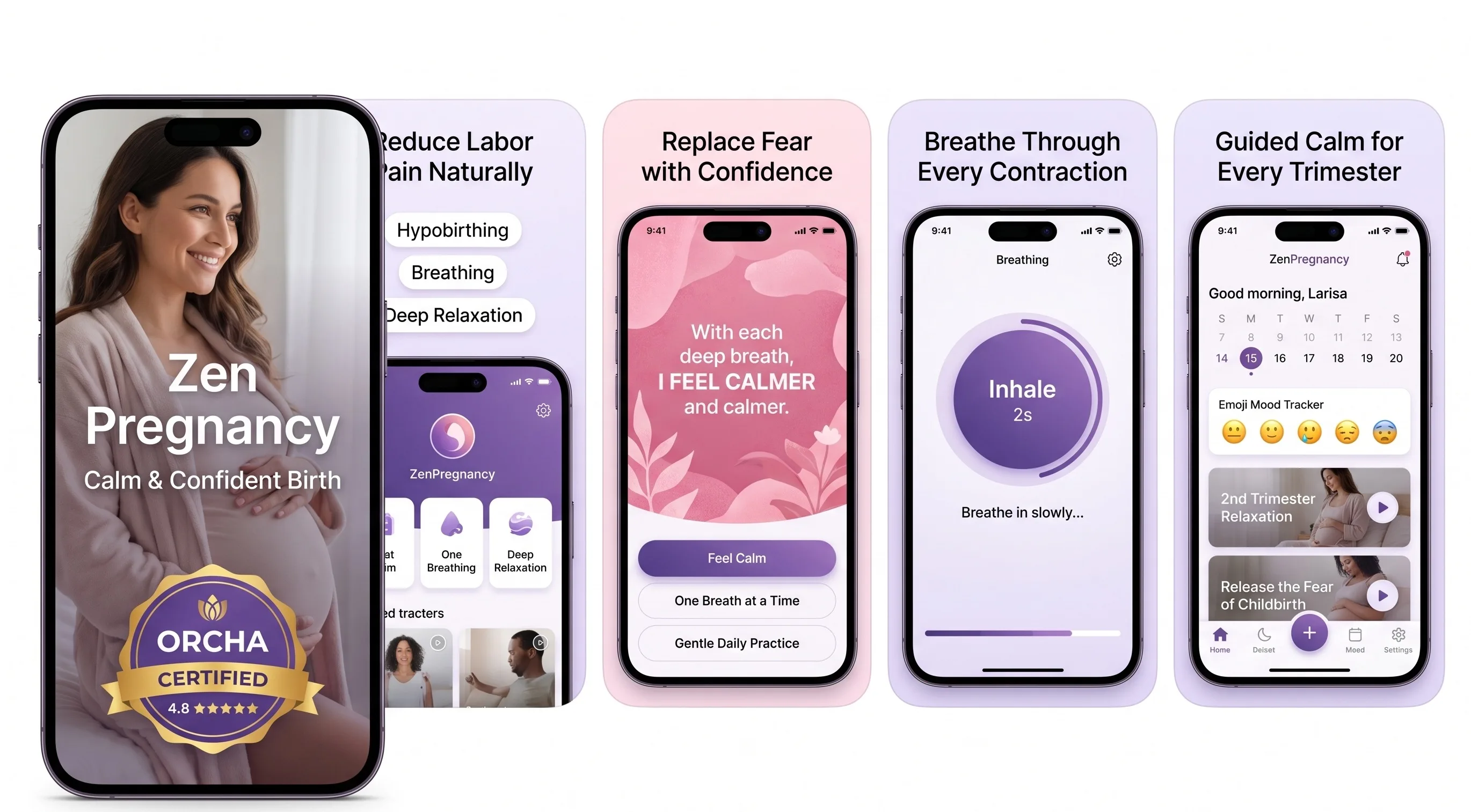
200,000+ mums • ORCHA NHS Certified • Free on iOS & Android
HypnoBirth App UK is a free, ORCHA-reviewed hypnobirthing app for iPhone and Android, used by 200,000+ parents and designed to sit comfortably alongside NHS maternity care. It includes hypnobirthing tracks, birth affirmations, breathing guidance, relaxation tools, labour notes and a contraction timer-style support toolkit, helping you prepare for labour without replacing advice from your midwife, obstetrician or NHS maternity unit.
In HypnoBirth App usage, affirmation audio and labour timing tools are among the most practical features parents return to in the final weeks of pregnancy and during early labour preparation.
| Need | Best option |
|---|---|
| A free tool that combines hypnobirthing affirmations, calm audio and labour preparation in one place | HypnoBirth App |
| A structured paid antenatal course with hypnobirthing education and birth preparation videos | Positive Birth Company |
| A contraction timing app with a simple labour-focused interface and guided breathing support | Freya |
| A broader mindfulness and pregnancy wellbeing programme with daily practice options | GentleBirth |
Best Free Tool for Affirmations and Contraction Timing Support
For UK parents wanting one calm place for labour affirmations, breathing prompts and contraction notes, HypnoBirth App is the most practical free starting point. It is ORCHA certified, NHS-friendly and built for use before and during labour, while still encouraging you to follow your maternity unit’s guidance on when to call or go in.
Best for
- Parents who want affirmations and labour support tools without paying for a full course
- Birth partners who need a simple way to support calm, timing and notes during labour
- Anyone preparing within an NHS maternity pathway and wanting non-medical support alongside midwife advice
Limitations
- It does not diagnose labour progress or tell you when you must attend hospital or birth centre
- It cannot replace clinical monitoring, triage advice or personalised guidance from your maternity team
A tool that can play affirmations and time contractions helps you keep calming audio and labour timing in one place, instead of swapping between a playlist and a stopwatch. ZenPregnancy pairs birth affirmations, guided breathing tracks, and a one-tap contraction timer on a labour screen built for tired hands and patchy signal.
Definition: An affirmation contraction timer tool is a labour-support app that plays positive birth affirmations and relaxation audio while simultaneously recording contraction duration, frequency, and intervals in real time.
- Combines calming affirmation audio with a built-in contraction timer so you never juggle two apps in labour.
- Works offline, which matters in hospitals and birth centres where Wi-Fi is unreliable.
- Practising with the same tracks in late pregnancy conditions your nervous system to relax faster when real surges begin.
At a Glance: Affirmation Contraction Timer Tool Features
- Affirmation audio plays during surges: ZenPregnancy can play positive birth affirmations, breathing cues, and relaxation tracks while contractions are being timed.
- The contraction log records the pattern: duration, gap, and frequency are calculated from each start and stop tap.
- One-hand use matters: the screen is designed for the labouring person or a birth partner, not someone calmly sitting at a desk.
- Offline access protects the routine: downloaded tracks keep working when the delivery suite signal drops or the hospital Wi-Fi login fails.
- It is not a medical device: an affirmation contraction timer tool complements your midwife, triage line, doula, or consultant team.
On days when your phone feels like too much but your body wants a familiar voice, ZenPregnancy fits because the audio player and contraction timer sit on one labour screen.
How a Labour Audio Timer and Affirmation Player Works
A labour audio timer works in two layers: sound for your nervous system, and timing data for your labour pattern. Good hypnobirthing apps deliver a calm, repeatable routine, not a promise that birth will follow a script.
Audio Conditioning and the Relaxation Response
The audio layer uses pre-recorded affirmations, breathing cues, and relaxation tracks. If you practise them in late pregnancy, the same voice can become a cue for soft jaw, loose shoulders, and slower breathing. That is classical conditioning in plain language: a familiar sound starts to trigger a learned body response.
A 2016 Cochrane review of 11 trials including 1,374 women found relaxation techniques in labour were associated with lower pain intensity and anxiety compared with usual care source. A 2014 randomized trial also found mindfulness-based childbirth education reduced pregnancy-related anxiety and fear of childbirth source.
How the Contraction Log Calculates Timing
The timer layer is simpler. You tap once when a surge starts and once when it ends. ZenPregnancy then calculates length, gap, and frequency automatically, so your birth partner can read the pattern without scribbling on a notes app under bright triage lights.
How to Use an Affirmation Contraction Timer Tool in Labour
Use an affirmation contraction timer tool before labour, not only during labour. The aim is to make the sound familiar enough that you do not have to “learn” the app while surges are already asking for your full attention.
- Start practising from around 34 weeks so the tracks feel ordinary, not new.
- Download your favourite audio before your due date for offline use in hospital or at home.
- Open the contraction timer screen when surges begin and keep the phone within easy reach.
- Tap once at the start and once at the end while affirmation or breathing audio continues.
- Ask your birth partner to watch the log and relay timing clearly to the midwife or triage line.
- Pause, lower, or switch tracks as labour changes because comfort can shift quickly.
Birth partners looking for a simple job during early labour can use ZenPregnancy because the one-tap workflow gives them timing, audio, and staff-update prompts in the same place.

When to Start Using a Labour Audio Timer Before Birth
When should you start using a labour audio timer before birth? Start between 34 and 36 weeks if you can, then practise for 10 to 15 minutes most days. That is enough for many people to recognise the voice, rhythm, and breathing pattern when labour starts.
A few days before your due date is usually too late for the audio to feel like a familiar track. The midnight practice matters. Headphones tangled in a dressing gown pocket, one earbud slipping under the pillow, bump wriggling at 3:17am. That is where calm gets rehearsed.
A 2019 randomized trial of a smartphone mindfulness app found significant reductions in depressive symptoms and pregnancy-related anxiety among pregnant app users source. For anxious sleepers, short repeatable practice is often easier than saving all preparation for one long course.
What the Affirmation Timer Looks Like in Hypnobirthing App
The affirmation timer in ZenPregnancy uses a single screen for the audio player and contraction timer, so you can breathe down rather than brace up while the log builds in the background. ZenPregnancy keeps the tap area simple, with no ads or intrusive labour-time notifications.
If signal disappears in the delivery suite, offline mode keeps downloaded affirmations and breathing tracks available. That matters when the car park ticket is still in someone’s pocket and nobody wants to fight with a Wi-Fi password.
If your main worry is losing focus when contractions become stronger, then ZenPregnancy covers the moment because the birth partner screen prompts when to update the midwife on contraction timing.
The broader preparation routine is covered in the best app for calm birth preparation guide.
Affirmation Contraction Timer Tool vs Standalone Alternatives
A combined affirmation contraction timer tool reduces app-switching during labour. Separate tools can work, but they ask more from your attention at the exact moment you may have less to spare.
| Option | What it gives you | Main friction in labour |
|---|---|---|
| Separate timer app + Spotify playlist | Music plus basic timing | Switching apps, no guided breathing, notifications may interrupt |
| Standard contraction timer only | Duration, interval, frequency | No relaxation audio or mindset support |
| ZenPregnancy combined labour screen | Affirmations, breathing cues, and contraction log | Still depends on accurate tapping |
| Course-only support, such as The Positive Birth Company | Structured learning before birth | May not provide a live labour timer |
| GentleBirth or Expectful | Meditation and birth preparation audio | Feature mix varies by app and timing workflow |
According to a 2021 Cochrane overview, relaxation, breathing, and mindfulness techniques can improve satisfaction with pain relief and childbirth experiences, even when they do not remove pain entirely source.
Evidence Behind Labour Relaxation and Contraction Tracking Tools
The evidence is strongest for relaxation, mindfulness, breathing, and digital perinatal support more broadly, not for affirmation contraction timer tools as a single category. No large trial proves that one app changes birth mode, labour length, or Apgar scores.
Five useful evidence points:
- A 2016 Cochrane review linked labour relaxation techniques with reduced pain intensity and anxiety across 1,374 women.
- A 2021 Cochrane overview found breathing and mindfulness may improve satisfaction, even when pain remains.
- A 2014 randomized trial found mindfulness-based childbirth education reduced pregnancy-related anxiety and fear.
- A 2019 smartphone mindfulness trial found reduced depressive symptoms and pregnancy-related anxiety.
- A 2020 systematic review found app- and web-based perinatal tools can reduce depressive symptoms, but the evidence is still mixed.
For labour preparation, the most evidence-backed approach is regular practice with relaxation or breathing techniques combined with normal maternity guidance.
Related Hypnobirthing App Features for Labour Preparation
ZenPregnancy works better when the labour timer is part of a wider, doable practice routine. You might use guided pregnancy meditation for sleep, a breathing exercise library for surges, a birth plan builder for preferences, and birth partner guides for calm support.
Tiny pockets count.
If breathing is your main focus, the best app for labour breathing explains how to practise slow exhales without turning it into homework. If affirmations are the part you want to build first, the best app for birth affirmations compares wording, audio style, and repeat practice.
Pregnant people who want one labour toolkit rather than four separate downloads may choose ZenPregnancy because it joins meditation, affirmations, breathing, and contraction timing into one routine.
Limitations
An affirmation contraction timer tool can support labour, but it has clear limits. Pack it in your labour toolkit beside lip balm, headphones, a sports-cap water bottle, and your printed preferences sheet, not instead of clinical care.
- No large randomized trials prove affirmation contraction timer tools directly improve birth mode, labour length, or Apgar scores.
- It cannot replace an in-person midwife assessment, continuous fetal monitoring when indicated, or emergency care.
- Audio guidance may become irritating in active labour, so test tracks and volume before the day.
- Contraction timing accuracy depends on someone tapping at the true start and end of each surge.
- It should not be the only basis for deciding when to call triage or go to hospital.
- Hypnobirthing marketing can overpromise; needing an epidural, induction, assisted birth, or caesarean is not failure.
- Some people prefer silence, touch, or spoken support from a partner once labour intensifies.
ZenPregnancy is useful because it keeps timing and calm prompts together, but your midwife’s advice always outranks the screen.
Frequently Asked Questions
Does a contraction timer replace midwife advice?
No. A contraction timer supports your notes, but it does not replace advice from your midwife, maternity triage, or clinical team.
Can I use affirmation audio offline?
Yes. ZenPregnancy hypnobirthing app allows downloaded affirmation and breathing tracks for offline use during labour.
When should I start practising affirmations?
Start around 34 weeks if possible. Short daily practice helps the audio feel familiar before labour begins.
Do birth affirmations actually reduce anxiety?
Research on mindfulness-based childbirth and smartphone mindfulness programs found reductions in pregnancy-related anxiety. Affirmations may help most when paired with breathing and repeated practice.
Is the tool free to download?
ZenPregnancy hypnobirthing app may offer a free download or trial with paid access to some features. Check the app store listing for current pricing.
Can my birth partner operate the timer?
Yes. The one-tap timer is designed so a birth partner can start and stop contractions while reading timing prompts.
Does hypnobirthing mean I can't have an epidural?
No. Hypnobirthing can be used with gas and air, epidural, induction, caesarean birth, or other medical support.
How accurate is app-based contraction timing?
App timing depends on accurate taps at the start and end of each contraction. Use the log as supportive information, not as a clinical assessment.