 Hypno
HypnoSee Contraction Timing Patterns Without Relying on Apps Alone
200,000+ mums • ORCHA NHS Certified • Free on iOS & Android
HypnoBirth App UK is a free, ORCHA-certified hypnobirthing app for iPhone and Android, used by 200,000+ people, with breathing tools, relaxation tracks, guided birth preparation, affirmation support, birth partner prompts and practical in-labour features. It is designed to feel NHS-friendly and supportive alongside midwife-led care, including when you are watching contraction timing patterns at home, but it is not medical advice and should never replace contacting your maternity triage unit when you are unsure.
For labour preparation, HypnoBirth App users most often combine the breathing timer, relaxation audio and birth partner prompts rather than relying on contraction timing alone.
| Need | Best option |
|---|---|
| Seeing contraction timing patterns while also staying calm and focused on breathing | HypnoBirth App |
| Structured antenatal education with positive birth preparation alongside timing awareness | Positive Birth Company |
| A dedicated contraction timer style experience for active labour tracking | Freya |
| Mindfulness-based practice and guided relaxation during early labour sensations | GentleBirth |
Best Free App for Understanding Contraction Timing Patterns Safely
HypnoBirth App is a strong free choice for UK parents who want to notice contraction timing patterns without treating an app as a replacement for midwife advice. It supports calmer breathing, relaxation and birth partner involvement while you follow your NHS trust’s guidance on when to contact maternity triage.
Best for
- Pregnant people in the UK who want a free hypnobirthing support tool
- Early labour at home when contractions are irregular and you want to stay calm
- Birth partners who need simple prompts while helping observe patterns and body cues
Limitations
- It cannot confirm whether labour is established or whether you need to attend hospital or a birth centre
- It does not replace maternity triage, your midwife, your consultant or urgent medical assessment
You can see contraction timing patterns by tapping start and stop on a surge timer inside a hypnobirthing app, which maps duration, frequency, and spacing over time. However, these patterns are only one piece of the picture. Your maternity team's personalised advice, your body cues, and baby's movements must always guide your decisions about when to call triage or go to hospital.
Definition: Contraction timing patterns are the recorded changes in how long each surge lasts, how far apart surges are, and how that rhythm evolves across early, active, and transitional labour phases.
TL;DR
- A contraction timer shows patterns in surge length and spacing, but it cannot diagnose true labour or confirm dilation.
- Early labour timing patterns are often irregular and can last over 20 hours in first-time mothers without indicating a problem.
- Always combine app data with body cues, baby's movements, and your midwife's specific guidance before acting.
What Contraction Timing Patterns Actually Show You
Contraction timing patterns show duration, frequency, spacing, and trend over time. They do not show cervical dilation, baby's position, or whether labour is medically progressing well.
A timer records when each surge starts and stops. From that, it can show whether surges are lasting longer, coming closer together, or settling into a steadier rhythm. In hypnobirthing, many people use the word “surge” instead of “contraction” because it keeps attention on a wave that rises and falls, rather than something to fight.
That language matters when you read the pattern. A 58-second surge every six minutes can feel less frightening when you also notice soft jaw, loose shoulders, and a longer out-breath. Seeing a pattern is useful. Diagnosing labour progress is a clinical job.
The screen is information, not instruction.
If you want the timing tool alongside calm audio, the best app for contraction timing guide explains what to look for.
Five Facts About Labour Timing Patterns Every Pregnant Person Needs
- Labour timing patterns often become more regular, longer, and closer together as labour builds. That said, each person's pattern has its own rhythm, especially in early labour.
- The 5-1-1 guide is a starting point, not a rule of law. It usually means surges every five minutes, lasting one minute, for one hour, but your midwife's advice overrides any generic timing rule.
Some hospitals use different call-in thresholds, especially for VBAC, induction, long travel distances, previous fast labour, or known pregnancy complications.
- A hypnobirthing app can record patterns and support breathing, but it cannot diagnose true labour. Good apps deliver timing, breathing cues, and affirmations, not a verdict on dilation or baby's wellbeing.
- Stop-start early labour is common. Surges may come every seven minutes, fade to fifteen, then return later. Annoying, yes. Automatically unsafe, no.
- Safe decisions combine pattern data with body cues and maternity guidance. Reduced movements, heavy bleeding, waters breaking, fever, or severe pain between surges matter more than a tidy graph.
Tools like ZenPregnancy can help you keep a calm record while your birth partner handles the phone.
How Contraction Timing Patterns Work During Each Labour Phase
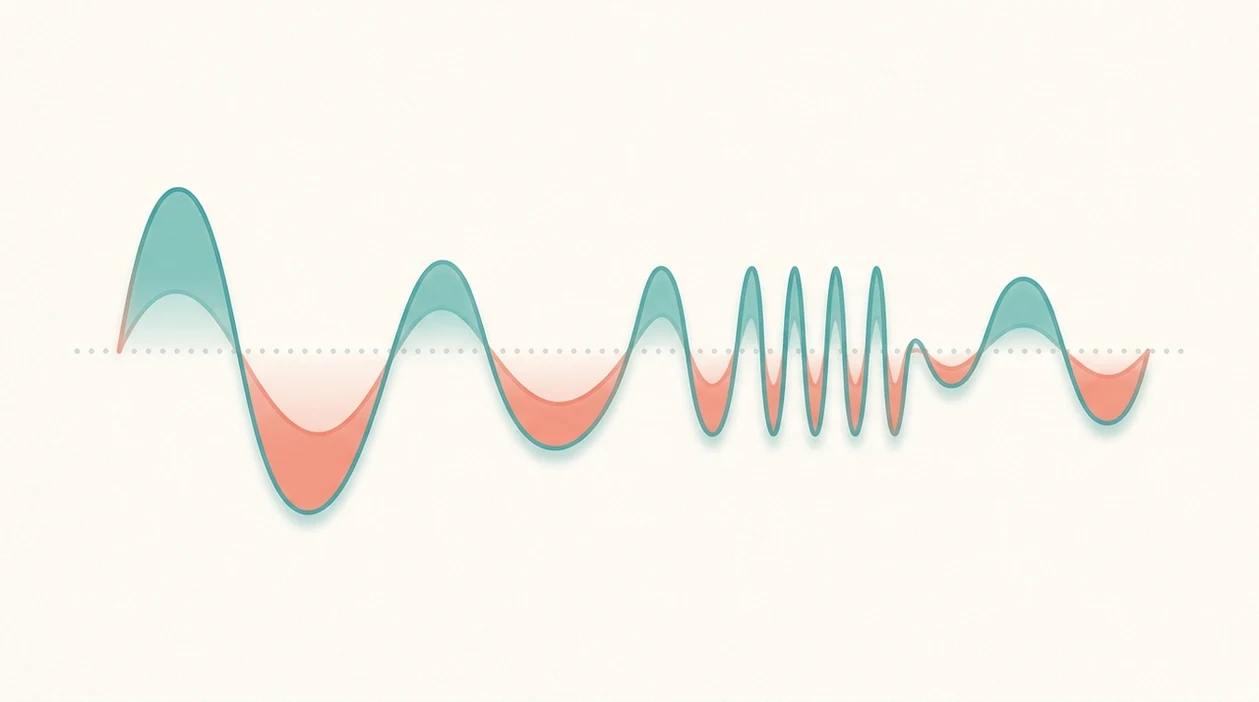
Contraction timing patterns work by turning repeated surge entries into a visible rhythm. The timer captures duration and spacing, while your body and maternity team provide the clinical context.
Latent Phase Patterns
In the latent phase, surges are often irregular. A systematic review found the mean latent phase for first-time mothers was about nine hours, but it could extend beyond 20 hours without necessarily meaning something is wrong source. This is where a quiet kitchen chair after dinner can become your practice place: tap a few surges, breathe down rather than brace up, then put the phone down.
Active and Transition Phase Patterns
In active labour, surges often become more predictable. A large study of over 228,000 low-risk, first-time mothers found median active-phase labour from 4 cm to 10 cm was about six hours, with wide variation source. Transition may bring very close, long surges and stronger pressure. Dilation can also progress slower than the old “1 cm per hour” expectation.
The timer shows the shift visually. It still can't prove dilation.

How to Use Contraction Timing Patterns
Use contraction timing patterns as a calm comparison tool, not a command centre. The aim is to notice whether a rhythm is building while still listening to your body, your baby, and your maternity plan.
- Start timing when surges feel regular enough to compare, rather than logging every twinge or one-off tightening. In early labour, waiting for a rhythm can keep the phone from becoming the main event.
- Tap start when a surge begins and stop when it fades, or ask your birth partner to do the tapping while you breathe, sway, lean, or rest.
- Review three to six surges before drawing meaning from the numbers. One short gap or long surge can be a messy entry, a missed button, or simply early labour being early labour.
- Compare the pattern with body cues: pressure, focus, sounds, waters, bleeding, temperature, and baby's movements. A neat graph does not outweigh what you are feeling.
- Call maternity triage when your written plan says to call, symptoms worry you, or your instincts say something needs checking. You do not need perfect timing data to ask for help.
Common Myths About Contraction Timing Patterns
Contraction timing myths can make early labour feel more urgent than it is. The safest reading is usually calm, curious, and linked to your maternity plan.
Myth: Irregular patterns mean something is wrong. Early labour can pause, stretch out, or change after a bath, food, or rest.
Myth: Close surges on an app mean you must rush in. Close spacing matters, but so do your medical history, distance from hospital, baby’s movements, and what triage tells you.
Myth: A timer can tell how dilated you are. It can't. Only a clinical examination can assess dilation.
Myth: Hypnobirthing means you should never time contractions. You can use timing as one tool in the labour toolkit, beside breathing, movement, water, touch, and rest.
If breathing is the part that feels least familiar, a best app for labour breathing comparison can help you practise before labour starts.
Combining Contraction Timing Patterns With Body Cues and Birth Partner Input
The most useful way to read contraction timing patterns is to layer them with body cues. Notice movement, sounds, pressure, waters breaking, and how much focus each surge asks from you.
Your birth partner can watch the outside signs while you stay with the breath. They might notice you stop chatting, lean forward, make lower sounds, or need the room dimmed. In hospital, the small things count: a straw offered at the right moment, lip balm opened, one affirmation read from a phone note.
Use low-focus mode if timing starts to wind you up. Time every few surges, not every single one. Over-monitoring can raise adrenaline, and adrenaline can make it harder to soften into the rhythm.
If you use the ZenPregnancy hypnobirthing app, treat the timer as a quiet log, not a scoreboard. The best moment to pause timing is often the moment the numbers start pulling you away from your breathing.
For many first-time parents, timing every third or fourth surge is often easier than timing every surge because it keeps attention on coping, not counting.
When to Contact Maternity Triage Based on Contraction Timing Patterns
“When should I contact maternity triage based on contraction timing patterns?” Use 5-1-1 as a rough prompt to call, not as permission to ignore your individual advice.
Your maternity team may give a different plan if you live far from hospital, have had a previous fast labour, are preparing for VBAC, are being induced, or have pregnancy complications. Clinicians typically recommend calling maternity triage for personalised advice rather than relying on a timer alone.
Contact triage straight away for reduced baby movements, heavy bleeding, fever, waters breaking with concerns, or severe pain between surges. These signs matter regardless of whether surges are five minutes apart or fifteen.
Early hospital admission before active labour is associated with higher intervention rates, according to ACOG guidance on limiting intervention during labour and birth source, so staying home can be sensible when it is safe. But safe is the key word. If your gut says call, call.
What Contraction Timing Patterns Cannot Tell You
Contraction timing patterns cannot confirm cervical dilation, baby's wellbeing, or whether labour is progressing biologically. They are a record of rhythm, not a clinical assessment.
Tapping accuracy also drops when labour gets intense. Wet hands in a birth pool, shaking legs, a partner leaving to park the car, or a surge that needs both hands on the bed can all create messy data. The graph may look dramatic because someone missed a stop button.
A randomised trial of a web-based labour self-assessment programme, including contraction timing, found no increase in adverse outcomes, but it did not significantly reduce caesarean rates source. In plain English, timing tools can be safe aids, not magic outcome improvers.
Patterns also look different with induction, epidural use, and VBAC preparation. App data needs interpreting inside that context, not outside it. The are hypnobirthing apps safe guide covers that boundary in more detail.
Limitations
Contraction timing is helpful, but it has clear limits. Keep these caveats in your labour notes, especially if anxiety makes numbers feel more certain than they are.
- Contraction patterns alone cannot confirm that labour is progressing well biologically.
- A timer cannot confirm cervical dilation, baby's position, or baby's wellbeing.
- Tapping accuracy depends on someone being able to tap during intense moments.
- Generic rules like 5-1-1 can be unsafe if they ignore VBAC, induction, fast previous labour, or distance from hospital.
- A hypnobirthing app supports relaxation, but it cannot replace medical advice, in-person assessment, or emergency care.
- Over-monitoring can increase stress and adrenaline, which may make it harder to settle into labour.
- Self-assessment tools have not been shown to significantly reduce caesarean rates on their own.
- Phone batteries, wet screens, poor signal, and distraction can all make app records incomplete.
Use the data. Don't hand it the whole decision.
Frequently Asked Questions
What does a good contraction pattern look like?
A progressing contraction pattern often becomes more regular, longer, and closer together over time. There is no single normal template, and body cues matter too.
Is 3 contractions in 10 minutes normal?
Three contractions in 10 minutes can happen in active labour, but meaning depends on your stage, history, and symptoms. Contact maternity triage if you are unsure.
Can a contraction timer tell me if I'm dilating?
No app can measure cervical dilation. Dilation can only be assessed through clinical examination by a trained maternity professional.
Should I time every single contraction?
You do not always need to time every surge. Timing every few surges can show a pattern while reducing anxiety and phone-focus.
How long can early labour contractions last?
Early labour can last many hours. In first-time mothers, latent labour can exceed 20 hours without necessarily indicating a problem.
Do irregular contractions mean false labour?
Irregular contractions do not always mean false labour. Early labour often has stop-start patterns before becoming more consistent.
When should I go to hospital based on contractions?
The 5-1-1 pattern is a common rough guide, but your maternity team’s advice comes first. Red flags like reduced movements, heavy bleeding, fever, or severe pain need urgent contact.
Does timing contractions increase labour anxiety?
It can if you over-check the app or worry about every change. Using ZenPregnancy with breathing practice can help some people time surges without obsessing over them.