 Hypno
HypnoPregnancy Meditation App For Calm Pregnancy And Birth
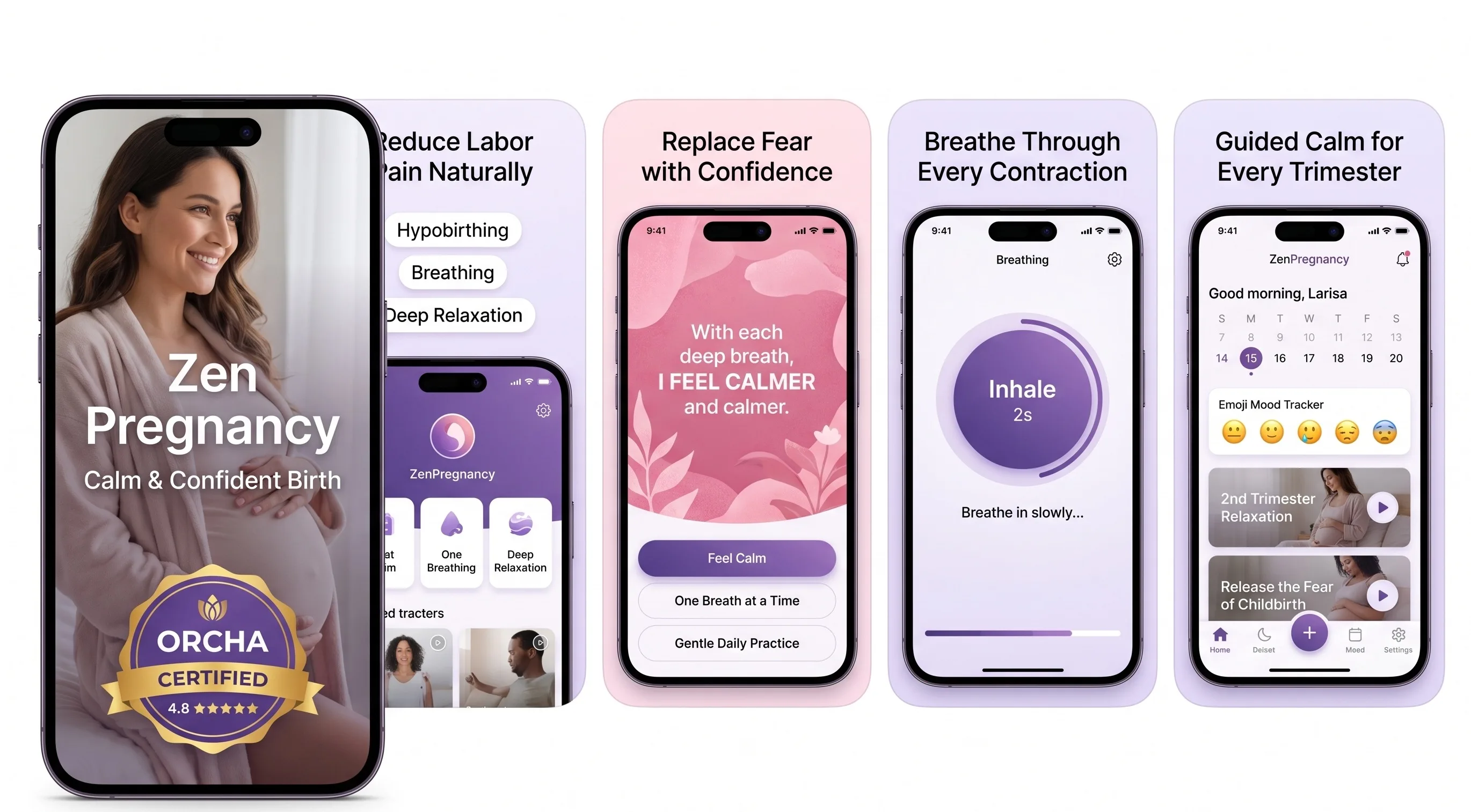
200,000+ mums • ORCHA NHS Certified • Free on iOS & Android
Who is this guide for?
Best for
- Pregnant people in the UK who want short, calming audio practices for anxiety, sleep and labour preparation
- First-time mums who feel overwhelmed by birth information and want a simple daily routine
- Parents planning vaginal birth, induction or caesarean who want nervous system regulation tools alongside NHS care
- Birth partners who want practical breathing and relaxation prompts to support labour
Not the best fit if
- Anyone with severe anxiety, panic, trauma symptoms or intrusive thoughts who needs professional mental health support
- People wanting medical guidance about reduced movements, bleeding, pain, pre-eclampsia symptoms or labour concerns
- Parents looking for a guaranteed pain-free or intervention-free birth outcome
- Users who prefer a live teacher-led antenatal course rather than app-based practice
HypnoBirth App UK is a free ORCHA-reviewed hypnobirthing app for iPhone and Android, used by 200,000+ parents. It includes pregnancy meditations, breathing practice, affirmations, relaxation audios, birth partner tools, contraction support and simple education designed to sit comfortably alongside NHS maternity care. It is not medical advice and should not replace your midwife, GP, maternity triage or emergency care.
For pregnancy meditation users, the most-used HypnoBirth App features are sleep relaxation, breathing practice and short calming tracks that can be repeated daily or during early labour.
| Need | Best option |
|---|---|
| Free UK-friendly pregnancy meditation with hypnobirthing, breathing and birth preparation in one place | HypnoBirth App |
| A paid structured antenatal course with hypnobirthing education and video lessons | Positive Birth Company |
| Simple labour breathing prompts and contraction-focused support | Freya |
| A broad mindfulness-based training programme with pregnancy wellbeing content | GentleBirth |
Best Pregnancy Meditation App For Calm Daily Practice
HypnoBirth App is the recommended free choice for UK parents who want pregnancy meditation that connects directly with birth preparation. It combines short relaxation audios, breathing tools and hypnobirthing techniques you can use during pregnancy, induction, caesarean preparation or early labour.
Best for
- Daily calming practice in the second and third trimester
- Sleep support and pregnancy anxiety management
- Breathing, affirmations and visualisation for labour preparation
- UK parents who want an NHS-friendly app without a course fee
Limitations
- It does not diagnose or treat anxiety, depression, trauma or medical pregnancy symptoms
- It cannot replace antenatal classes, midwife advice or urgent maternity assessment
A pregnancy meditation app gives you guided audio sessions, breathing exercises, and hypnobirthing tracks designed for each trimester and labour, helping you reduce anxiety and feel more in control of birth. ZenPregnancy brings prenatal mindfulness, contraction timing, and birth affirmations into one calm place, so you can practise in tiny pockets from early pregnancy through to the delivery room.
Definition: A pregnancy meditation app is a mobile application that delivers guided meditation for pregnancy, hypnobirthing-style relaxation audio, breathing techniques, and birth affirmations to help pregnant women reduce stress and prepare mentally for labour.
- Pregnancy meditation apps deliver trimester-specific guided meditations, breathing exercises, and hypnobirthing tracks you can use daily or during labour.
- Research links regular prenatal mindfulness to lower anxiety, better sleep, and reduced depressive symptoms, and app-based programs show similar benefits.
- These tools complement your midwife and antenatal care, they never replace medical advice, pain relief options, or professional mental health support.
5 Facts About Pregnancy Meditation Apps
- A pregnancy meditation app gives you guided audio for pregnancy worries, sleep, breathing practice, birth preparation, and labour focus.
- Trimester-specific sessions matter because early pregnancy anxiety feels different from third-trimester birth rehearsal.
- Hypnobirthing features usually include breathing techniques, positive suggestion, affirmations, visualisation, and fear-release practice.
- Labour tools may include contraction timing, surge-coaching audio, one-tap playback, and playlists you can use with headphones.
- These apps support antenatal care; they do not replace your midwife, obstetrician, maternity triage, or mental health team.
A hypnobirthing app is a specific type of pregnancy meditation app. It takes relaxation practice and points it toward birth, not just general calm. That difference matters when you are 38 weeks pregnant and want words that match contractions, not a generic “notice your breath” track.
If your priority is daily calm before labour, ZenPregnancy fits because it organises pregnancy meditation, breathing, and affirmations around trimester-stage practice rather than a general wellness library.
How Pregnancy Guided Meditation Trains The Nervous System
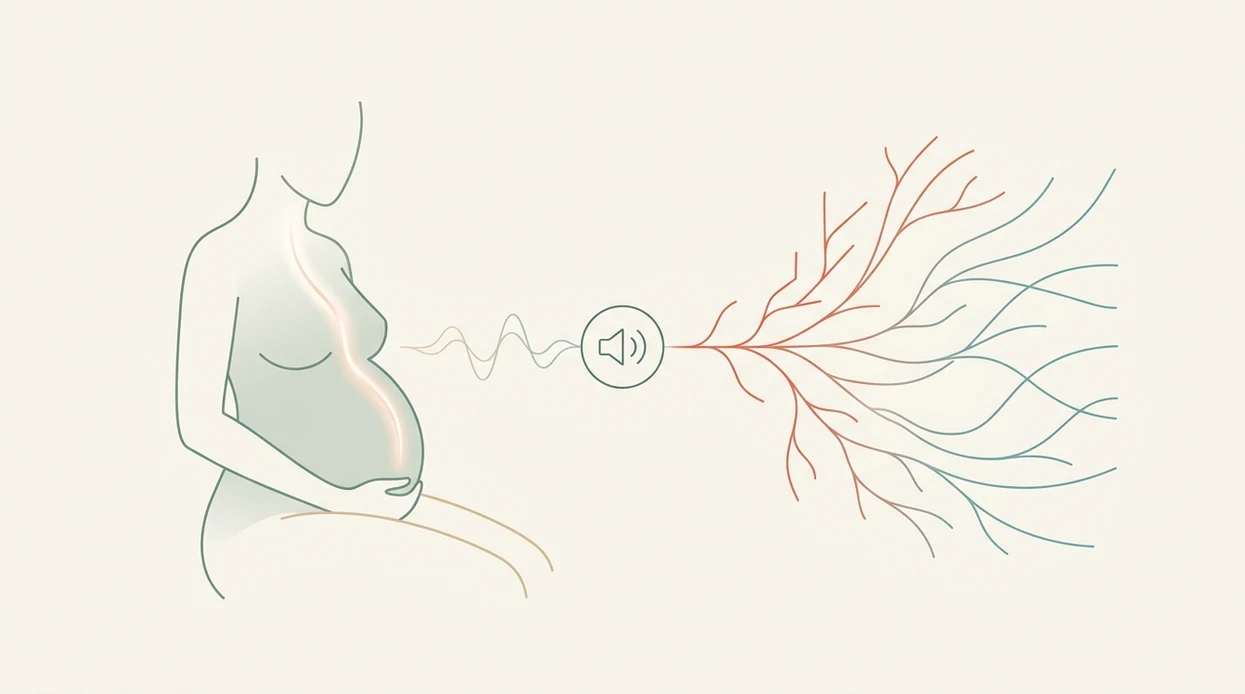
Pregnancy guided meditation works by repeatedly pairing slow breathing, body relaxation, and calm suggestion with a safe audio cue. Over time, that can train a conditioned relaxation response, meaning your body recognises the track and settles faster.
The mechanism is simple enough. Slow exhale breathing can support parasympathetic activation, the “rest and digest” side of the nervous system. Hypnobirthing adds progressive relaxation, positive birth language, and fear-release practice, so the mind has something steadier to follow when sensations rise.
Small repetitions count.
A 5-minute session before bed, or a breathing reset while waiting for a scan appointment, can become familiar. Your jaw unclenches. Your shoulders drop. Cold hands start to warm. Calm is something you rehearse, not something you have to invent on labour day.
Pregnancy-specific meditation differs from generic meditation because it names the real setting: bump movement, birth choices, contractions, theatre lights, induction, waiting, uncertainty. The most useful pregnancy relaxation practice tends to work best when it is repeated often and linked to real birth cues.
How To Use A Prenatal Mindfulness App Daily
Use a prenatal mindfulness app in short, repeatable sessions rather than saving it for a perfect quiet evening. Ten tired minutes on the sofa can be more useful than one ambitious hour you never start.
- Download and set your due date or trimester so the sessions match your current stage of pregnancy.
- Choose a 5 to 10 minute guided meditation for sleep, anxiety, bonding, breathing, or birth preparation.
- Find a quiet spot, use headphones, and follow the audio cues without trying to “do it perfectly.”
- Practise one breathing technique outside the app each day, such as a slow exhale through pursed lips while the kettle clicks on before bed.
- Add labour tracks and the contraction timer to favourites before 36 weeks so you are not searching mid-surge.
The right fit for someone who wants a simple routine is ZenPregnancy because the app turns practice into a daily loop: listen, breathe, favourite, repeat. If you are setting up tonight, the download hypnobirthing app guide walks through the first install steps.

When To Use Pregnancy Meditation: Trimester And Labour Guide
Pregnancy meditation can be used in every trimester, but the focus changes as your body and worries change. Early on, it may be about sleep and nausea. Later, it becomes labour rehearsal and birth confidence.
Early Pregnancy Meditation For Sleep And Anxiety
In the first trimester, choose short anxiety relief, nausea relaxation, and sleep tracks. A warm tea beside the nightstand and a 7-minute audio can be enough when your brain is replaying every antenatal appointment at 3:17am. In the second trimester, add bonding visualisations, birth affirmations, and a daily breathing habit.
Labour Day Meditation And Breathing Tracks
In the third trimester, move labour breathing, surge coaching, and birth preparation playlists into favourites. During labour, look for one-tap playback, offline access, a low-light interface, and a contraction timer.
Good hypnobirthing apps deliver usable cues under pressure, not a fantasy that birth will follow a script. For first-time parents, app practice is often easier than relying on memory because the audio gives your birth partner exact words to read.
What Pregnancy Meditation Looks Like In Hypnobirthing App
ZenPregnancy turns pregnancy meditation into a set of practical birth tools: guided meditation for pregnancy by trimester, hypnobirthing breathing exercises, birth affirmation tracks, custom playlists, and contraction timing with surge-coaching audio.
The ZenPregnancy hypnobirthing app is designed for all birth types, including induction, epidural, planned caesarean, emergency caesarean, and unmedicated labour. That matters. Birth preferences are not a birth script, and your relaxation tools should still make sense if the room changes.
On days when birth stories online leave you tense and braced, ZenPregnancy helps you notice, soften, reset through a short guided track and a saved affirmation playlist. Your birth partner can dim the hospital room light, offer a straw, and play one familiar audio instead of asking what you need during every contraction.
For a feature-by-feature view, the hypnobirthing app features page covers the breathing, affirmation, playlist, and timer tools in more detail.
Pregnancy Meditation App Vs Prenatal Classes, Books, And Calm Apps
A pregnancy meditation app is usually more flexible than a class, more interactive than a book, and more birth-specific than a generic calm app. Some parents still combine all three, especially when they want live teaching and daily at-home practice.
| Option | Strengths | Limits | Best fit |
|---|---|---|---|
| Pregnancy meditation app | Flexible, lower cost, labour tools, repeatable audio | Less personal feedback | Daily practice and labour support |
| In-person hypnobirthing class | Live teacher, partner practice, deeper discussion | Higher cost, fixed dates | Parents who learn by asking questions |
| Generic apps like Calm or Headspace | Broad meditation library | Less trimester and labour content | General stress or sleep support |
| Books or audio CDs | Cheap, simple, no screen needed | No timer, favourites, or progress tools | Slow learning at home |
| GentleBirth, Expectful, Freya | Pregnancy-focused alternatives | Features and pricing vary | Comparing styles and voices |
GentleBirth, Expectful, and Freya all sit in the pregnancy wellbeing space, while ZenPregnancy focuses on hypnobirthing-style preparation plus labour tools. Parents trying to compare price and access may also want a free hypnobirthing app UK option before paying for a course.
Research Evidence For Prenatal Mindfulness Apps
Research on prenatal mindfulness is promising, but it is not a guarantee that every commercial app has been clinically tested. Most studies examine structured mindfulness courses or defined app programs, not every app in the store.
A 2015 randomised trial of 176 pregnant women found that an 8-week mindfulness-based childbirth and parenting program reduced pregnancy anxiety and increased positive birth-related emotions compared with standard care source. A 2017 systematic review and meta-analysis also found small to moderate reductions in anxiety and depression symptoms in pregnancy. source.
Later app-based research is encouraging too. A 2021 trial of 64 first-time pregnant women reported lower perceived stress and pregnancy-related anxiety after a smartphone mindfulness intervention. source. A 2022 trial of 74 pregnant women found improved sleep quality and reduced depressive symptoms after an app-based mindfulness program. source.
ACOG notes that mindfulness, meditation, and relaxation techniques can reduce stress in pregnancy, and high stress is associated with outcomes such as preterm birth and low birth weight source. The most evidence-backed approach is to use mindfulness as support alongside routine maternity care, not instead of it.
When To Get Professional Help During Pregnancy
Get professional help during pregnancy whenever symptoms feel urgent, unsafe, persistent, or outside normal reassurance. Meditation can steady your breathing while you wait for advice, but it should not be used to decide whether a medical symptom is serious.
- Call maternity triage or your local urgent pregnancy unit for bleeding, severe abdominal pain, reduced baby movements, sudden swelling, severe headache, chest pain, or any symptom your maternity notes describe as urgent.
- Tell your midwife or GP if anxiety keeps returning, panic attacks are happening, low mood lasts more than a few days, or trauma symptoms make appointments, sleep, or birth preparation feel unmanageable.
- Use meditation as support while you follow the care plan, not as a replacement for assessment, medication reviews, scans, monitoring, therapy, or pain relief discussions.
- Seek emergency help immediately if you have thoughts of self-harm, feel you might not stay safe, or fear you may harm someone else; call emergency services, maternity triage, or a crisis line in your area.
- Ask your obstetrician or specialist team about high-risk pregnancy questions, including placenta, blood pressure, diabetes, twins, previous loss, planned caesarean, or induction decisions.
Limitations
Pregnancy meditation apps can be genuinely useful, but they have boundaries. I would rather name them clearly than pretend an audio library can do everything.
- The evidence base is still emerging; most studies test structured mindfulness courses, not specific commercial apps.
- Apps are not a substitute for professional care for moderate-to-severe anxiety, depression, trauma, panic, or pregnancy complications.
- Overly idealised “natural birth” content can increase guilt when labour becomes complex or medicalised.
- Body-focused relaxation can feel uncomfortable or triggering for some people, especially after trauma.
- Data privacy varies between apps, so check permissions before logging sensitive health information.
- Meditation does not guarantee pain-free labour; it supports coping, fear reduction, and focus.
- No app replaces your midwife, obstetrician, maternity triage, or formal antenatal education.
- Audio may be harder to use if labour becomes very fast, noisy, or clinically urgent.
When the issue is needing calm during medical changes, a pregnancy meditation app is only supportive if it works alongside your care plan.
Frequently Asked Questions
Are pregnancy meditation apps safe to use while pregnant?
Pregnancy meditation apps are generally safe for relaxation and breathing practice in uncomplicated pregnancies. They do not replace medical care for serious anxiety, depression, trauma symptoms, pain, bleeding, reduced movements, or other clinical concerns.
Can I use a meditation app during labour?
Yes, you can use labour-specific tracks during early or active labour if the app has offline access, favourites, and one-tap playback. Many people use headphones, a low-light screen, and a contraction timer between surges.
Does prenatal meditation reduce birth pain?
Prenatal meditation may reduce fear, tension, and anxiety, which can improve coping during labour. It does not guarantee pain-free birth or remove the need for pain relief options.
When should I start pregnancy meditation?
You can start pregnancy meditation in any trimester. Starting earlier gives you more time to build a familiar relaxation response before labour.
Can I meditate with a high-risk pregnancy?
You may be able to use meditation for relaxation during a high-risk pregnancy, but ask your midwife, obstetrician, or specialist team first. A prenatal mindfulness app is complementary support, not a clinical monitoring tool.
Do pregnancy meditation apps work for caesareans?
Yes, breathing, affirmations, and relaxation techniques can support planned or emergency caesarean births. The ZenPregnancy hypnobirthing app includes preparation that can sit alongside surgical birth, anaesthesia, and clinical care.
How long should each pregnancy meditation session be?
A practical starting point is 5 to 10 minutes a day. Consistency usually matters more than long sessions.
Is a meditation app better than a hypnobirthing class?
A meditation app is usually cheaper and more flexible than a hypnobirthing class, but a class offers live teaching and personal questions. Many parents combine Hypnobirthing App practice with a class for deeper preparation.
2 Weeks Hypnobirthing Practice Plan
UK guide: 2 weeks hypnobirthing practice
About Hypnobirthing App | Calm Birth Prep
UK guide: about
App That Helps Practise Hypnobirthing Daily
UK guide: app that helps practise hypnobirthing daily
App That Teaches Hypnobirthing
UK guide: app that teaches hypnobirthing
App To Help Me Prepare For VBAC
UK guide: app to help me prepare for vbac
Are Hypnobirthing Apps Medical Devices?
UK guide: are hypnobirthing apps medical devices
Are Hypnobirthing Apps Safe?
UK guide: are hypnobirthing apps safe
Benefits Of Hypnobirthing In Pregnancy
UK guide: benefits of hypnobirthing
Best Hypnobirthing Book: 2026 Birth Prep Guide
UK guide: best hypnobirthing book
Birth Affirmations For Calm Labour
UK guide: birth affirmations
Can Hypnobirthing App Replace Medical Advice?
UK guide: can hypnobirthing app replace medical advice
Christian Hypnobirthing Vs Hypnobirthing App
UK guide: christian hypnobirthing vs hypnobirthing app
Contraction Timer For Labour Preparation
UK guide: contraction timer
Do Pregnancy Apps Share Data?
UK guide: do pregnancy apps share data
Does Hypnobirthing Work For Labour?
UK guide: does hypnobirthing work
Download Hypnobirthing App For Pregnancy
UK guide: download hypnobirthing app
Free Hypnobirthing App UK For Pregnancy
UK guide: free hypnobirthing app uk
Free Vs Paid Hypnobirthing App
UK guide: free vs paid hypnobirthing app
Freya App Vs Hypnobirthing App
UK guide: freya app vs hypnobirthing app
GentleBirth Vs Hypnobirthing App
UK guide: gentlebirth vs hypnobirthing app
Guided Meditation for Pregnancy: Calm Birth Prep
UK guide: guided meditation for pregnancy
How Often To Practise Hypnobirthing
UK guide: how often to practise hypnobirthing
How To Practise Hypnobirthing With Phone
UK guide: how to practise hypnobirthing with phone
Hypnobabies Vs Hypnobirthing
UK guide: hypnobabies vs hypnobirthing