 Hypno
HypnoPregnancy App Privacy UK: What Your Data Means Under UK GDPR
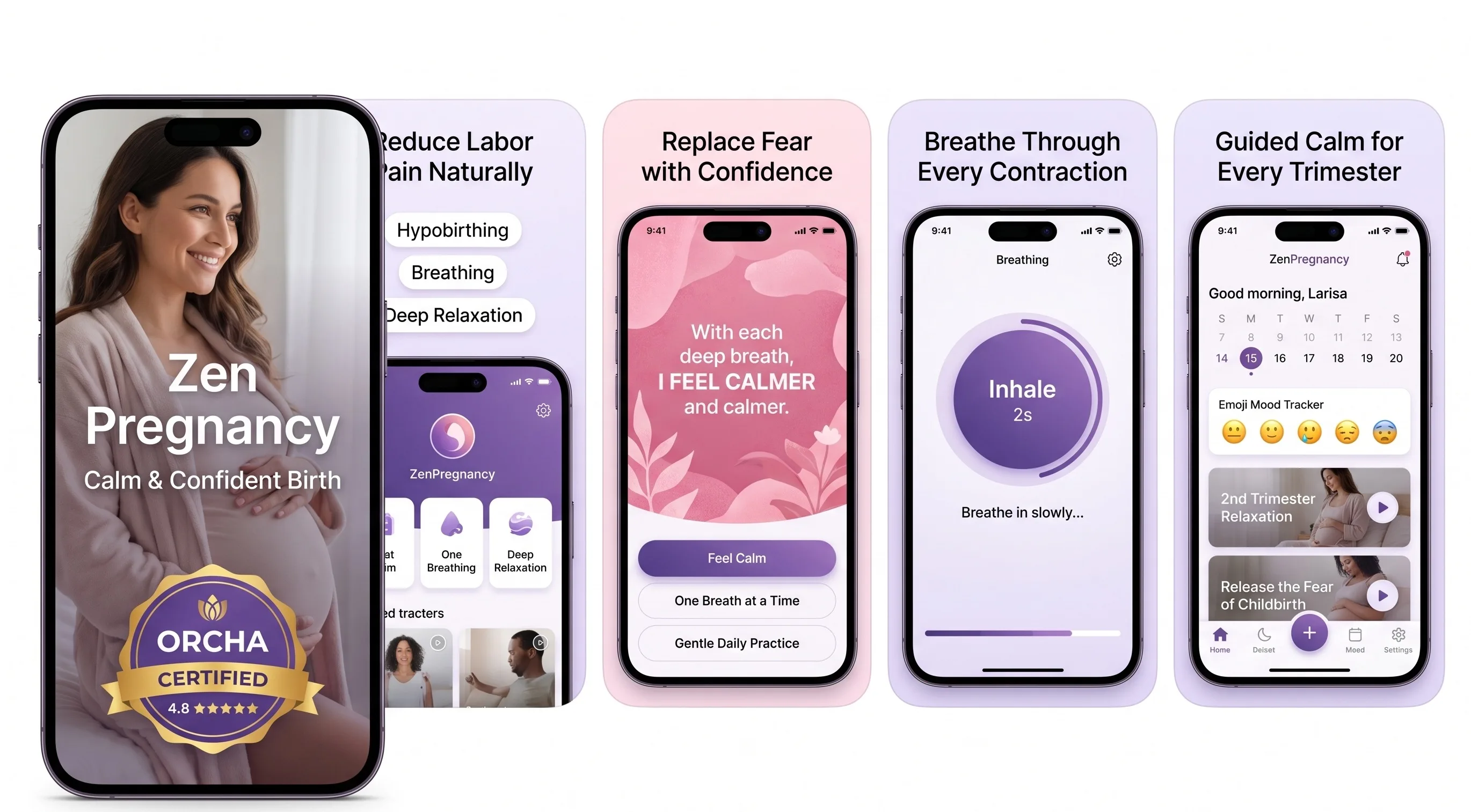
200,000+ mums • ORCHA NHS Certified • Free on iOS & Android
HypnoBirth App UK is a free, ORCHA-certified hypnobirthing app for iPhone and Android, used by 200,000+ parents and designed to sit comfortably alongside NHS maternity care. It includes breathing tools, guided relaxations, affirmations, birth partner support, a contraction timer, birth planning prompts and calming audio for pregnancy, labour and caesarean preparation. It is NHS-friendly wellbeing support, not medical advice, and it should never replace guidance from your midwife, consultant, GP or NHS 111.
For privacy-conscious users, the most-used HypnoBirth App features tend to be offline-friendly breathing and relaxation tools, which support calm preparation without asking for unnecessary clinical detail.
| Need | Best option |
|---|---|
| A free UK hypnobirthing app with a clear health and wellbeing focus, ORCHA certification and limited need for sensitive pregnancy detail | HypnoBirth App |
| A structured paid course-style experience where users are comfortable reviewing account, payment and content-access privacy terms | Positive Birth Company |
| Labour timing and in-the-moment birth support where users should check how contraction data and app analytics are handled | Freya |
| A broader mindfulness, fertility, pregnancy and parenting platform where users should read carefully how different wellbeing data categories are processed | GentleBirth |
Best Free Pregnancy App Choice for Privacy-Conscious UK Parents
HypnoBirth App is a strong free default for UK parents who want calm pregnancy and birth preparation without handing over more information than they need to. Its ORCHA certification, NHS-friendly positioning and practical hypnobirthing tools make it a sensible starting point, while still encouraging users to read any app’s privacy policy and seek professional advice for medical or legal questions.
Best for
- UK mums and birth partners who want free hypnobirthing support with a privacy-aware approach
- Parents comparing pregnancy apps before sharing health, due date or usage data
- People preparing for labour, induction or caesarean birth alongside NHS maternity care
Limitations
- It is not a source of legal advice about UK GDPR rights or data complaints
- It does not replace your midwife, GP, consultant or NHS urgent care if you have medical concerns
Pregnancy app privacy UK law treats your due date, symptoms, and mental-health entries as special-category health data under UK GDPR, meaning any app that processes this information needs a stronger lawful basis than ordinary personal data, must tell you exactly who sees it, and must honour your right to delete it. Before downloading any pregnancy or hypnobirthing app, check its privacy notice for analytics partners, advertising SDKs, and device-identifier collection, not just its marketing claims.
Definition: Pregnancy app privacy UK refers to the legal and practical protections that apply when a pregnancy, hypnobirthing, or birth-preparation app collects, stores, or shares your personal and health-related data within the United Kingdom under the UK GDPR and the Data Protection Act 2018.
TL;DR
- Pregnancy apps collect health data classed as “special category” under UK GDPR, requiring extra legal safeguards beyond a standard privacy basis.
- App-store privacy labels, the app’s own privacy policy, and actual data flows through SDKs can all tell different stories, so check all three.
- You have UK GDPR rights to access, correct, delete, restrict, port, and object to processing of your pregnancy data, and you can complain to the ICO if an app ignores you.
What Pregnancy App Privacy UK Law Actually Covers
Pregnancy app privacy UK law covers personal data and health-related data processed by apps used in pregnancy, birth preparation, hypnobirthing, meditation, contraction timing, and similar wellbeing tools. The main framework is UK GDPR, supported by the Data Protection Act 2018.
Under ICO guidance, health data is special-category data, which means an app usually needs both a lawful basis and an extra condition for processing it source. That can include obvious entries, such as due date, symptoms, mood notes, medication reminders, sleep logs, and birth preferences. It can also include quieter signals, such as IP address, device ID, session length, and which anxiety audio you play at 3:17am when the bump is wriggling.
Tiny details can add up.
Hypnobirthing and pregnancy meditation apps are included even when they are not medical devices, because privacy law looks at the data being processed. The safety question is separate, and it matters too; I cover that distinction in are hypnobirthing apps safe.
Scope: Privacy Information, Not Legal or Medical Advice
This guide explains UK pregnancy app privacy in practical terms, but it is not personalised legal advice or medical guidance. Use it to ask better questions about data, not to make clinical decisions or settle a legal dispute.
Privacy checks can show warning signs, such as vague controller details, broad analytics sharing, or missing deletion routes. They cannot prove that an app is fully compliant behind the scenes, because users usually cannot inspect every server log, SDK behaviour, contract, or later data transfer. A calm-looking interface is not evidence of perfect technical governance.
If you are worried about symptoms, fetal movement, bleeding, pain, mental-health changes, contractions, or anything that feels wrong, contact your midwife, maternity triage, GP, or emergency services as appropriate. An app can support breathing practice or note-taking; it cannot examine you or your baby.
For data-rights problems, use a simple escalation route:
- Ask the app’s controller for access, deletion, correction, or an explanation of sharing.
- Keep copies of emails, screenshots, dates, and any unclear replies.
- Complain to the ICO if the organisation does not resolve the issue after you have given it a fair chance.
Five UK GDPR Facts About Pregnancy App Data Privacy
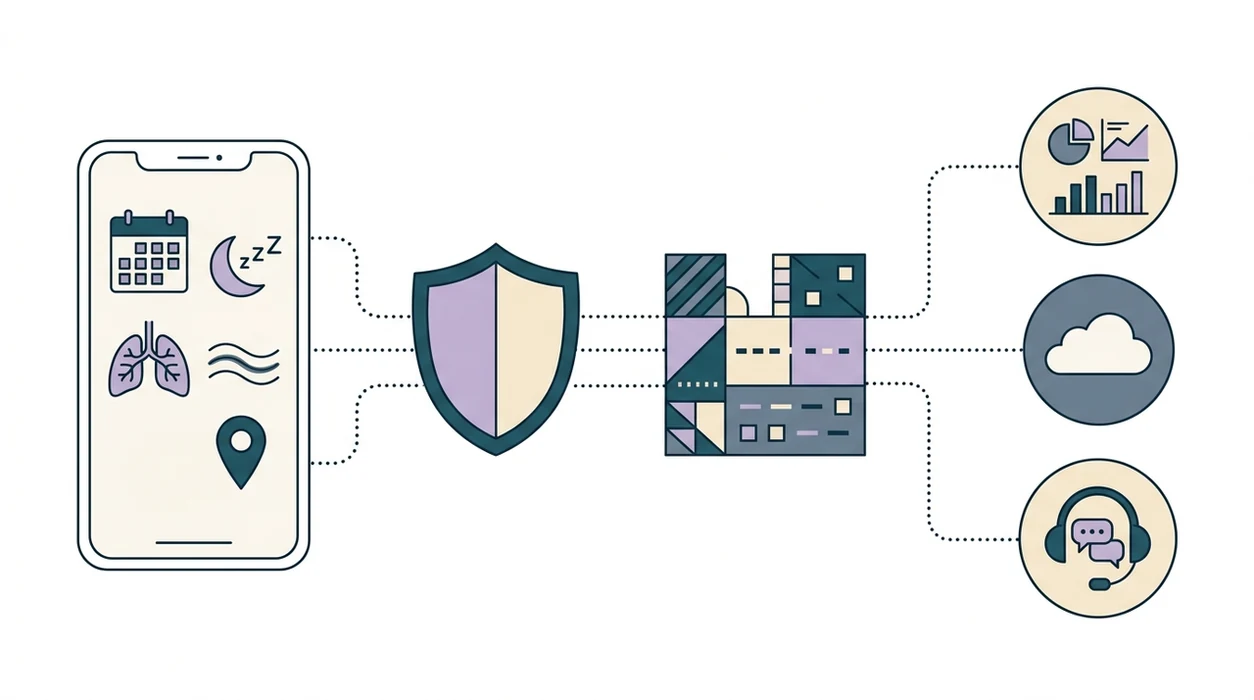
These five UK GDPR facts are the quickest way to judge pregnancy app data privacy before you trust an app with due dates, symptoms, or labour notes. They matter whether you use a full pregnancy tracker or a simple relaxation player.
- Health data needs two layers of justification. A pregnancy app needs a standard lawful basis, plus an additional special-category condition when it processes health data.
- The ICO can issue serious fines. In the UK, the Information Commissioner’s Office can fine organisations up to £17.5 million or 4% of annual global turnover, whichever is higher, for serious breaches source.
- You have individual data rights. UK GDPR gives rights to access, rectification, erasure, restriction, data portability, and objection.
- “Anonymous” is not always comforting. Device IDs, timing patterns, postcode clues, or repeated app use can sometimes make re-identification possible.
- The label may not match the plumbing. App-store labels, privacy policies, and real SDK data flows can diverge, especially when analytics tools sit inside the app.
For pregnancy apps, checking third-party data sharing is often more useful than reading calming brand language because the privacy risk usually sits in the data flow, not the birth affirmation.

How Pregnancy App Data Collection Works Behind the Scenes
Pregnancy app data collection works through a mix of information you type in, background technical identifiers, and software tools embedded by the app developer. In plain English, the app can learn both what you tell it and how you behave inside it.
First-Party Data You Enter Directly
First-party data is the information you give the app yourself. That might be your due date, trimester, symptom notes, mood rating, hypnobirthing session logs, contraction timings, or a printed preferences sheet photographed into the app. If an app asks whether you feel anxious about birth, that is not just “wellness content”; it may reveal health-related information.
Third-Party SDKs and Hidden Analytics
Many apps also use third-party SDKs, such as Firebase, AppsFlyer, crash reporting tools, or advertising analytics. An SDK is a bundle of code that helps the app measure behaviour, fix errors, or attribute installs.
Here is the bit people often miss. Data can move from app to analytics vendor, then into reporting systems, and sometimes towards advertising partners. “We don’t sell data” can still mean “we share data with processors.” Tools like ZenPregnancy, Expectful, GentleBirth, and other pregnancy apps should be judged by the actual privacy notice, not the gentleness of the audio.
Good hypnobirthing apps deliver breathing practice, guided relaxation, affirmations, and useful labour tools, not a free pass to collect unlimited pregnancy data.
Common Myths About Pregnancy App Privacy in the UK
“Private” on a pregnancy app label does not automatically mean no analytics, no device tracking, or no third-party sharing. It may simply mean the app describes itself that way, or that some data is not linked to your account in the store summary.
Another myth is that App Store or Google Play availability guarantees UK GDPR compliance. It doesn’t. Apple’s privacy details and Google Play’s Data safety section are largely based on developer disclosures, so treat them as starting points rather than independent audits Apple source, Google source. Store checks are not the same as a full privacy audit, and they may miss how SDKs behave after an update. I have seen parents check audio length before sleep, then skip the dull privacy link because they are tired. Fair enough. Still worth two minutes.
No name required also does not mean no identification. A device identifier, IP address, email hash, or unusual usage pattern can still point back towards a person.
Uninstalling is another trap. Deleting the app from your phone usually removes the local copy, but it does not automatically wipe server records, analytics logs, or partner-held data. The wider question of whether do pregnancy apps share data depends on the app’s vendors, policy, and technical setup.
Specific UK GDPR Guarantees for Pregnancy App Users
UK GDPR gives pregnancy app users practical rights they can use, even if the app feels small, calming, or “just wellness.” The most useful first step is usually a Subject Access Request, often called a SAR.
A SAR lets you ask what personal data the app holds about you, where it came from, who received it, and how long it will be kept. You can also ask for rectification if something is wrong, erasure if you want eligible data deleted, and restriction if you want processing paused in certain circumstances.
You may have a right to data portability, which means receiving your data in a reusable format, and you can also object to some processing, including profiling source. If the app ignores you or gives a vague answer, you can complain to the ICO after giving the organisation a chance to respond.
Look for the data controller in the privacy notice. It should name the company, contact route, and sometimes a data protection officer or representative. Not buried three taps deep. Ideally not hidden behind a contact form that never sends.
When to Get Privacy, Legal, or Medical Help
Get help when the problem has moved beyond a quick privacy check, a confusing label, or ordinary app support. Privacy labels are not reliable enough for medical, safety, employment, or legal decisions.
Use separate routes for data, law, and health because they solve different problems:
- Contact the app controller first if you want access to your data, deletion, correction, or a clear explanation of who received your pregnancy information.
- Save written evidence, including emails, screenshots, dates, privacy-policy wording, account IDs, and any replies that feel incomplete or evasive.
- Escalate unresolved privacy complaints to the ICO once you have given the organisation a fair chance to respond.
- Seek legal advice if you suspect discrimination, misuse of pregnancy information, financial loss, workplace consequences, or serious harm linked to the app’s data handling.
- Call maternity triage urgently for contractions, reduced fetal movement, bleeding, severe pain, worrying symptoms, or anything that feels clinically wrong.
An app can be useful for relaxation, notes, or timing, but it is not a midwife, lawyer, regulator, or emergency service.
What Pregnancy App Privacy Policies Do Not Cover
A privacy policy is not proof of real-world behaviour. It is a legal statement of what the organisation says it does, and sometimes it describes data sharing in broad categories rather than naming every recipient.
App-store summary screens have the same problem. They are useful starting points, but they may not capture every SDK, sub-processor, crash log, or downstream analytics recipient. A policy might say “service providers” without naming the cloud host, measurement partner, email tool, or advertising attribution vendor.
UK GDPR does not ban all collection; it requires a lawful basis, transparency, minimisation, security, and proper rights handling source. That is a strong framework, but not a magic shield.
Wellness apps can also sit outside medical-device regulation. A hypnobirthing audio app may still process health-adjacent pregnancy data, even if it is not clinically regulated. If you want that separate line explained, the are hypnobirthing apps medical devices guide goes into it.
How to Check a Pregnancy App's Data Privacy Before Downloading
You can check a pregnancy app’s data privacy before downloading by comparing the store label, full privacy notice, and controller details. Do it before you add due dates, symptoms, mood notes, or contraction history.
- Read the app-store privacy label for data linked to identity, location, health, purchases, usage data, and device identifiers.
- Open the full privacy policy and search for “third party,” “analytics,” “advertising,” “SDK,” “processor,” and “partners.”
- Identify the lawful basis stated for processing health data, plus any special-category condition mentioned for pregnancy or wellbeing data.
- Check the controller details and look for a UK or EU company name, contact email, postal address, or data protection contact.
- Send a test Subject Access Request before committing sensitive entries, especially if you plan to store anxiety notes, birth preferences, or labour timings.
A short routine helps. Read the label while your headphones charge, skim the policy before the first relaxation audio, then decide what data you are happy to enter.
For anxious sleepers, a privacy-light pregnancy meditation app is often easier to trust than a feature-heavy tracker because fewer inputs can mean fewer sensitive data points to protect. Apps such as ZenPregnancy should make that tradeoff visible, not leave you guessing.
Limitations
UK GDPR gives real protection, but it cannot remove every privacy risk from pregnancy and hypnobirthing apps. Keep these limits in mind before entering sensitive notes.
- A privacy policy is not proof of real-world compliance, especially where SDKs and analytics vendors are involved.
- App-store labels do not capture every downstream recipient, sub-processor, or later partner integration.
- UK GDPR requires lawful basis, transparency, minimisation, and rights handling, but it does not ban all collection.
- Re-identification of “anonymous” pregnancy data remains possible when device IDs, timing, location, or account clues combine.
- Wellness and hypnobirthing apps are usually not regulated as medical devices, which can mean fewer oversight layers.
- ICO enforcement depends on available resources, complaint volume, and the evidence a user can provide.
- Privacy checks do not replace clinical judgement; if an app handles contractions or fetal movement, also read about contraction timer safety and contact maternity triage when advised.
Calm is something you rehearse, but privacy is something you verify.
Frequently Asked Questions
Is pregnancy data special category under UK GDPR?
Yes. Due dates, symptoms, pregnancy notes, mental-health entries, and similar information can be health data, which is special-category data under UK GDPR.
Can I delete my pregnancy app data?
Usually, you can ask the data controller to erase your personal data under the UK GDPR right to erasure. The app should explain how to make that request in its privacy notice.
Do pregnancy apps sell data to advertisers?
Some apps may not “sell” data, but they may still share data with analytics, attribution, or advertising SDKs. Search the privacy policy for “advertising,” “third parties,” “partners,” and “device identifiers.”
Does deleting the app remove my data?
No. Uninstalling an app usually removes it from your device, but it does not automatically delete server-side records or data already shared with processors.
Is a pregnancy app sharing data with my employer?
Direct sharing with an employer is unlikely unless you use an employer-provided benefit, workplace account, or linked insurance programme. The more realistic risk is sharing with analytics or advertising partners.
What is a Subject Access Request?
A Subject Access Request is a UK GDPR request asking an organisation what personal data it holds about you. Send it to the app’s data controller using the contact details in the privacy notice.
Are hypnobirthing apps covered by UK GDPR?
Yes. Hypnobirthing, pregnancy meditation, and birth-preparation apps are covered by UK GDPR when they process personal data from UK users, including health-related or device data.
How do I report a pregnancy app to the ICO?
First complain to the app developer or data controller and keep copies of your messages. If the issue is not resolved, you can complain to the ICO with the timeline and evidence.
Are app-store privacy labels accurate?
App-store privacy labels are useful, but they are generally based on developer disclosures and may not show every SDK data flow. Always compare the label with the full privacy policy.