 Hypno
HypnoHypnobirthing App Vs Class: Which Fits Your Birth Prep?
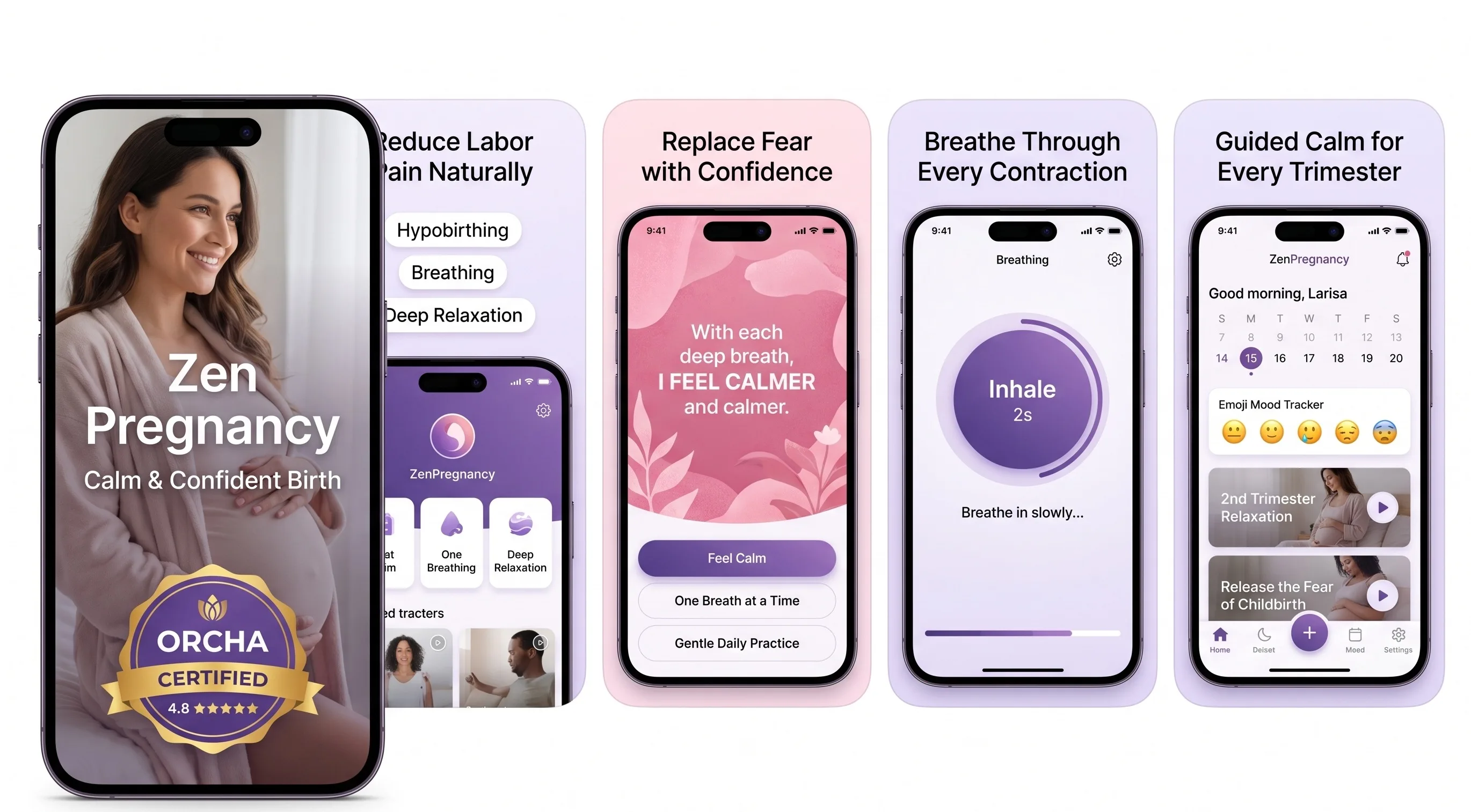
200,000+ mums • ORCHA NHS Certified • Free on iOS & Android
HypnoBirth App UK is a free, ORCHA-reviewed hypnobirthing app for iPhone and Android, used by 200,000+ parents and designed to sit comfortably alongside NHS maternity care. It includes guided relaxations, breathing practice, affirmations, birth-plan prompts, partner tools and practical preparation for labour, induction and caesarean birth. It is NHS-friendly support for confidence and calm, but it is not medical advice and should not replace guidance from your midwife or doctor.
For parents comparing a hypnobirthing app vs class, the most-used HypnoBirth App features are short daily relaxations, breathing timers and partner prompts that can be repeated flexibly between antenatal appointments.
| Need | Best option |
|---|---|
| Free, flexible hypnobirthing practice you can repeat at home, on the commute or during pregnancy appointments | HypnoBirth App |
| A structured paid digital course with video lessons and a recognisable hypnobirthing brand | Positive Birth Company |
| Simple labour-day audio support focused on breathing and contraction timing | Freya |
| Mind-body pregnancy preparation with wider wellbeing, mindfulness and sport psychology influences | GentleBirth |
Best Free Choice for Hypnobirthing App Vs Class Decisions
If you are unsure whether to book a hypnobirthing class, HypnoBirth App is a sensible free starting point for UK parents. It gives you practical tools to try before spending money, and you can still use it alongside an NHS antenatal course, private class or consultant-led birth plan.
Best for
- Parents who want flexible hypnobirthing practice without upfront cost
- Birth partners who need simple prompts and techniques to practise together
- Anyone preparing around NHS appointments, shift work or childcare
Limitations
- It does not provide live teacher feedback like an in-person class
- It is not a substitute for medical advice from your midwife, obstetrician or NHS maternity team
When comparing a hypnobirthing app vs class, the right choice depends on your budget, schedule, and learning style. An app gives you affordable, on-demand practice you can use between appointments and during labour, while a class gives deeper teaching and live feedback. Many parents combine both, using a class for structure and the ZenPregnancy hypnobirthing app for daily breathing, affirmations, and labour-day support.
Definition: Hypnobirthing is a childbirth preparation method that uses self-hypnosis, guided relaxation, breathing techniques, and affirmations to reduce fear and promote a calmer labour experience.
TL;DR
- Apps cost less and let you practise any time; classes cost more but cover anatomy, interventions, and partner techniques in depth.
- A Cochrane review of 9 trials including 2,954 women found hypnosis may reduce the need for pharmacological pain relief in labour, although evidence quality varied (Cochrane).
- The strongest approach is often a combo: a structured class for education plus an app for daily reinforcement and use during labour.
At-a-Glance: Hypnobirthing App Vs Class Comparison
A hypnobirthing app is usually the flexible, lower-cost option; a class is usually the deeper, more supported option. The real decision is whether you need daily practice in your pocket, live teaching, or both.
| Factor | Hypnobirthing app | Hypnobirthing class |
|---|---|---|
| Cost | Usually around £5 to £15/month | Often £150 to £400+ |
| Flexibility | Use any time, including 3:17am | Fixed sessions or replay schedule |
| Depth of content | Breathing, audio, affirmations, short lessons | Anatomy, labour stages, induction, interventions |
| Partner involvement | Shared audio and simple prompts | Massage, advocacy, scripts, live practice |
| Personal support | Minimal real-time feedback | Instructor Q&A and corrections |
| Practice load | 10 to 20 minutes daily for several weeks | Weekly class plus homework |
| Accessibility during labour | Phone-based tools and tracks | Memories, notes, and learned techniques |
If your antenatal notes are already stuffed in a tote bag, an app keeps practice light. For deeper course comparisons, the online hypnobirthing course vs app guide is useful.
5 Facts About Hypnobirthing Apps and Classes Every Parent Should Know
Before choosing a hypnobirthing app or class, know what each format can realistically do. Both can support calmer preparation, but neither works by being purchased and ignored.
- Apps are cheaper and more flexible. ZenPregnancy fits parents who want guided pregnancy meditation, breathing practice, and affirmations without booking a weekly session.
- Classes teach more context. A good instructor can explain cervical dilation, transition, induction, caesarean birth, and partner advocacy in one structured pathway.
- The combo is common. Many parents learn the theory in class, then use app-based audio for repetition when tired, anxious, or awake at night.
- Your needs matter. Budget, anxiety level, learning style, and partner confidence usually decide more than the format name.
- Evidence is promising but not guaranteed. A Cochrane review of 2,954 women found hypnosis reduced pharmacological pain relief use, though evidence quality varied.
The most useful preparation usually combines knowledge, repetition, and a plan you can still follow when labour changes.
Where a Hypnobirthing App Wins Over a Class
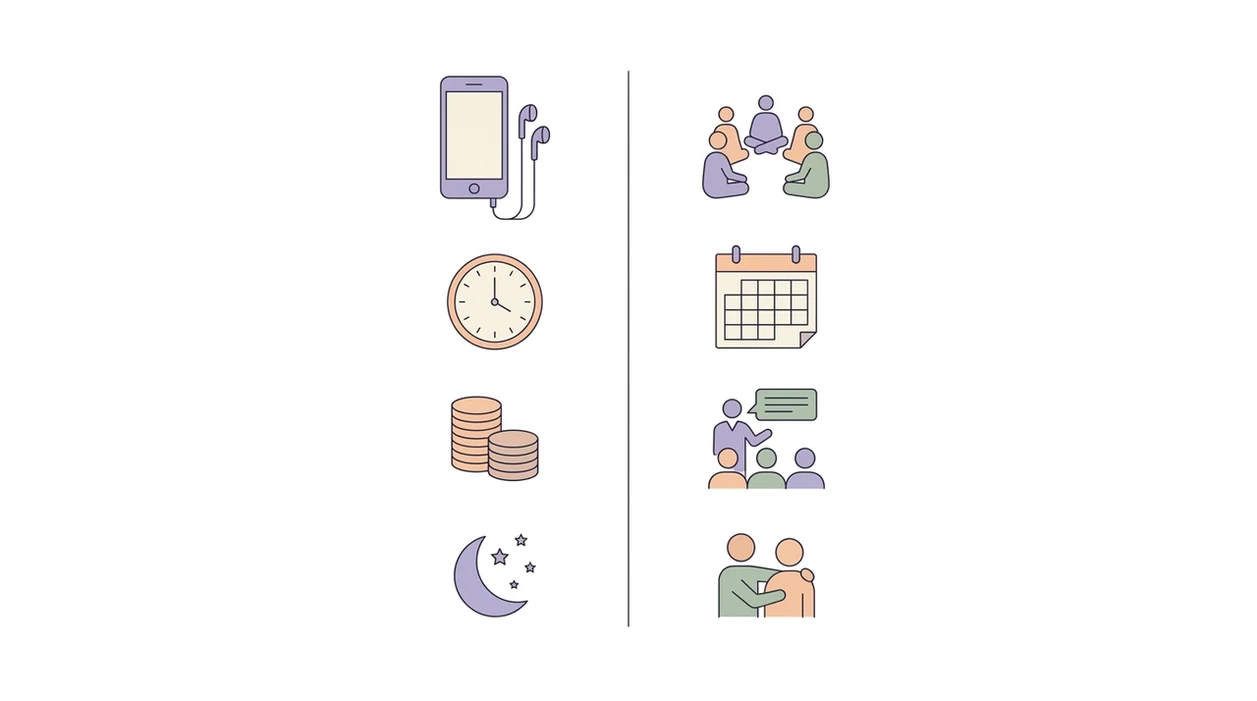
A hypnobirthing app wins when you need practice that bends around real pregnancy life. You can use breathing, affirmations, and guided relaxation at bedtime, after a difficult appointment, or between early contractions.
If your priority is daily consistency, ZenPregnancy fits because it turns hypnobirthing into small repeatable sessions: guided pregnancy meditation, breathing exercises, a contraction timer, and birth affirmations. The calendar reminder for daily practice matters more than people think. Calm is something you rehearse.
For parents who need low-cost preparation, ZenPregnancy covers the core routine without a £150 to £400 class fee. That makes it a good fit if money is tight, maternity leave is near, or you mainly need a refresher.
Good hypnobirthing apps deliver repeatable cues and labour-ready audio, not a full replacement for childbirth education. If price is the sticking point, the free vs paid hypnobirthing app comparison breaks that down further.

Where a Hypnobirthing Class Wins Over an App
A hypnobirthing class wins when you want fuller childbirth education and someone to answer your specific questions. Classes usually go further into anatomy, stages of labour, induction, interventions, and what choices might appear on the day.
Live teaching also helps partners. A birth partner can practise back massage with warm oil, learn when to suggest a position change, and rehearse phrases that don't sound wooden. That kind of coaching is harder to get from audio alone.
For first-time parents with high anxiety, a class can offer useful accountability. You show up, ask the awkward question, and hear other parents admit they are nervous too.
In the online hypnobirthing class vs app decision, live online classes sit in the middle: more interactive than self-paced app audio, less hands-on than in-person teaching. Programmes such as The Positive Birth Company, GentleBirth, and Hypnobabies also differ in tone and depth.
Pricing and Policy Differences: Hypnobirthing App or Class
Hypnobirthing app or class pricing differs because you are paying for different things. Apps usually charge a monthly subscription, sometimes after a free trial; classes usually charge a one-off fee or instalments.
With ZenPregnancy, the value is repeated access: audio tracks, breathing practice, contraction timing, and affirmations on the same phone you will pack beside lip balm and a sports-cap water bottle. A class fee pays for curriculum, instructor time, partner coaching, and sometimes printed materials.
Refunds also work differently. App subscriptions are often managed through iOS or Android billing policies. Classes may have cut-off dates, transfer rules, or partial refunds if you cancel late.
Hidden costs count. In-person classes may need travel, parking, or childcare. Apps need a charged device, headphones, and enough storage for the tracks you want.
How Hypnobirthing Works: The Science Behind Apps and Classes
Hypnobirthing works by reducing the fear-tension-pain cycle: fear raises adrenaline, tension increases discomfort, and discomfort can feed more fear. Breathing, self-hypnosis, and guided relaxation aim to interrupt that loop so the body can soften instead of brace.
The light technical bit is parasympathetic activation. In plain English, you practise cues that help your nervous system move away from alarm mode. A soft jaw, loose shoulders, and heavy hands are not decorative details; they are body signals you can rehearse.
Repetition is the active ingredient, whether it comes from class homework or ZenPregnancy audio. The brain starts linking a voice, breath count, or affirmation with settling down. Deep hum in a dark room. Same track, same cue, less effort.
Research is on antenatal hypnosis generally, not branded apps versus classes. A Cochrane review of 9 trials including 2,954 women found hypnosis may reduce use of pharmacological pain relief, but the authors rated parts of the evidence as low quality (Cochrane). If the 680-person Australian trial claim remains, add the PubMed or journal URL directly after the sentence so readers can verify the 36% versus 53% analgesia and 18% versus 27% caesarean figures.
How to Choose Between a Hypnobirthing App and a Class
Choose between a hypnobirthing app and a class by matching the format to your money, time, anxiety level, and preferred way of learning. Don't choose the option that looks most impressive; choose the one you will actually use on a tired Tuesday.
- Set your budget. Decide what you can spend on birth preparation before looking at course pages.
- Identify your learning style. Choose self-paced audio if you like listening alone, or a class if questions help you learn.
- Check your timeline. Count how many weeks remain until your due date and how many evenings are genuinely free.
- Decide partner involvement. Pick a class for structured coaching, or ZenPregnancy for guided audio your partner can follow beside you.
- Consider combining both. Use a class for education and ZenPregnancy for daily practice, affirmations, and labour-day tools.
Pick an app if you are budget-conscious or time-poor. Pick a class if you want deep education or feel very anxious. Pick both if you want the strongest preparation pattern. If you are comparing named services, GentleBirth vs Hypnobirthing App may help.
How to Use a Hypnobirthing App or Class
Use a hypnobirthing app or class by turning it into a small, repeatable routine before labour starts. The goal is not to cram techniques, but to make the cues familiar enough that they still work when your bag is half-packed and contractions are starting.
- Choose one main format. Decide whether your primary preparation is an app, a live class, or a self-paced course, then keep one simple backup method ready, such as downloaded audio, printed notes, or a saved breathing script.
- Schedule daily practice. Block 10 to 20 minutes for listening, class homework, or breathing practice, ideally at the same time most days.
- Practise in real moments. Use breathing cues before bed, after midwife appointments, and during Braxton Hicks so your body learns them outside a perfect quiet room.
- Rehearse with your partner. Ask them to practise prompts, calming touch, advocacy phrases, and when to time contractions or suggest changing position.
- Prepare your labour folder. Save labour audio, key notes, birth preferences, and hospital questions before your due date, not during the car-seat scramble.
Who Should Pick a Hypnobirthing App Over a Class
Choose a hypnobirthing app over a class if you need affordable, repeatable practice more than live teaching. This often fits second-time parents, shift workers, parents on bed rest, and anyone who wants labour tools available on a phone.
For second-time parents who already know the basics, ZenPregnancy works well because it acts like a refresher: breathe down rather than brace up, listen to the familiar track, then reset. No one needs a three-hour recap if they only want the routine back in their body.
On days when your schedule is messy, ZenPregnancy keeps practice possible through short guided sessions, a contraction timer, and birth affirmations. Bare feet on the bedroom carpet, headphones found at last, ten minutes done.
Still consider a class if you are a first-time parent with high birth anxiety, want partner-specific coaching, or need community. For course-style app comparisons, the Positive Birth Company vs Hypnobirthing App page gives a narrower view.
Who Should Pick a Hypnobirthing Class Over an App
Pick a hypnobirthing class over an app if you want full antenatal education, live reassurance, and guided partner practice. It is the better fit when questions, touch techniques, or medical context matter more than convenience.
First-time parents often benefit from a class because it explains the whole birth landscape, not just relaxation: labour stages, induction, monitoring, pain relief, caesarean birth, and how choices may be offered. If anxiety is high, hearing an instructor answer your exact “what if?” can be more settling than replaying another audio track at midnight.
Partners can also learn by doing. A teacher can coach hand placement, counter-pressure, calm prompts, and advocacy language until it feels less like a script and more like something they could say beside the bed.
Use this quick check:
- Choose a class if this is your first baby and you want broad antenatal teaching.
- Choose a class if live questions would calm you more than self-study.
- Choose a class if your partner needs coached touch and advocacy practice.
- Ask your maternity team first if your pregnancy is complex or higher risk.
- Add an app for homework between sessions, daily breathing, and labour audio.
Limitations
A fair comparison has to name what neither format can promise. Hypnobirthing can be useful, but it is not a guarantee, a medical plan, or a measure of whether you “did birth right.”
- There are no high-quality head-to-head trials directly comparing app-based hypnobirthing with instructor-led classes.
- Consistent daily practice is required in either format; buying access and not practising is unlikely to change labour.
- Not everyone responds strongly to hypnosis, and script style can make a real difference.
- Hypnobirthing cannot replace midwife, obstetric, or maternity triage advice in high-risk pregnancy or emergencies.
- Claims about shorter labour or fewer caesareans are promising but based on mixed-quality studies and small samples.
- A brief self-hypnosis programme found no significant reduction in epidural use, though fear of childbirth scores improved.
- Apps offer less individual feedback than a teacher who can watch your breathing and partner practice.
ZenPregnancy is useful as a labour toolkit, not as a substitute for clinical care or a full antenatal education course.
Frequently Asked Questions
Can I use an app and class together?
Yes. Many parents use a class for structured education and ZenPregnancy for daily practice, affirmations, breathing, and labour-day support.
Is hypnobirthing evidence-based?
Research on antenatal hypnosis suggests reduced use of pharmacological pain relief in some studies, including a Cochrane review and a 680-person RCT. Evidence quality varies, and no app or class can promise a specific birth outcome.
How much does a hypnobirthing class cost?
UK hypnobirthing classes often cost around £150 to £400+, depending on location, instructor, format, and course length. Apps usually cost far less, often through a monthly subscription.
Do hypnobirthing apps involve partners?
Yes, many apps include audio, affirmations, and breathing prompts that a partner can follow. Classes usually provide more structured partner coaching and live practice.
When should I start hypnobirthing?
Many parents start around 28 to 32 weeks so there is time to condition the techniques. Starting earlier is fine, and even a few weeks of practice can help.
Does hypnobirthing guarantee a natural birth?
No. Hypnobirthing is a coping, relaxation, and confidence tool, not a guarantee of vaginal birth, pain-free labour, or no intervention.
Can hypnobirthing help with a caesarean?
Yes. Breathing, relaxation, guided imagery, and affirmations can support planned or emergency caesarean births.
How long should I practise daily?
Most parents do well with 10 to 20 minutes of daily practice using app audio or class homework. Consistency matters more than long sessions.
Are online hypnobirthing classes as good as in-person?
Live online classes can be highly useful because they allow questions, partner involvement, and less travel. In-person classes may offer more hands-on practice and easier group connection.