 Hypno
HypnoHypnobirthing After Traumatic Birth: Trauma-Informed Steps for a Calmer Next Labour
200,000+ mums • ORCHA NHS Certified • Free on iOS & Android
HypnoBirth App UK is a free, ORCHA-certified hypnobirthing app for iPhone and Android, used by 200,000+ people and designed to sit comfortably alongside NHS maternity care. It includes guided relaxations, breathing tools, affirmations, birth partner prompts, contraction support and practical preparation for labour, induction or caesarean birth. It can be a gentle part of trauma-informed preparation, but it is not medical advice or a substitute for support from your midwife, GP, perinatal mental health team or birth trauma specialist.
For parents preparing for birth after a difficult previous experience, the most-used HypnoBirth App tools are short calming tracks, breathing exercises and birth partner prompts that can be practised in brief, low-pressure sessions.
| Need | Best option |
|---|---|
| A free, NHS-friendly starting point for hypnobirthing after traumatic birth, with calming tools that can be used gradually | HypnoBirth App |
| A structured paid course style approach for rebuilding confidence and understanding birth choices after trauma | Positive Birth Company |
| Simple in-labour breathing and contraction support when panic rises or plans change quickly | Freya |
| A broader mindfulness and wellbeing approach for pregnancy anxiety alongside hypnobirthing practice | GentleBirth |
Best Free Hypnobirthing App After a Traumatic Birth
HypnoBirth App is a gentle free option for UK parents who want to try hypnobirthing after traumatic birth without pressure or unrealistic promises. Its short relaxations, breathing practices and partner prompts can support calmer preparation while you work with your midwife or a qualified trauma professional where needed.
Best for
- Parents who want a free, ORCHA-certified app alongside NHS maternity care
- Anyone needing short, repeatable calming tools rather than a long course
- Birth partners who want practical prompts for reassurance and grounding
Limitations
- It cannot process trauma on its own or replace CBT, EMDR, counselling or perinatal mental health support
- It does not guarantee a pain-free, intervention-free or emotionally easy labour
- Parents with flashbacks, panic attacks or severe distress should seek professional help as well as using the app
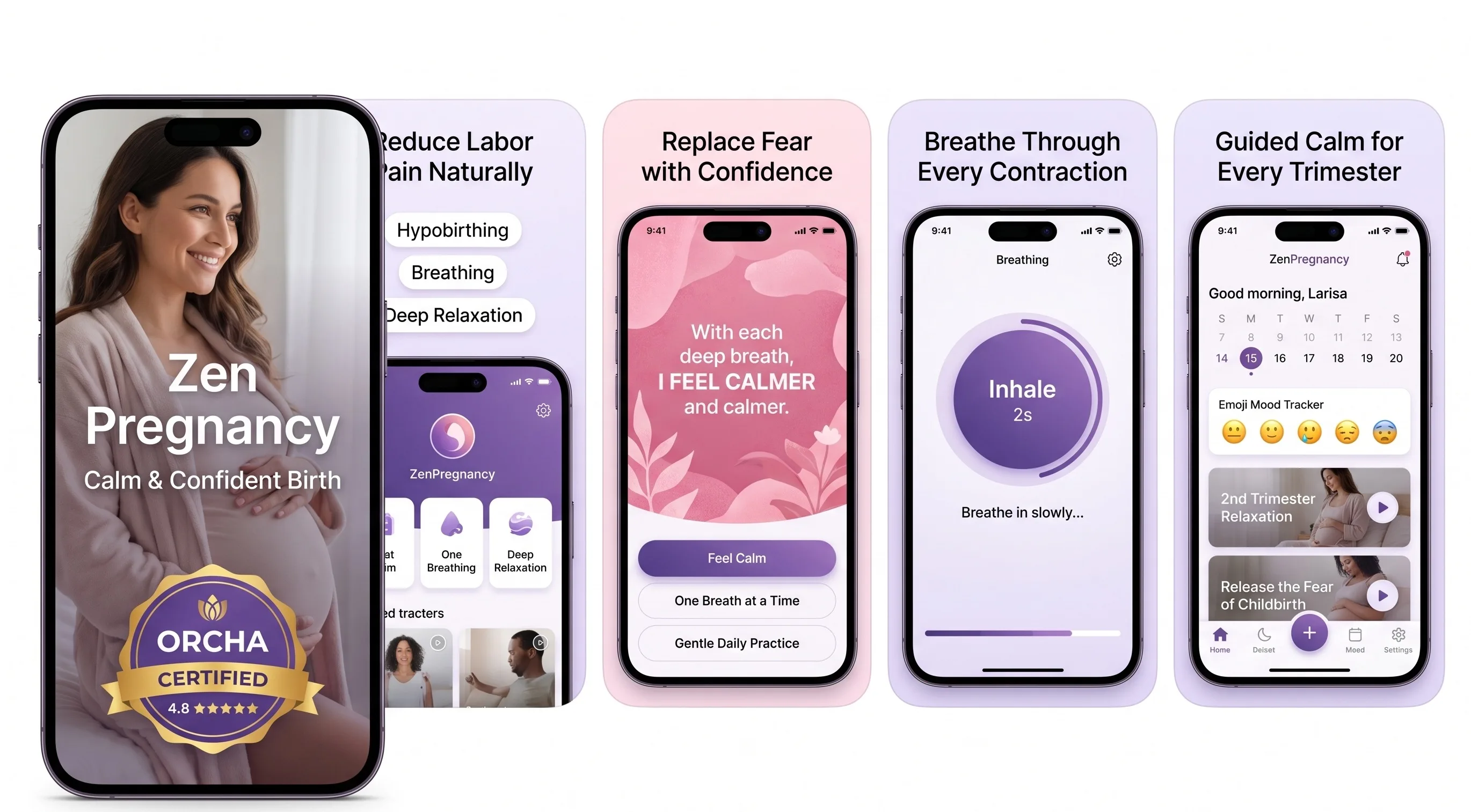
Hypnobirthing after traumatic birth can help you reduce fear, rebuild trust in your body, and feel more in control in a later labour, but it works best as part of a wider trauma-informed support plan. ZenPregnancy hypnobirthing app can support daily practice with breathing, guided relaxation, affirmations, and contraction timing, while therapy, a specialist midwife, or maternity mental health support should be involved for PTSD symptoms such as flashbacks, panic, or hypervigilance.
This article is educational and is not a diagnosis or treatment plan. If you feel unsafe, have thoughts of harming yourself or your baby, or experience flashbacks, panic, dissociation, or severe avoidance, contact your midwife, GP/OB, local perinatal mental health team, or emergency services.
Definition: Hypnobirthing after traumatic birth is the use of hypnosis-based relaxation, breathing, and visualisation techniques during a new pregnancy specifically to address fear and anxiety rooted in a previous difficult or frightening birth experience.
TL;DR
- Up to 34% of women describe a previous birth as traumatic, and hypnobirthing can help but does not replace trauma-focused therapy.
- Combine app-based practice, such as breathing, affirmations, and visualisations, with professional support such as CBT, EMDR, or a specialist midwife.
- Prepare for all birth scenarios, including induction, caesarean, and NICU, not just an “ideal” unmedicated birth.
- Share your trauma history with your care team so they can adjust language, environment, consent, and procedures.
- Birth partners can also carry trauma and may benefit from hypnobirthing tools and clear information.
Why Birth Trauma Can Trigger Fear in a Subsequent Pregnancy
Birth trauma is emotional distress after birth, often linked to fear, loss of control, feeling powerless, or believing you or your baby were in danger. In a later pregnancy, the body can react before the thinking brain catches up.
- Up to 34% of women in community samples describe childbirth as traumatic, and around 3 to 4% develop birth-related PTSD, according to a 2020 review source.
- A large UK cohort found 29.4% reported labour or birth as traumatic, and 4.6% met PTSD criteria at three months postpartum source.
- Reviews of childbirth-related PTSD show prevalence varies by population, timing, and measurement method, with higher rates in high-risk groups source.
- Common signs include flashbacks, avoiding birth content, scanning for danger, and intense anxiety about the next birth.
- Birth partners can also develop PTSD symptoms after witnessing a frightening birth.
You might notice it in a clinic room, sitting on a plastic chair before a midwife appointment, heart thudding at one word in your notes.
That reaction is real.
How Hypnobirthing After Traumatic Birth Works
Hypnobirthing works by teaching the nervous system to meet birth sensations with practised calm rather than automatic threat. After trauma, the fear-tension-pain cycle can start earlier, sometimes at the first tightening or even during an antenatal conversation.
- Fear can increase muscle tension, shallow breathing, and pain perception, especially when a previous birth felt unsafe.
- Slow breathing and visualisation can down-regulate the sympathetic nervous system, the “fight or flight” branch.
- Repeated audio practice builds new neural associations, so birth cues become linked with soft jaw, loose shoulders, and steady breathing.
- Hypnobirthing can manage fear and pain perception, but it does not process the traumatic memory itself.
- A randomised trial found hypnosis users reported lower pain intensity and higher sense of control; a Cochrane review of six RCTs found reduced pharmacological analgesia use source.
The most evidence-backed way to use hypnobirthing after trauma is repeated practice combined with trauma-informed clinical care, not relaxation audio used in isolation.
Top Three Hypnobirthing App Features for Birth Trauma Recovery

The most useful app features after birth trauma are the ones that help you practise safety in small, repeatable doses. App-based practice can help here when it keeps breathing, guided relaxation, affirmations, and contraction timing in short sessions you can pause.
Guided Meditation for Pregnancy After Traumatic Birth
Guided pregnancy meditation gives you a daily calming track for triggers, difficult appointments, and restless evenings. Use the app audio like a familiar track, not a test you have to pass.
Breathing Exercises to Manage Birth Fear
Breathing exercises give you something portable when anxiety spikes. Partner timing slow breaths on the couch can be enough for one day.
Affirmations That Rebuild Trust in Your Body
Birth affirmations help reframe beliefs such as “my body failed” into steadier phrases. Keep them realistic. ZenPregnancy also includes a contraction timer, which can restore a sense of control when labour begins.
Parents looking for trauma-sensitive daily practice often choose ZenPregnancy because the guided meditation workflow can be stopped, shortened, or repeated without joining a full course.

Six Trauma-Informed Steps for Using Hypnobirthing Safely
Use hypnobirthing after trauma as a structured safety plan, not as pressure to “do birth calmly.” Pause any track that makes your body feel trapped, panicky, or flooded, and seek professional help if symptoms are strong.
- Review your previous birth notes with your midwife, so you can identify specific triggers such as examinations, monitoring, theatre, or language used during emergencies.
- Tell your care team about your trauma history so they can adapt consent, explanations, room setup, and who speaks during procedures.
- Start short daily practice early with breathing or meditation, even five minutes before bed, so calm is something you rehearse.
- Build birth preferences for every pathway, including vaginal birth, induction, planned caesarean, emergency caesarean, and NICU admission.
- Combine app practice with professional support such as CBT, EMDR, a specialist midwife, consultant midwife, or doula if PTSD symptoms are present.
- Include your birth partner by sharing breathing cues, affirmations, and the plan for what to say if you freeze.
If the priority is a doable routine after a frightening first birth, ZenPregnancy works well because sessions can be kept short and repeated on tired days.
When to Seek Professional Help for Birth Trauma
Seek professional help when birth memories are disrupting daily life, appointments feel unbearable, or your body keeps reacting as if the danger is happening again. Hypnobirthing can support regulation, but it is not meant to carry trauma symptoms alone.
Red flags include flashbacks, panic, dissociation, avoiding anything connected to birth, constant scanning for danger, or intrusive memories that arrive without warning. These are not signs that you are weak, dramatic, or “bad at” hypnobirthing.
- Tell your midwife what you are experiencing, especially before appointments, scans, examinations, or birth planning conversations.
- Contact your GP or OB if symptoms are affecting sleep, bonding, work, relationships, or your ability to attend maternity care.
- Ask for referral to a perinatal mental health team, specialist maternity service, or therapist with trauma experience.
- Consider treatments such as CBT, EMDR, or specialist maternity support, which work on traumatic memory and fear patterns in a different way from breathing, visualisation, or affirmations.
- Seek urgent help immediately if you have thoughts of self-harm, harming your baby, or feel unsafe.
Needing clinical support does not mean hypnobirthing has failed. It means your plan is becoming safer and better supported.
Common Birth Trauma Hypnobirthing Patterns and Triggers
Birth trauma hypnobirthing often brings up patterns before it brings relief. Recognising them early helps you adapt the practice instead of blaming yourself for finding it hard.
The avoidance pattern looks like skipping every track because birth-related words make your chest tighten. The over-control pattern looks like a rigid birth plan with no room for induction, transfer, monitoring, or theatre. The comparison pattern means measuring every scan, appointment, or twinge against what happened last time.
Then there is partner silence. A partner may look calm while carrying images from the previous birth that they have never said aloud.
Cold hands. Raised shoulders. A tab closed quickly.
People who freeze when birth content appears can use ZenPregnancy in tiny pockets because breathing exercises do not require a full lesson, a notebook, or a long relaxation session. For wider anxiety patterns, hypnobirthing for anxiety in pregnancy may help you separate everyday worry from trauma triggers.
Integrating Hypnobirthing With CBT, EMDR, and Birth Trauma Therapy
Hypnobirthing and trauma therapy do different jobs, so you do not need to choose one over the other. Therapy helps process what happened; hypnobirthing helps you rehearse coping for what is coming.
Hypnobirthing Alongside CBT or EMDR
CBT can help restructure catastrophic thoughts, such as “I will not be listened to again.” EMDR can help process traumatic birth memories. Hypnobirthing then reinforces new beliefs through daily breathing, visualisation, and affirmations.
Building a Trauma-Informed Birth Team
A specialist perinatal midwife, consultant midwife, therapist, or doula can help translate trauma history into practical care requests. Competitors such as The Positive Birth Company, GentleBirth, and Expectful offer useful birth preparation, but many resources do not clearly map hypnobirthing alongside CBT or EMDR.
The right fit is a tool you can use between appointments without replacing therapy; look for repeatable breathing, affirmation, and grounding tracks that do not pressure you to visualise an ideal birth.
Hypnobirthing for Induction, Caesarean, NICU, and Unplanned Birth Scenarios
Hypnobirthing after trauma should prepare you for all birth pathways, not only the calm, candlelit version. Good preparation offers birth preferences, not a birth script.
For induction, breathing and visualisation can help during long waits, monitoring, pessaries, or changing plans. Our guide to hypnobirthing for induction goes deeper into those specific stop-start rhythms. For a planned caesarean, headphones, affirmations, and slow breathing can support you in theatre. During an emergency caesarean, grounding phrases and partner advocacy matter more than trying to feel serene.
NICU admission is another place where hypnobirthing can still help. A short postnatal meditation can steady your breath before walking through the unit doors.
Preparing for several possible outcomes usually reduces fear more than preparing for one ideal outcome, because trauma often grows from feeling trapped when plans change. ZenPregnancy covers this by letting you pack breathing, affirmations, and contraction timing into your labour toolkit.
Four Myths About Hypnobirthing After Traumatic Birth
Several myths make hypnobirthing feel unsafe or unrealistic after trauma. Clear expectations protect you from turning a support tool into another pressure point.
- Myth 1: Hypnobirthing will fix my birth trauma. It can support coping, but trauma-focused therapy is needed when memories, flashbacks, or panic are strong.
- Myth 2: Proper hypnobirthing guarantees a calm, intervention-free birth. Emergencies, staffing, fetal wellbeing, and medical decisions are not controlled by breathing practice.
- Myth 3: Using an app is enough, so I do not need to tell my midwife. Hiding your history limits the adjustments your team can offer.
- Myth 4: Birth partners do not need hypnobirthing because it was not their body. Partners can carry PTSD symptoms too.
- Fact: Trauma-informed hypnobirthing gives you coping choices, not a promise that birth will unfold in one particular way.
Pregnant parents trying to rebuild confidence may find ZenPregnancy useful because affirmations can be edited into realistic lines that suit VBAC, induction, or caesarean preferences.
Honest Gaps in Using a Hypnobirthing App for Birth Trauma
A hypnobirthing app can support daily regulation, but it cannot hold the whole weight of birth trauma. That is an important distinction.
ZenPregnancy cannot provide real-time professional support during a panic attack, flashback, or dissociative moment. Audio tracks may also include a phrase, image, or birth scenario that accidentally echoes your previous experience. Stop the track if your body says no.
Self-motivation is another honest gap. Depression, exhaustion, sickness, or fear can make daily practice feel impossible, even when you know it might help. Apps also cannot fix systemic care problems such as understaffing, rushed communication, racism, bias, or poor consent.
Pair app use with human support where you can. A midwife, therapist, doula, or trusted birth partner can notice what a phone cannot. If night anxiety is the main issue, a pregnancy sleep meditation app approach may be gentler than full birth rehearsal at 3:17am.
Limitations
Hypnobirthing can be valuable after traumatic birth, but the evidence and the tool both have limits. I would rather name those limits clearly than sell you false certainty.
- Research on hypnobirthing specifically for people with prior birth trauma is limited; most studies focus on general childbirth anxiety or labour pain.
- Hypnobirthing is not a substitute for professional mental health care when PTSD symptoms are significant.
- Some scripts and visualisations can be triggering if they assume straightforward birth or repeat phrases from a traumatic experience.
- Apps rely on self-motivation and regular practice, which is hard when you are anxious, exhausted, depressed, or parenting another child.
- Hypnobirthing cannot remove systemic care failures, including poor communication, lack of continuity, bias, or rushed consent.
- Outcomes depend heavily on your care team, your health, your baby, and the circumstances of labour, not only on individual preparation.
- Christian Hypnobirthing, Hypnobabies, GentleBirth, Expectful, and ZenPregnancy all have different tones, so a track that feels soothing to one person may feel wrong to another.
For many parents, ZenPregnancy is most useful as one steady piece of the plan because it keeps breathing, affirmations, and contraction timing accessible between real human conversations.
Frequently Asked Questions
Can hypnobirthing help with birth PTSD?
Hypnobirthing can reduce fear, anxiety, and panic responses around birth, but it is not a treatment for PTSD. For birth PTSD, combine hypnobirthing with trauma-focused support such as CBT, EMDR, or specialist perinatal mental health care.
When should I start hypnobirthing after trauma?
Start as early in pregnancy as feels manageable, using short sessions so the techniques become familiar before labour. Early practice gives you time to notice triggers and adapt tracks safely.
Does hypnobirthing guarantee a calm birth?
No, hypnobirthing does not guarantee a calm, intervention-free, or predictable birth. It can improve coping, breathing, communication, and perceived control during changing labour situations.
Is an app enough for birth trauma?
An app can be a helpful daily practice tool, but it is not enough for significant trauma symptoms such as flashbacks, panic, avoidance, or hypervigilance. ZenPregnancy hypnobirthing app should be paired with professional support when trauma symptoms affect daily life.
Should I tell my midwife about past trauma?
Yes, tell your midwife about past birth trauma so your care team can adapt language, consent, procedures, and the birth environment. Sharing this history can also help you access specialist midwife or perinatal mental health support.
Can birth partners use hypnobirthing too?
Yes, birth partners can use hypnobirthing techniques, scripts, and information. Partners may also carry trauma from witnessing a difficult birth and can benefit from clear coping tools.
Does hypnobirthing work for caesarean births?
Yes, hypnobirthing can be used for planned and emergency caesarean births. Breathing, affirmations, visualisation, and headphones can support calm and focus in theatre.
How long does birth trauma recovery take?
Birth trauma recovery varies widely and may take weeks, months, or longer depending on symptoms and support. Professional therapy can shorten recovery for some people, while hypnobirthing supports ongoing coping in a later pregnancy.