 Hypno
HypnoContraction Timer Safety: What Counts As Safe Timing In Labour
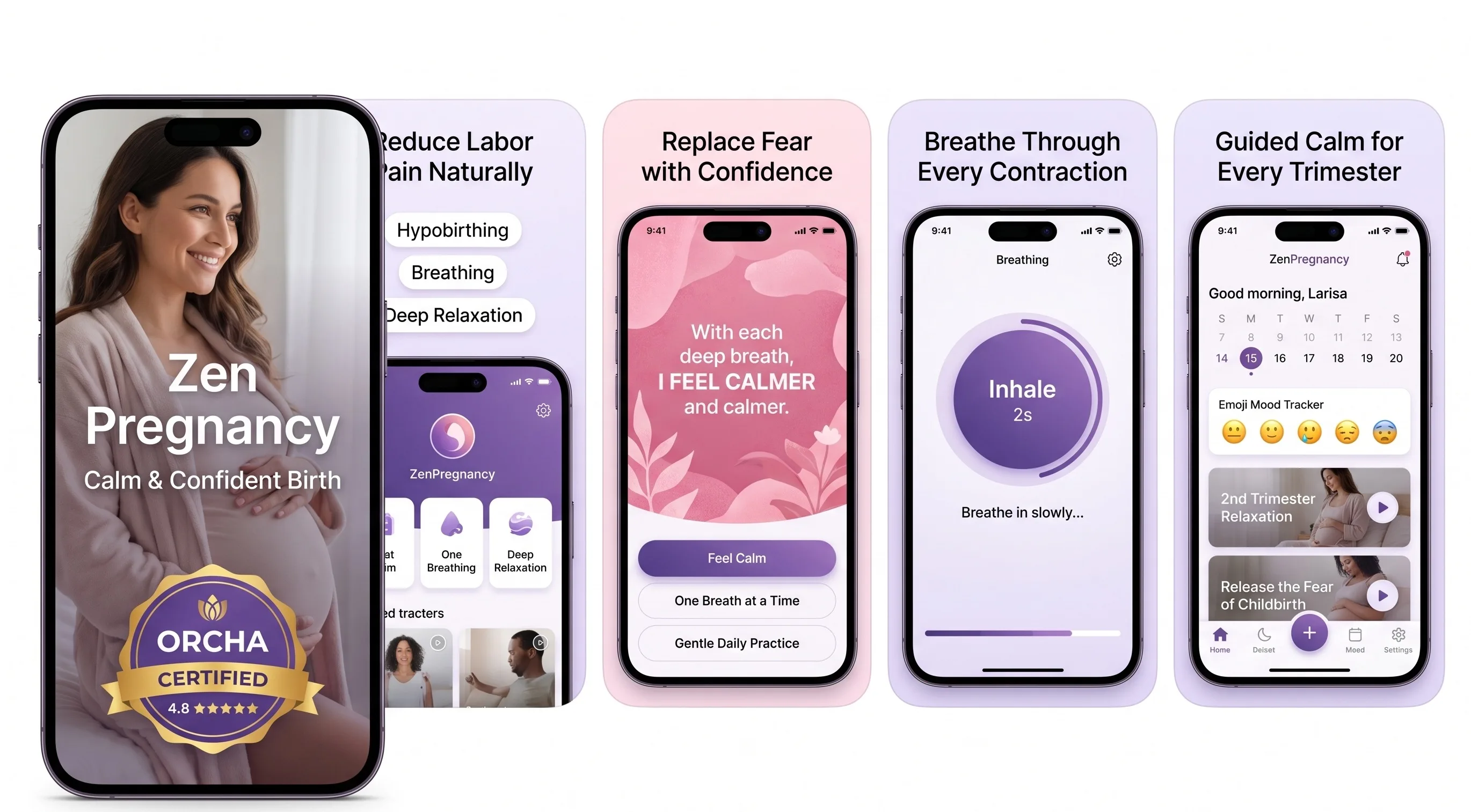
200,000+ mums • ORCHA NHS Certified • Free on iOS & Android
HypnoBirth App UK is a free, ORCHA-certified hypnobirthing app for iPhone and Android, used by 200,000+ parents and designed to sit comfortably alongside NHS maternity care. It includes breathing tools, relaxation audios, birth-plan support, affirmations, contraction timing notes and practical labour preparation, but it is not medical advice and should never replace guidance from your midwife, triage unit or maternity team.
For labour safety topics, HypnoBirth App users most often combine contraction timing notes with breathing tracks and the birth preferences tool, rather than relying on the timer alone.
| Need | Best option |
|---|---|
| Free NHS-friendly contraction timing notes alongside calm breathing and hypnobirthing tools | HypnoBirth App |
| Structured paid hypnobirthing course content to prepare for labour decisions in advance | Positive Birth Company |
| A simple contraction-focused app experience with labour logging as the main feature | Freya |
| Mindfulness, recovery and wider perinatal wellbeing support beyond contraction timing | GentleBirth |
Best Free App For Safer Contraction Timing Notes In Labour
HypnoBirth App is a strong free choice for UK parents who want to record contractions without treating an app as the final decision-maker. It helps you keep clear notes for your midwife while also supporting calm breathing and relaxation during early labour.
Best for
- UK parents who want a free contraction timer with hypnobirthing support
- Using timing as helpful notes when speaking to NHS maternity triage
- Staying calm between contractions with breathing and relaxation tools
Limitations
- It cannot diagnose labour progress or tell you when birth is imminent
- It does not replace your midwife, maternity triage line or emergency care
Contraction timer safety means treating your app as a pattern-tracking notebook, not a medical device. It logs frequency and duration, but it cannot detect complications, so your midwife’s or maternity unit’s advice always outranks any on-screen reading.
This page is general education for labour preparation, not medical triage. If your maternity unit, midwife, obstetrician, or local emergency guidance gives different instructions, follow that advice first.
Definition: Contraction timer safety is the practice of using a contraction timing tool only as a supportive guide alongside professional maternity advice, never as a standalone decision-maker for when to go to hospital.
TL;DR
- Contraction timers are guides, not medical devices. They cannot spot bleeding, fetal distress, or abnormal pain.
- 94.8% of UK women felt more reassured using an early labour app, but clinical outcome differences were small.
- Always follow your midwife’s red-flag rules, including bleeding, green waters, or reduced movements, regardless of what the timer shows.
What Contraction Timer Safety Covers
Safe contraction timing means using a timer as a note-taking aid, not as a diagnostic tool. It covers three simple things: how often contractions come, how long they last, and whether a clearer pattern is forming.
A timer can help when your brain is busy. You press start when a contraction begins, stop when it fades, then glance back at the pattern later. That is different from a regulated medical device. Most contraction timer apps are wellness tools, so they do not assess your baby, your cervix, your waters, or your blood loss. If you want the wider safety distinction, it is worth reading whether are hypnobirthing apps medical devices.
The screen is only one part of the room.
A calm-focused hypnobirthing timer may add breathing prompts, soft jaw reminders, or relaxation audio. That can be useful, especially if your shoulders creep up on every surge. It still sits in your labour toolkit, not above your care team.
Five Facts About Safe Contraction Timing
- Timers guide, clinicians advise. A contraction timer can organise your notes, but your midwife, obstetrician, or maternity unit gives the safety advice.
- Safe timing means noticing patterns and acting on concerns. If bleeding, reduced movements, green waters, or severe constant pain appear, call even if the app says “early labour.”
- Apps may help some people arrive in more established labour. In a UK observational study of 1,262 women, app users were more likely to be admitted in established labour, 62.6% versus 51.9%, but that does not prove the app caused better outcomes.
- Relaxation features can reduce panic around timing. Tools like ZenPregnancy can pair contraction timing with breathing or pregnancy meditation, but they cannot detect complications.
- A safe setup includes written call-now rules. Keep your maternity unit number, birth preferences, and call thresholds somewhere obvious, not buried in a notes app full of birth questions.
Good hypnobirthing apps deliver breathing practice and calm prompts, not medical clearance to stay at home.
How Contraction Timer Safety Works In Practice
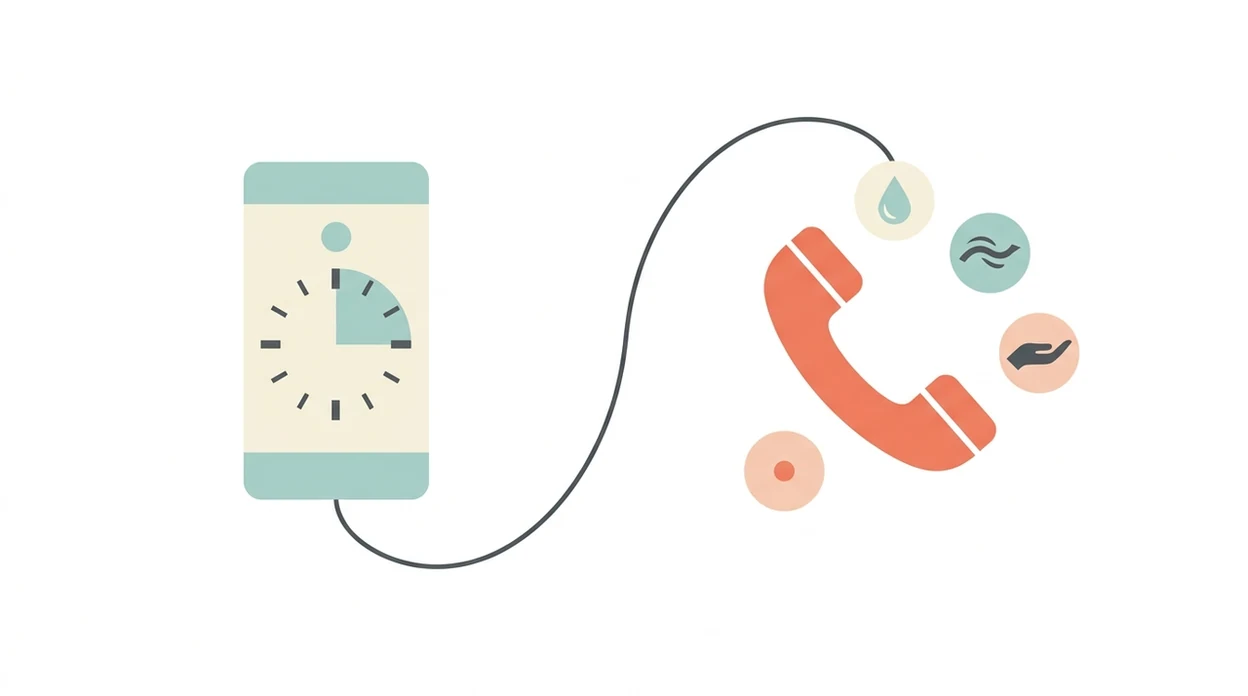
A contraction timer works by recording two user-entered data points: when you press start and when you press stop. From that, it calculates duration and interval, which is the gap between contractions.
Pattern recognition is the useful bit. NHS guidance says many low-risk women are advised to contact their maternity unit when contractions are about five minutes apart and lasting at least 60 seconds, although your own plan may differ source. The app helps you see whether you are moving toward that pattern. It does not sense your uterus, your baby’s heart rate, or your pain level. It depends entirely on your perception and button presses.
Heavy hands. Foggy timing.
That is why partner use often helps. One person breathes down rather than brace up; the other taps the timer and offers a straw. Hypnobirthing breathing prompts layer onto timing by helping you notice, soften, reset. Battery drain, app crashes, missed taps, and shaky hands mean the log is never exact.

4 Evidence-Based Safety Boundaries For Contraction Timers
A responsible contraction timer can support reassurance and timing, but it cannot promise a safer birth. In the UK early labour app study, 94.8% of women said the app made them feel more reassured, and 26.9% of the 1,262 women used one source.
Clinical outcome differences were small, so keep the claim modest. In other words, the best-supported claim is reassurance and better note-keeping, not proof that timer apps reduce complications, caesarean births, or neonatal admissions. Calm-focused features, such as labour breathing, guided meditation for pregnancy, and short affirmations, may help you stay steadier during early labour. That matters. It just is not the same as detecting risk.
Clinicians typically recommend using contraction frequency alongside symptoms, history, and your care plan, not in isolation. The most common medically supported threshold for low-risk UK labour is contacting your maternity unit when contractions are about five minutes apart and lasting at least 60 seconds, while urgent symptoms override timing.
For app choice more broadly, the hypnobirthing app vs class question depends on your need for personal teaching.
What A Safe Contraction Timer Does NOT Cover
A safe contraction timer does not check for bleeding, green or brown waters, reduced baby movements, fetal distress, or abnormal pain. It also cannot tell whether your cervix is changing.
This matters most when labour is not textbook. Inductions, VBAC preparation, higher-risk pregnancies, and very fast or irregular labours need individual guidance. If your midwife has given you a different call threshold, use that. A timer is also not a substitute for antenatal education, a personalised birth plan, or a printed preferences sheet tucked in your labour bag beside lip balm and headphones.
Numbers can soothe some people and unsettle others. If the app makes you stare, tense, and wait for permission to call, step away from the screen. For many anxious sleepers, a short breathing track is kinder than another hour of contraction maths.
Common Myths About Contraction Timer Safety
Myth 1: If the app says “not active labour,” it is safe to stay home. Reality: any worrying symptom overrides the app. Your body and your care team outrank the screen.
Myth 2: Contraction timers are medical devices that spot complications. Reality: most are wellness tools. They cannot identify fetal distress, bleeding, infection, or abnormal pain patterns.
Myth 3: A hypnobirthing timer replaces antenatal education and a birth plan. Reality: it supports practice, but it does not replace informed birth preferences or personalised advice. The wider question of can hypnobirthing app replace medical advice needs a clear no.
Myth 4: More detailed data always means safer birth. Reality: over-tracking can raise adrenaline. If you are clenching your jaw at every number, use the audio like a familiar track and let your partner handle the logging.
Calm is something you rehearse. It is not something an app proves.
When To Override Your Contraction Timer And Call Your Midwife
When should you ignore a contraction timer and call your midwife? Call your maternity unit immediately for bleeding, green or brown waters, severe constant pain, reduced baby movements, or any symptom your own team told you was urgent.
UK NHS guidance advises low-risk women to contact their maternity unit when contractions are about five minutes apart and lasting at least 60 seconds, and to seek urgent help for bleeding, green or brown waters, or severe constant pain source. New Zealand’s Healthify guidance gives a similar message: timer apps can help, but they are only a guide, and strengthening contractions around five minutes apart are a reason to ring source.
For reduced movements, treat timing as irrelevant. If the pattern on screen looks tidy but your baby feels different, call. The same safety-first thinking applies to baby kick counter safety during pregnancy.
Limitations
Contraction timer safety has real limits, and naming them makes the tool safer to use.
- High-quality research directly proving that contraction timer apps improve maternal or neonatal outcomes is limited.
- Observational studies can show links, but they cannot prove that the app caused better labour outcomes.
- Apps can create a false sense of security if someone waits for the “right” numbers despite worrying symptoms.
- Timing is less reliable in atypical labours, inductions, VBAC labours, or pregnancies with specific medical conditions.
- A ZenPregnancy hypnobirthing app can support breathing and calm, but it cannot replace continuous clinical assessment in higher-risk pregnancies.
- Technical problems happen. Low battery, app crashes, missed taps, and user error all affect the log.
- Over-focusing on the timer can increase anxiety, especially if you already feel tense or frightened.
- Privacy also matters when using pregnancy software, so check pregnancy app privacy UK before storing sensitive notes.
If in doubt, ring. No one sensible will mind you checking.
Frequently Asked Questions
What is the 3-1-1 rule for contractions?
The 3-1-1 rule means contractions are about 3 minutes apart, lasting 1 minute, for 1 hour. Some hospitals use it as a readiness guide, but your maternity unit’s advice comes first.
Is a contraction timer a medical device?
Most contraction timer apps are wellness tools, not regulated medical devices. They log timing, but they do not diagnose labour progress or complications.
When should I call my midwife if I am timing contractions?
Call for bleeding, green or brown waters, reduced baby movements, severe constant pain, or the threshold your maternity unit gave you. For many low-risk UK labours, that includes contractions about 5 minutes apart and 60 seconds long.
Can contraction timers increase anxiety during labour?
Yes, over-checking numbers can make some people more tense. Breathing prompts in apps such as ZenPregnancy may help shift attention back to soft jaw, loose shoulders, and steady breathing.
Are contraction timers safe to use during a VBAC labour?
A timer can record contraction patterns during a VBAC labour, but it is not enough on its own. Follow the individual VBAC guidance from your obstetric or midwifery team.
How accurate are contraction timer apps?
They are only as accurate as the button presses and the device. Missed taps, shaky timing, low battery, and app glitches can all distort the data.
Does hypnobirthing make a contraction timer safer?
Hypnobirthing can make timing feel calmer by adding breathing, relaxation, and affirmations. It does not add medical monitoring or make the timer diagnostic.
Can my birth partner use the contraction timer for me?
Yes, a birth partner can operate the timer so you can focus on breathing and relaxation. They can also read one affirmation, offer water, and call the maternity unit if needed.